



About
Michelle Zhang is a fashion educator, artist and writer with a professional background spanning fashion business, communications, branding, marketing and the creative industries.
She is currently an adjunct lecturer at LASALLE College of the Arts, where she teaches bachelor's degree students fashion business, communications, brand engagement, public relations, content marketing and digital marketing.
An advocate for continuing education, Michelle recently completed her Master of Arts in Arts and Pedagogy at LASALLE, building on her First Class bachelor’s degree in fashion management. Her ongoing learning journey reflects her belief that education is not confined to the classroom, but is a continual process of questioning, experimenting and developing new perspectives.
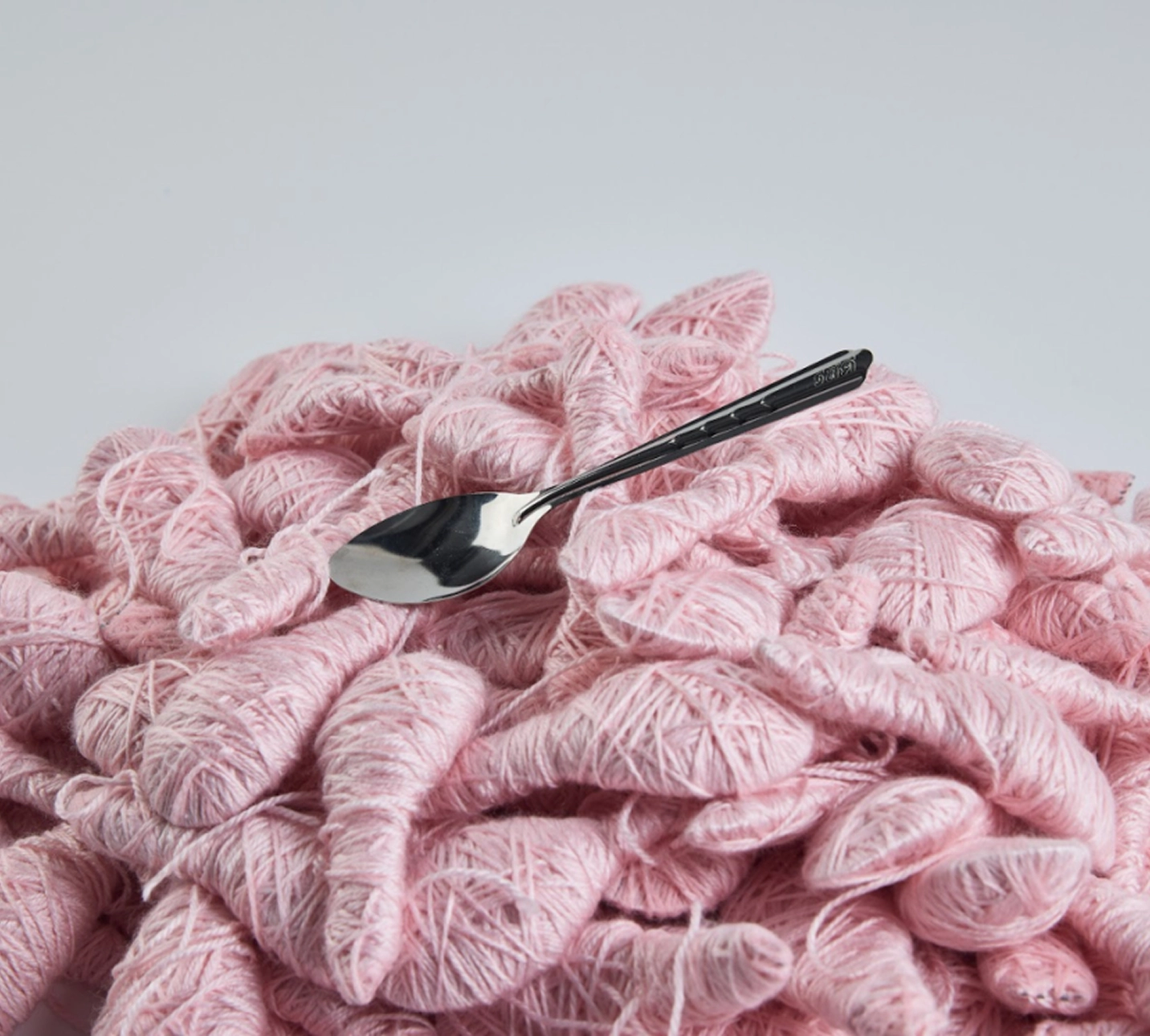
Alongside her academic practice, Michelle maintains a personal art practice rooted in the philosophy of being a 'slow artist'. She is drawn to the tactile, meditative qualities of fibre arts and painting, embracing processes that encourage patience, presence and experimentation rather than speed or immediate outcomes. Working with her hands provides a counterpoint to the fast-paced nature of contemporary fashion and digital culture, allowing her to explore creativity through slower, more intuitive forms of making.
Her interests sit at the intersection of fashion, education, communication and creative practice, with a particular curiosity about how different ways of thinking and making can inform one another.
Through teaching and her own artistic practice, Michelle continues to explore creativity as both a professional skill and a lifelong way of seeing, learning and engaging with the world.
How can one develop lateral thinking skills through autobiographical reflective and metacognitive inquiry, while expanding on self-awareness?
This thesis presents research and results on how lateral thinking can be taught through autobiographical reflection, used as a metacognitive practice, to expand student self-awareness.
The research responds to a pattern observed across five years of teaching at LASALLE: students who struggle creatively tend to draw from a narrow pool of references. Drawing on de Bono, Sloane, Michalko, and Adams, the study argues that existing lateral thinking frameworks are largely context-neutral and culturally Western, and proposes that grounding these techniques in a student's own autobiographical reflection makes them more transferable across disciplinary and cultural contexts, including a setting such as Singapore.
A four-week programme was piloted with five students, combining conceptual block assessment, de Bono's core techniques, Six Thinking Hats, SCAMPER, and Brutethink with sustained journaling and an avatar-building exercise.
The results lend evidence of genuine metacognitive growth: students became more conscious of their thinking patterns, more willing to take creative risks, and more able to carry perspective-taking into everyday life. An unanticipated finding was the process's therapeutic dimension, with several students describing the journal as a space for healing as much as design development.
The study supports the need for lateral thinking, paired with autobiographical reflection, to be introduced as a foundational practice in creative education.
Professional practice
Paul Wong

Xu Yanzhe

Thomas Lim

Regina Chua

Jerry Teo

Chng Xin Xuan
