


About
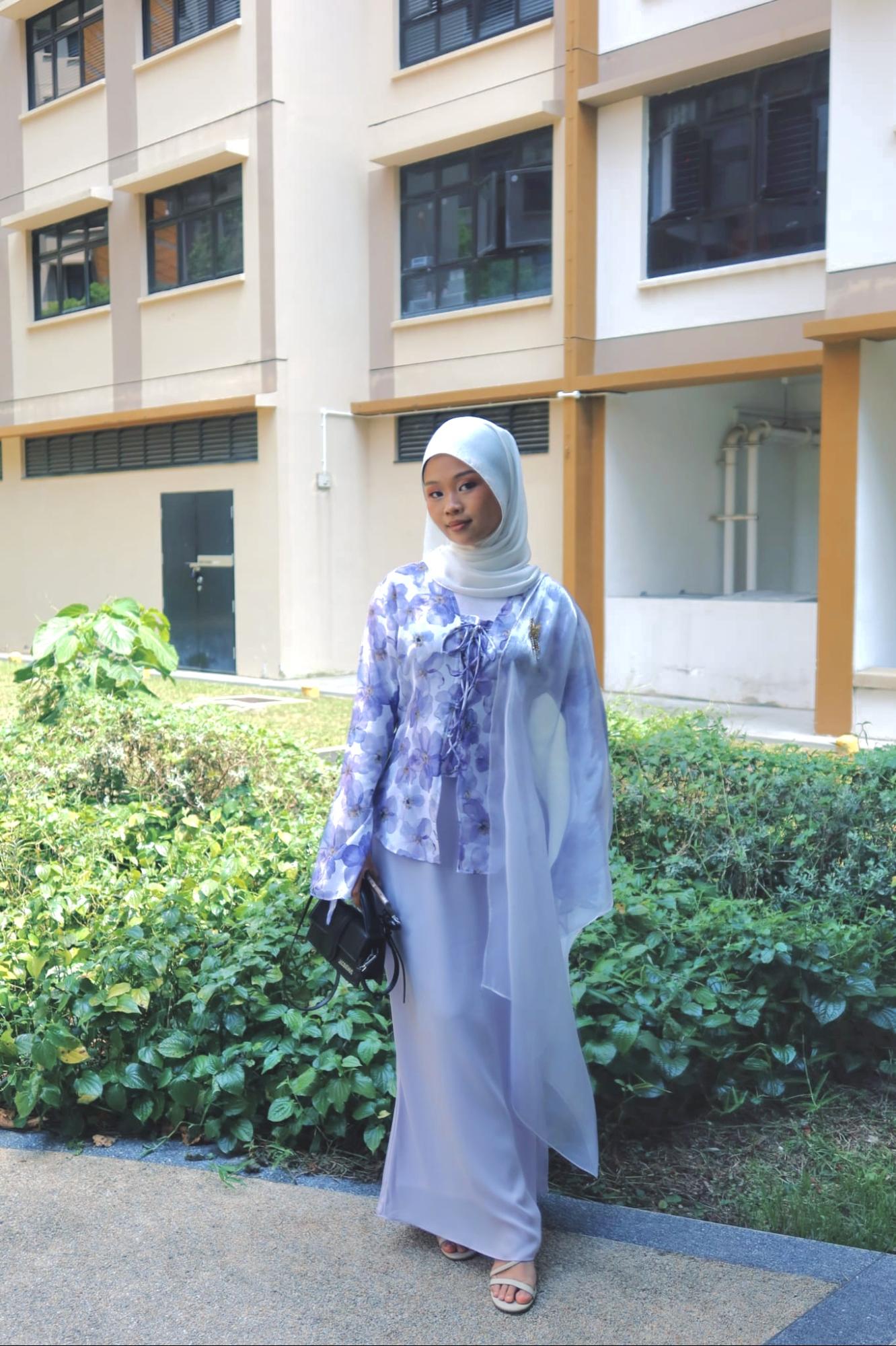
Erny is a mixed-media sculptor whose practice is rooted in Malay culture, tradition, religion and memory.
Working across sculpture and textile design, her work often incorporates traditional materials and techniques such as batik and songket. Through these mediums, Erny explores personal and collective memories tied to heritage, reinterpreting them within contemporary contexts to bridge the past and present.
Erny's practice engages with themes of cultural preservation, identity and the tension between tradition and modernity, with memory functioning as both subject and method. Drawing inspiration from local myths, nature and everyday lived experiences, her works blend traditional Malay aesthetics with contemporary forms and concepts, evoking nostalgia while inviting reflection on how memory, culture and embodied experiences are carried forward in a rapidly changing world.
Dari Tangan ke Tangan, Dari Tubuh ke Ingatan
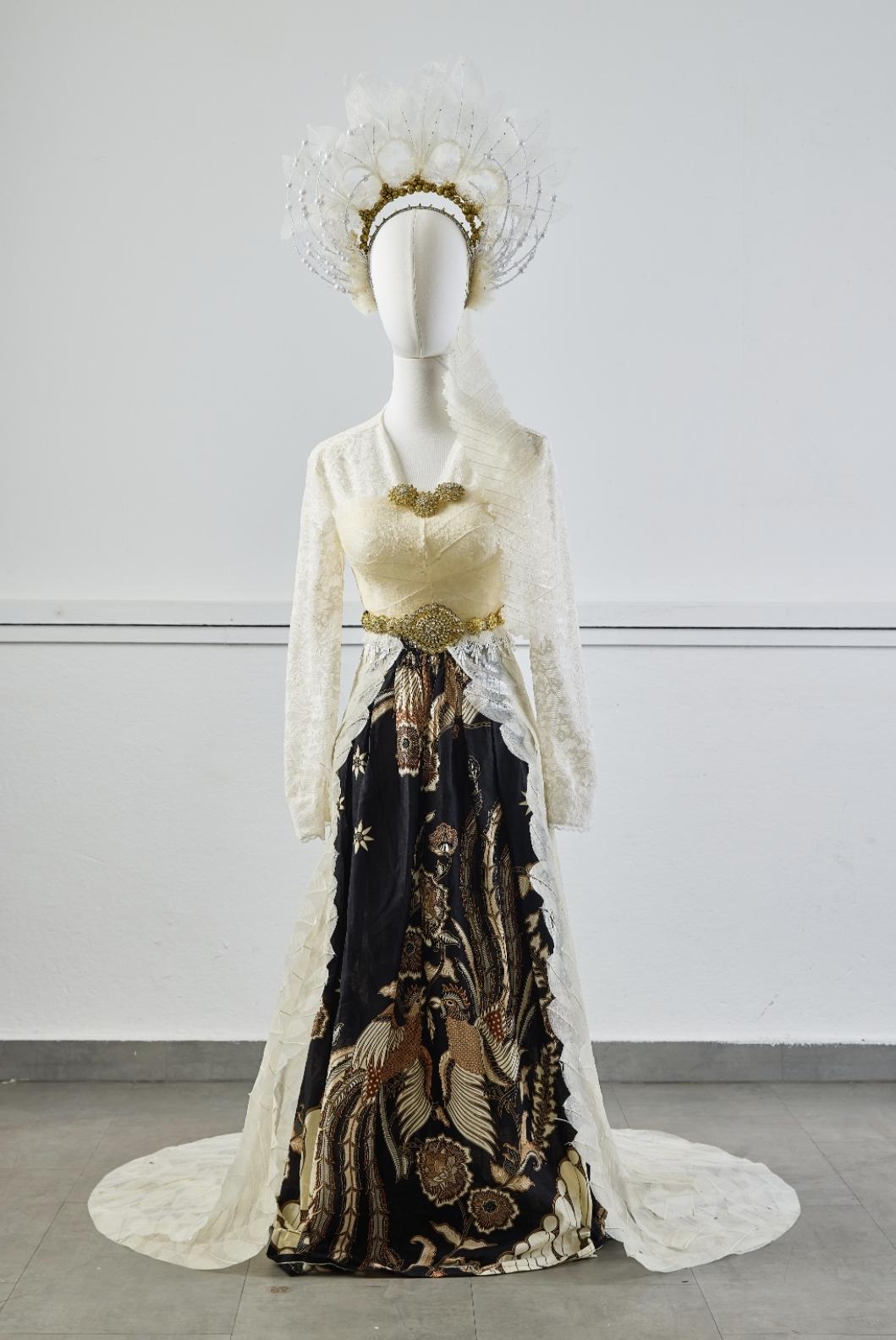
Dari Tangan ke Tangan, Dari Tubuh ke Ingatan explores the leaf as both material and metaphor, drawing from everyday encounters with nature and acts of making.
Through the hands-on processes of collecting, assembling and shaping leaves, the work reflects embodied knowledge learned through repetition, care and touch, echoing practices passed down from Erny's grandmother. The fragile surface of the leaf mirrors the vulnerability of memory, tradition and the body, while its resilience speaks to continuity and survival.
The piece transforms an ordinary, overlooked object into a site of reflection, where domestic gestures, cultural inheritance and personal experience converge through slow, intentional labour.

Full body
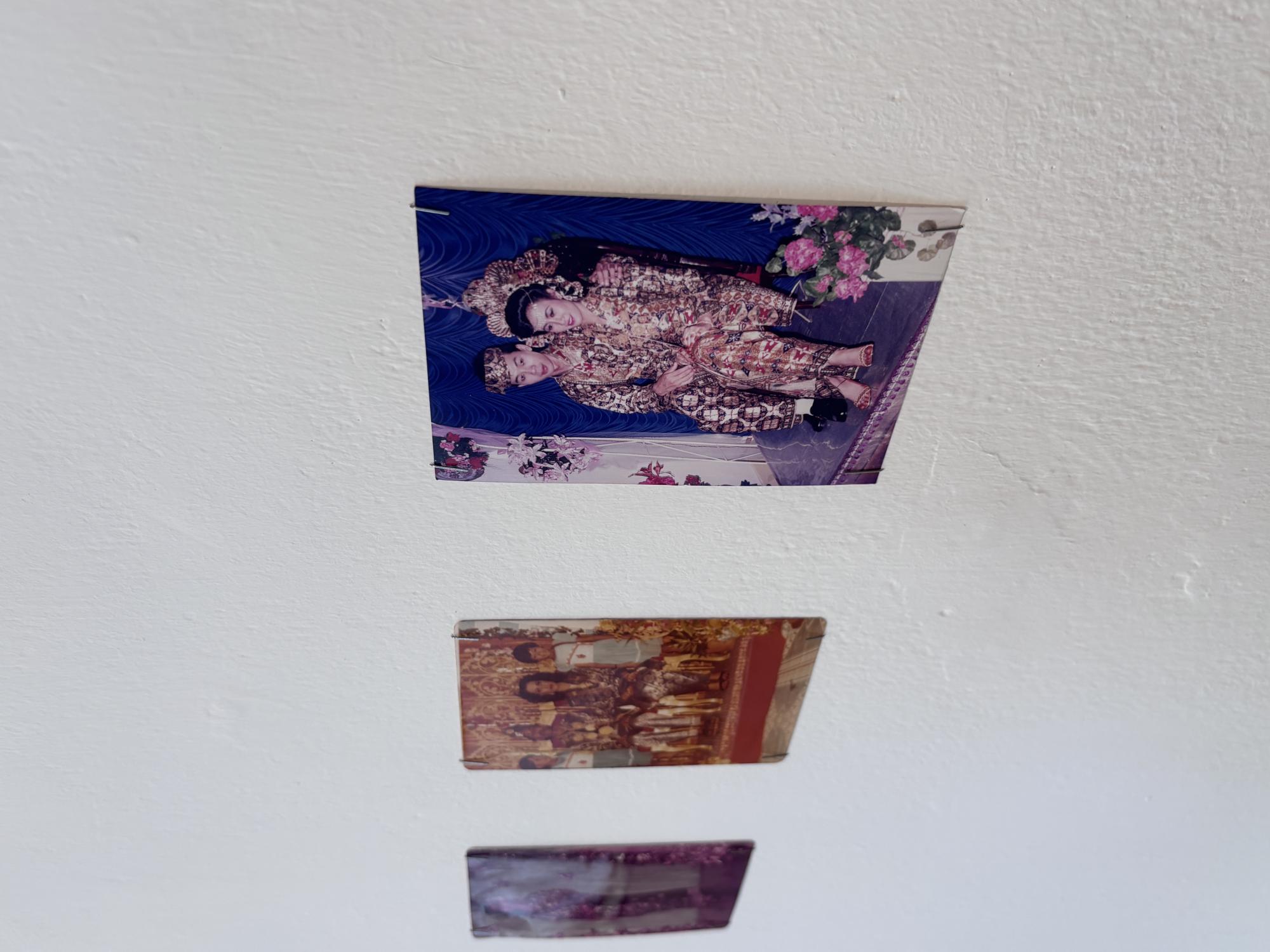
The silhouette mimics Erny's mother's wedding gown made by Erny's grandmother


Research methodology and theoretical framework
This project adopts a practice-based research methodology, where making is positioned as a primary mode of inquiry. Rather than treating the artwork as a final outcome, the process itself becomes a site for generating knowledge. Through the collection, handling and transformation of leaves, the research engages directly with materiality, allowing meaning to emerge through tactile interaction and embodied experience. The use of organic materials introduces fragility and unpredictability, requiring a responsive and intuitive approach to making.
The methodology is grounded in iterative experimentation. Processes such as assembling, layering and shaping leaves are repeated over time, allowing the body to develop sensitivity toward the material. This repetition becomes a form of embodied learning, where gestures are refined through touch. The inclusion of clay as a medium of imitation further extends this inquiry, exploring the tension between the organic and the constructed. By replicating natural textures, the work reflects on ideas of preservation, translation and the limits of material representation.
Documentation forms an important part of the research process. Instead of continuous video, the project uses photographic sequences and stop-motion techniques to fragment movement into individual frames. This approach allows gestures to be slowed down and examined more closely, transforming ephemeral actions into a visual archive. By breaking down movement, the work avoids overly literal representation and instead emphasises repetition, rhythm and subtle bodily shifts. Reflection is embedded throughout, where insights emerge from the interaction between the body, the material, and the act of documentation.
The theoretical framework is grounded in somaesthetics, developed by Richard Shusterman, which positions the body as a central site of sensory experience and knowledge production. Somaesthetics emphasises how understanding is formed through lived, physical engagement rather than detached observation. Within this framework, the repetitive handling of leaves becomes an act of embodied knowing, where the body functions as both a medium and an archive of memory and habit.
This perspective is further informed by Rozsika Parker, whose work in The Subversive Stitch reconsiders craft practices as culturally and emotionally significant. Her emphasis on repetitive handwork as a form of care and continuity resonates with the project’s focus on slow, manual processes and the transmission of knowledge through touch. Additionally, the practice of Mella Jaarsma provides a reference for understanding the relationship between material and the body. Her use of wearable forms highlights how materials can carry cultural meaning and shape bodily experience.
Together, these perspectives situate the project within a discourse of embodied knowledge, material memory and everyday practice. The work emphasises how meaning is formed through repetition, touch, and interaction, rather than fixed representation. Dari Tangan ke Tangan, Dari Tubuh ke Ingatan reflects this process, suggesting a continuous flow of knowledge that moves through the body, linking personal memory with broader cultural continuity.
Wong Huilin Pauline
Natalie Savann Oh
Wang Runxin

Neo Weiqi

Michelle Loh

Ye Min Khant