


About
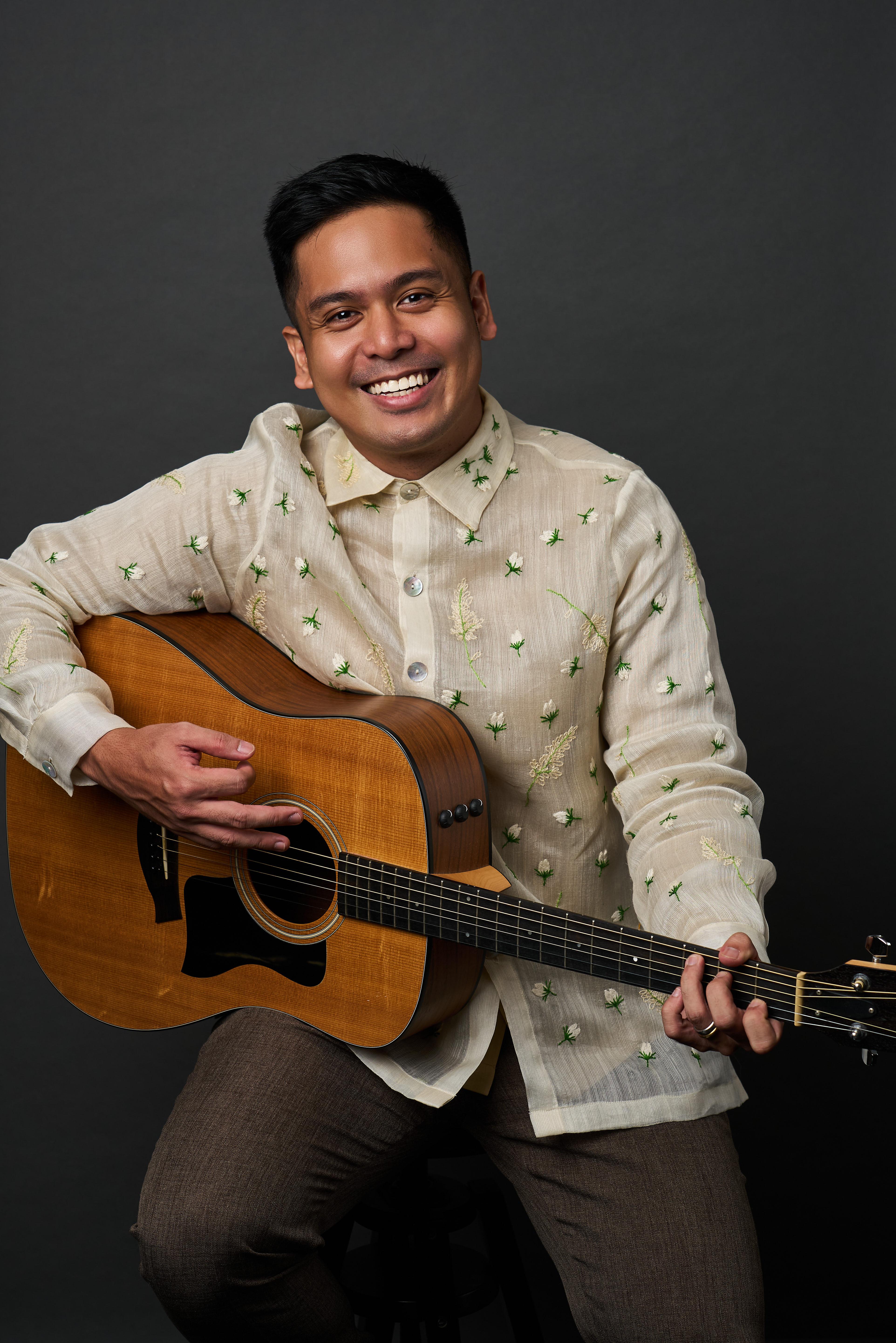
Jeremy is graduating with a Master of Arts in Music Therapy from LASALLE College of the Arts as part of the programme’s inaugural cohort.
A multi-instrumentalist across piano, guitar, voice, and percussion, he brings a versatile musical foundation to his clinical work. Before pursuing music therapy, Jeremy built a career in social media and digital marketing, where he developed strong skills in communication, relationship-building, and understanding people’s needs—competencies that now inform his therapeutic practice.
During his training, Jeremy completed clinical placements across diverse settings, including special education at AWWA School, palliative care at Assisi Hospice, and adult mental health services at Institute of Mental Health and Anglican Care Centre. Across these placements, he accumulated over 900 supervised clinical hours, developing strengths in group facilitation, therapeutic songwriting, and adaptive music-making for diverse client populations.
As a Filipino practitioner based in Singapore, Jeremy is drawn to culturally centred and relational approaches that honour clients’ lived experiences and identities within the therapeutic space. His research thesis, 'Embedding Music Therapy in Singapore’s SPED Multidisciplinary and Interdisciplinary Teams: A Systematised Review', explores the integration of music therapy within collaborative care models, advocating for greater recognition of music therapy within Singapore’s healthcare and special education systems.
Jeremy is committed to advancing culturally responsive, inclusive, and interdisciplinary music therapy practice across diverse clinical and community settings.
Embedding music therapy in Singapore's SPED MDT/IDT Teams: A systematised review
Music therapists have collaborated with allied health professionals and educators in school settings internationally, but the profession's positioning within school-based multidisciplinary and interdisciplinary teams is not well defined.
In Singapore, where 25 special education (SPED) schools employ speech-language pathologists, occupational therapists, psychologists and social workers within established team frameworks, music therapy has remained structurally absent, unregistered with the Allied Health Professions Council and unnamed in Ministry of Education staffing and curriculum documents.
This systematised review synthesised 25 sources (15 international peer-reviewed and 10 Singapore-relevant, including policy documents and grey literature) to answer four research questions concerning music therapy's positioning within school-based MDT/IDT teams, Singapore's SPED structures, the embedded status of benchmark professions, and the models that emerge for embedding music therapy.
Database searches were conducted across PubMed, APA PsycINFO, and BioMed Central, supplemented by searching of Singapore government and SPED school publications. Data were extracted against seven blueprint domains and synthesised narratively.
Practice-level collaboration models existed across a continuum from consultative to transdisciplinary role release, but requirements for embedding like professional registration, named staffing positions, and curriculum-level recognition were absent for music therapy in Singapore. Even benchmark professions with full recognition achieved interprofessional collaborative practice in only a minority of cases.
Four conditions for embedding were identified: recognition, institutional commitment, teacher-centred design, and model adaptability. The proposed framework offers a context-sensitive starting point for advancing music therapy's integration into Singapore's SPED teams.
Professional practice
Jeremy's clinical practice spans paediatric special education, palliative care, adult mental health and community aged care, with over 900 supervised hours across settings including AWWA School, Assisi Hospice, the Institute of Mental Health and ACCH.
His work centres on group and individual music therapy using therapeutic songwriting, improvisation and adaptive music-making, grounded in person-centred, psychodynamic and resource-oriented approaches. He has a particular interest in culturally-centred practice that reflects the diverse backgrounds of clients in Singapore.
Valerie Teo Minyi
Tan Jia Rou
Chia Jing Xuan (Jingle)

Lee Pui Yee Rosalind

Valerie Tiong Hui Ling
Joycelyn Sim