

About
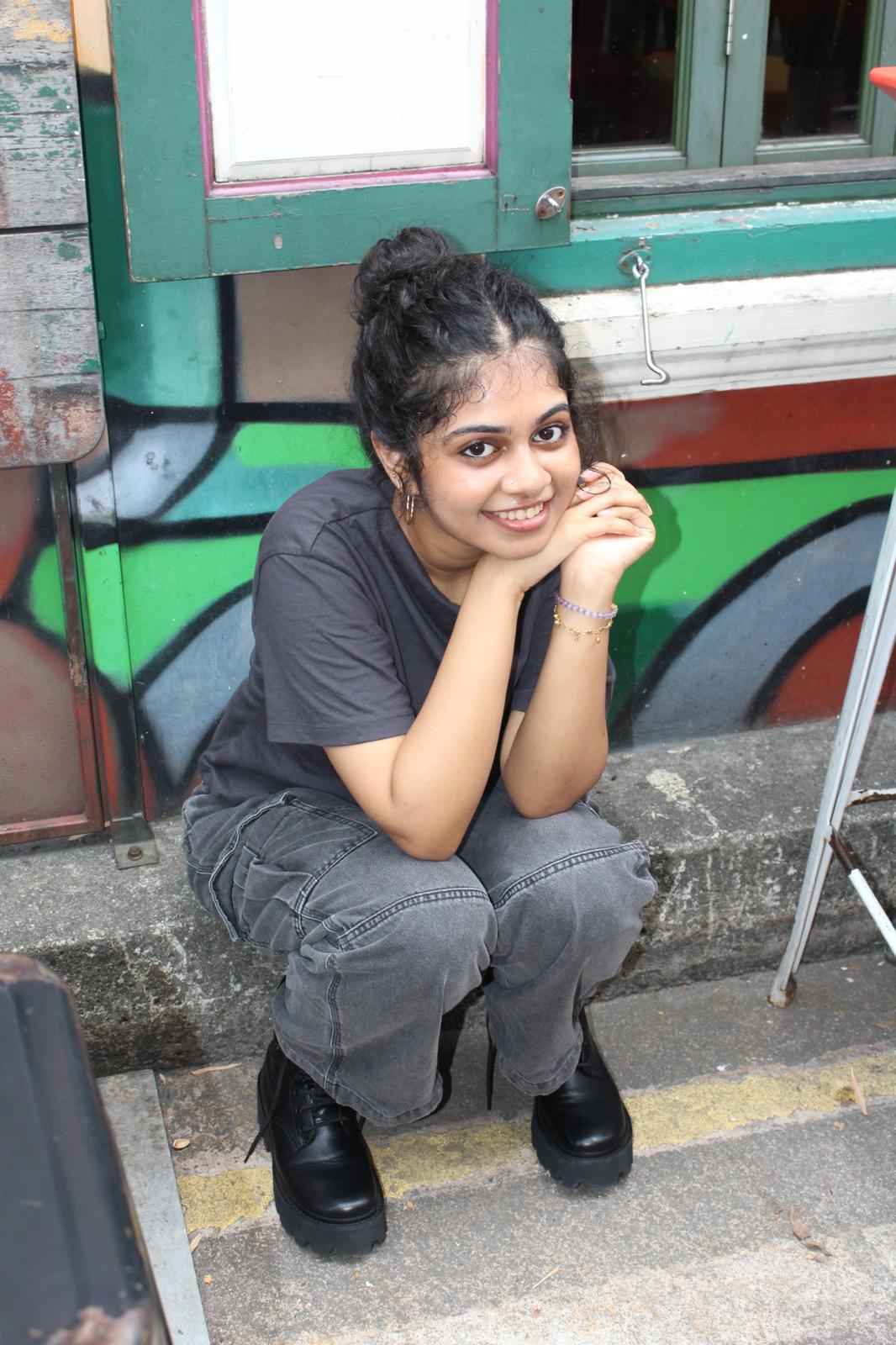
Iniya is a visual artist whose developing practice centres on the exploration of culture, identity and the shifting spaces where they intertwine.
Working across a range of mediums while still discovering the possibilities within each, she approaches art as both a personal archive and a process of becoming. Her works often emerge from fragments, memories, conversations and everyday observations assembled into visual narratives that reflect her ongoing negotiation with belonging.
Iniya's practice is informed by her experience as a South Indian living in Singapore, navigating the tension between representation and reality. Rather than presenting identity as fixed, she engages with its inconsistencies, questioning how culture is simplified, performed or misunderstood across different contexts. Through image-making and narrative construction, she reflects on how personal and collective identities are shaped, distorted and circulated, particularly within contemporary visual culture.
As Iniya continues her work, her approach remains exploratory and open-ended, guided by curiosity and critical inquiry. She is particularly interested in how personal histories intersect with broader cultural and social frameworks, and how these intersections can be visualised. Her evolving practice reflects a desire to build an authentic visual language—one that holds space for complexity, contradiction and growth.
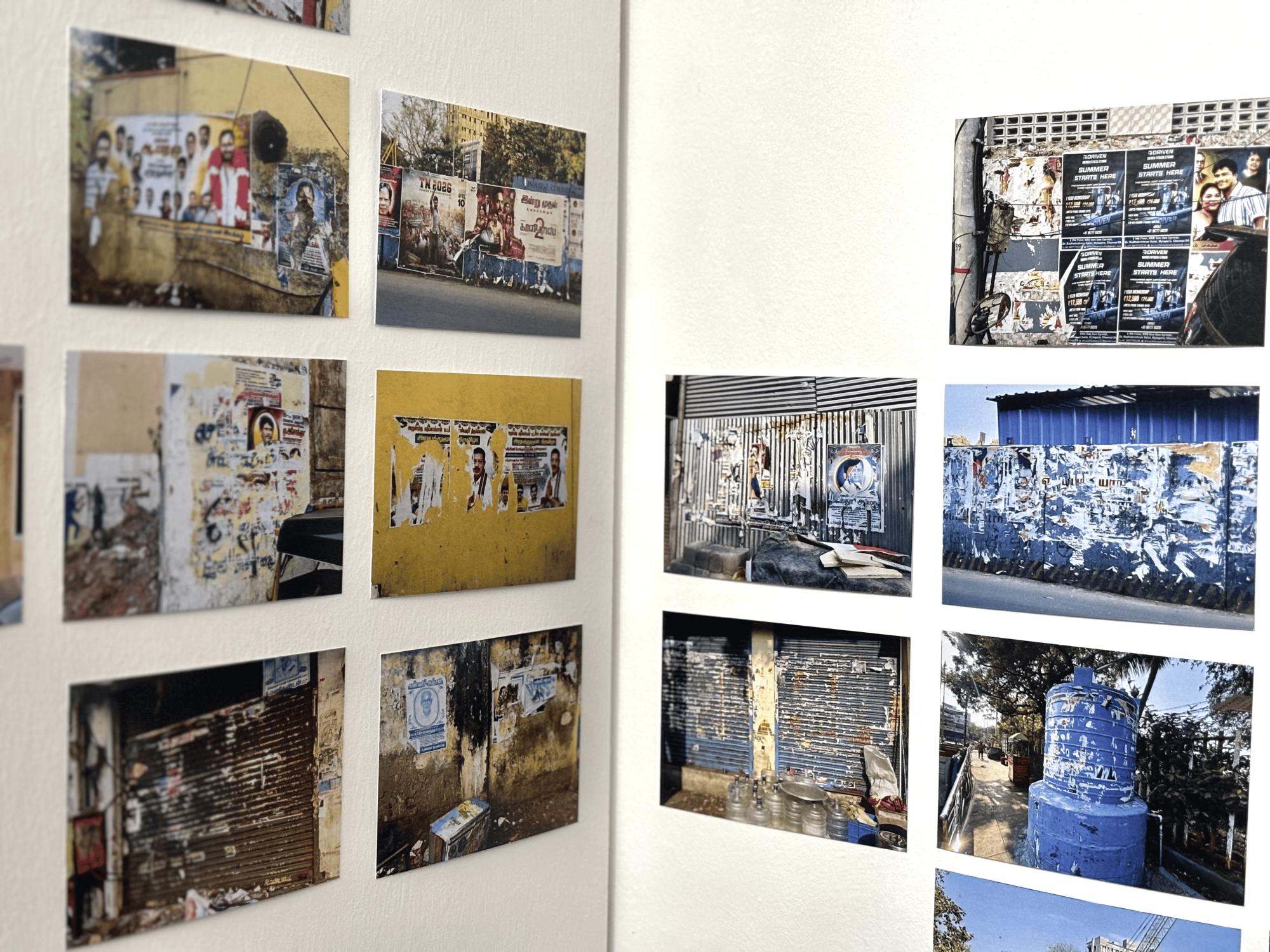
Photographic installation: Indian street imagery with ripped posters, referencing how social media extracts and aestheticises Indian culture, reducing lived contexts into surface-level visual content.
We Don’t Speak the Same Language
This work reflects on how ideas of 'Indian culture' are shaped, repeated and often distorted through digital systems and collective imagination. It considers how algorithms, media circulation and personal memory begin to overlap, producing images of identity that are simplified, aestheticised and easily consumed. These representations, while appearing familiar, often flatten the complexity of lived experience into symbols that are widely recognised but rarely questioned.
By placing these constructed portrayals alongside ordinary, unfiltered moments from daily life, the work creates a tension between what is visible and what is felt. Small, seemingly insignificant details—gestures, environments, textures—begin to resist the clarity and neatness imposed by digital representation. In doing so, the work draws attention to the gap between mediated culture and embodied experience.
Rather than attempting to reclaim, correct or redefine these images, the piece lingers in that gap. It asks what remains authentic when culture is continuously processed, circulated and consumed as data. Meaning is not fixed but unstable, shifting between what is shown, remembered and lived. Within this instability, culture is understood not as a singular or static identity, but as something that exists simultaneously within and beyond the frames that attempt to contain it.

Prompt Generation (video still): A looping sequence of generated prompts where memory is reduced to a command, highlighting the mechanisation of cultural and personal narratives.


Neo Weiqi

Serene Lee

Manasi Agrawal
October Bong Man Won

J.L. ‘Desert Rose’

Muhamad Erwan Afian