




About
Emma is a Singaporean artist and illustrator whose practice explores lived experience, womanhood and the body as a site of knowledge. Working across drawing, painting, printmaking and assemblage, she approaches the body as a matrix—an active surface that records and transmits memory.
Emma's creative processes position art-making as a way of thinking through sensation, emotion and lived realities. Her research centres on the mothering body and its often invisible forms of labour, foregrounding embodied experience as a critical mode of knowledge. Informed by Julia Kristeva, Elizabeth Grosz and Maurice Merleau-Ponty, Emma's work examines the themes of absence, fragmentation and transformation within women’s lives. Engaging with object-oriented feminism, she explores the agency and materiality of bodies beyond fixed representation, often through subtle gestures such as blind embossing and layering, to evoke unseen scars.
Emma was the Singapore representative at the ASEAN-India Artists' Camp 2025. She was a Nanyang Academy of Fine Arts scholarship recipient (2010–2013) and is a recipient of the Tan Chay Bing Scholarship (2024–2026) at LASALLE College of the Arts.
In 2016, Emma founded Studio Luna (@lunabyemma), a creative studio offering bespoke illustration and creative services. Her clients include local and international companies including Louis Vuitton, Hermès, Bulgari, Cartier, Luxasia, Estée Lauder Companies, Hendrick’s Gin and The Sheraton Towers Hotel.
Alongside her commercial practice, she conducts nature-led workshops, fostering spaces for creative exchange and reflection.
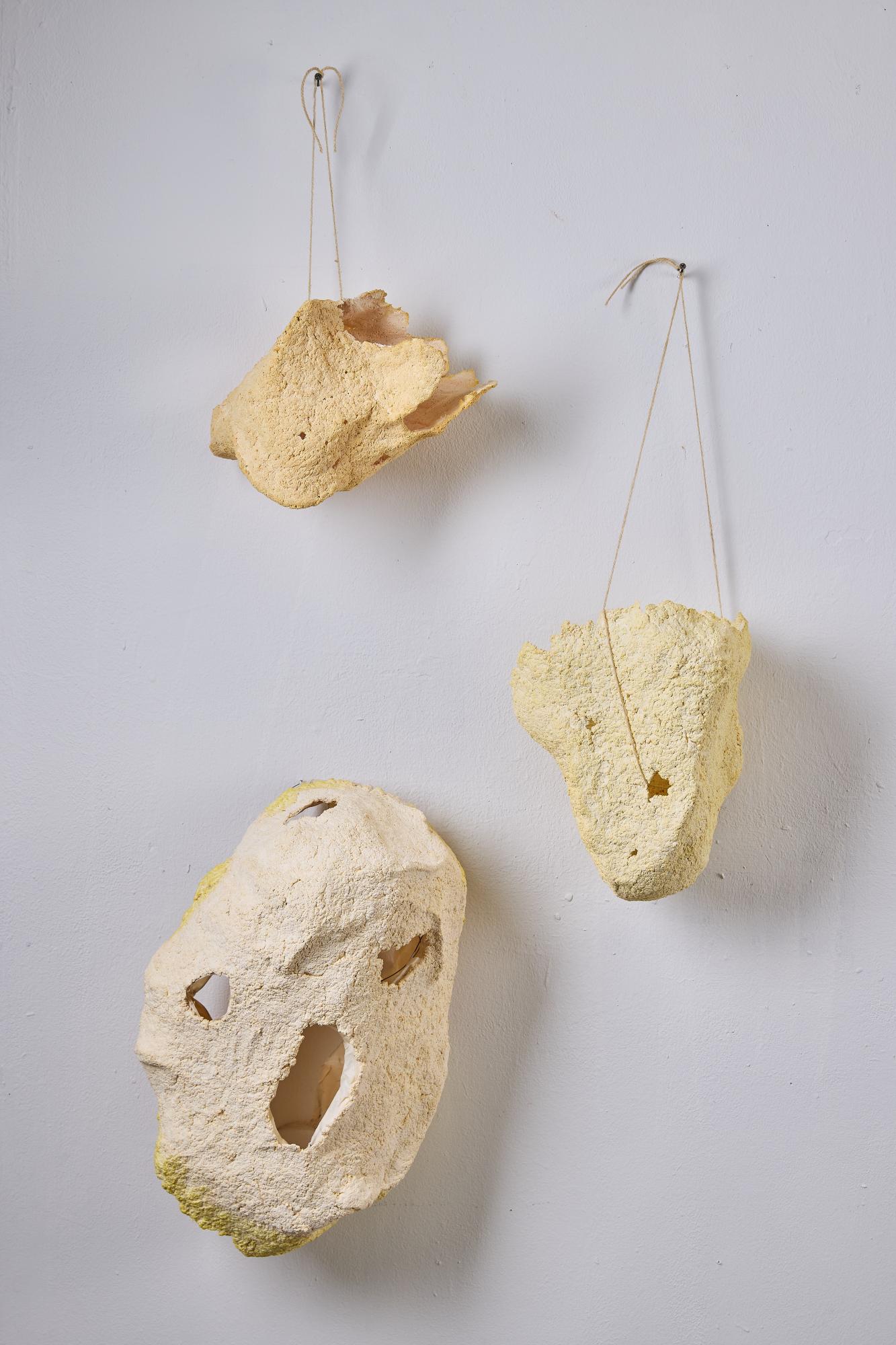
Containers from The Embodied Abecedarium: a mothering body in translation
Containers
Containers
from The Embodied Abecedarium: a mothering body in translation
Containers is a paper-sculpture installation that critically engages with and unsettles the historical construction of the female body as a 'container'. Within feminist discourse, the notion of women as vessels has long been resisted for its reduction of the body to a passive site of reproduction, care and utility. This work does not affirm that logic but instead renames and complicates it.
In this work, the mothering body is not a sealed receptacle, but a porous, unstable surface. It contains not only what is within, but also what exists across its skin, through absorption, leakage and exchange. Boundaries are not fixed; they are continuously negotiated. The body becomes a site of contact where the inside and the outside collapse into one another.
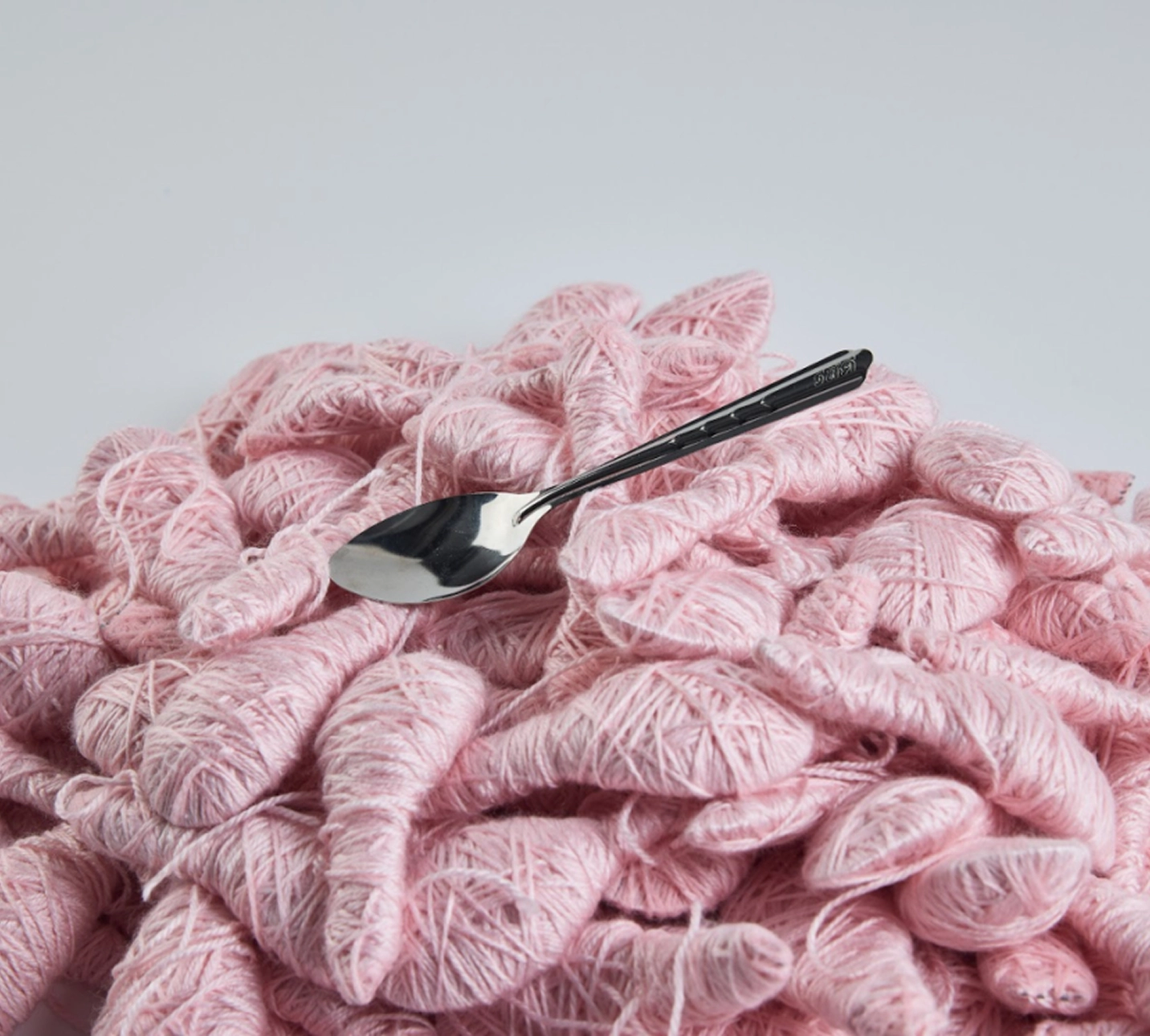
Constructed through gestures drawn from domestic activity, the paper forms emerge from an augmented experience of housework. These repetitive acts, often dismissed as mundane, are refigured as processes of inscription. The containers do not simply hold; they register and archive the quiet accumulations of care, labour and time. By rendering these forms fragile, permeable and contingent, Containers resists the idea of the body as a passive vessel. Instead, it proposes containment as an active, relational condition, one that exposes how the mothering body is shaped through ongoing exchanges with its environment.

The Day I Am Home with My Receipts
from The Embodied Abecedarium: a mothering body in translation
This series is an extension of the artist’s 2025 work Tender Ruptures, continuing her investigation into speech impairment and memory loss through embossing on handmade paper. Moving beyond the initial rupture, the work turns toward the body as a site where knowledge is formed, stored and enacted.
Drawing from the relationship between matrix and print, where the matrix (etymologically linked to womb and matter) generates the impression while remaining unseen, the work reflects on the mothering body as both origin and trace. Here, knowledge does not begin in language or text, but in embodied experiences of care, survival and relational existence.
By foregrounding pressure, touch and material processes, the series resists Western dualisms that privilege form over matter, word over flesh and masculine over feminine. Instead, the work asserts that knowledge is not solely transmitted through text or formal instruction, but is encountered, accumulated and enacted through the body. It is carried in repetition, in touch, in memory that is felt rather than spoken.


Research methodology and theoretical framework
Taking the form of an abecedarium (a Latin term for a container of the alphabet) and structured as a fragmented glossary, this work weaves together theoretical inquiry and personal narratives, forming a body of writing that articulates the conceptual foundations underpinning Emma's studio practice. Central to this practice-led research is an understanding of women’s bodies as materially and affectively constituted formations that bear layered inscriptions of lived experience across both inner and outer dimensions.
This body of work assembles text, materials, drawings, sound and video recordings as a reflection on how the rupturing body becomes a site of contemplation. Informed by a deeply personal encounter with bodily disruption, these embodied events prompted a reflection on the demand that the body perform, produce and conform to normative ideals. This developed into an in-depth examination of how emotion circulates through material processes, leaving traces of the unseen and the unspoken.
This work engages with maternal subjectivity, feminist theory and phenomenological frameworks, drawing on writings from Elizabeth Grosz and Julia Kristeva. Adopting what artist and writer Lauren Fournier calls autotheory in its approach, The Embodied Abecedarium: a mothering body in translation positions writing and making as interdependent modes of research, reflection and translation. It aims to assemble fragments of embodied experience, language and material process into a provisional system of knowledge, tracing how the mothering body narrates its own conditions of becoming.

Serene Lee

Wang Runxin

Nehal Agarwal

Sim Li Yan Emily
Ye Min Khant
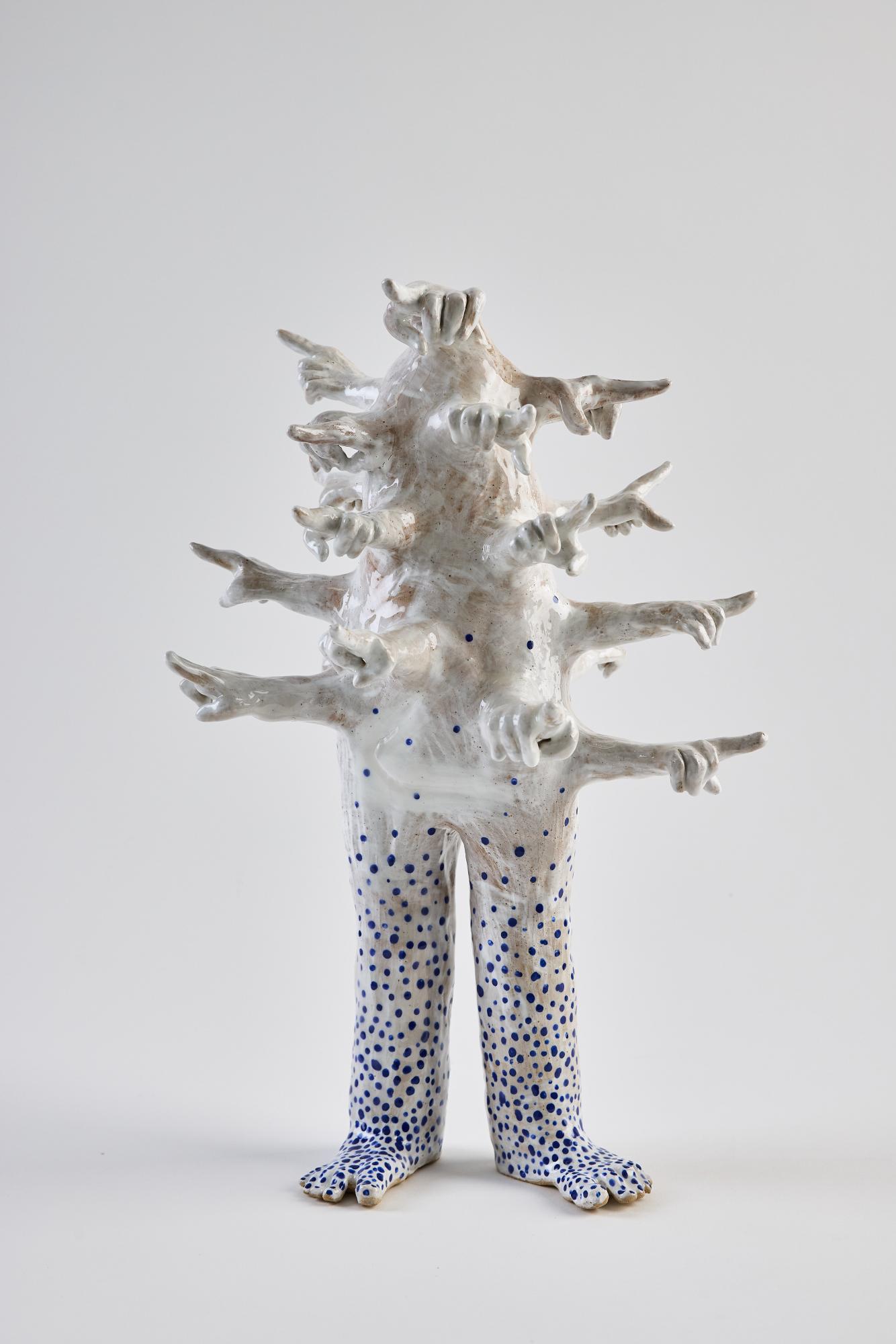
Neo Weiqi
