

About
Gunika Jain is an industrial designer with a research-driven and user-centred approach focused on healthcare, education, and social impact. She is passionate about creating accessible and meaningful solutions that improve everyday experiences.
Based in Singapore, she pursued her MA in Design (under the research theme Design for Social Change) at LASALLE College of the Arts. Her process is grounded in fieldwork and direct conversations with the people her designs serve, translating complex or sensitive subjects into experiences that feel clear, approachable, and dignified.
Saheli — A Portable PCOS Screening & Awareness System
Saheli is a portable PCOS screening and awareness system designed for rural India, delivered through the trusted, existing network of ASHA (community health) workers.
It combines a simple strip test with a guided ultrasound to give women a clear risk score—not a confusing pass/fail result—reflecting how doctors actually understand PCOS: as a spectrum, not a yes-or-no diagnosis.
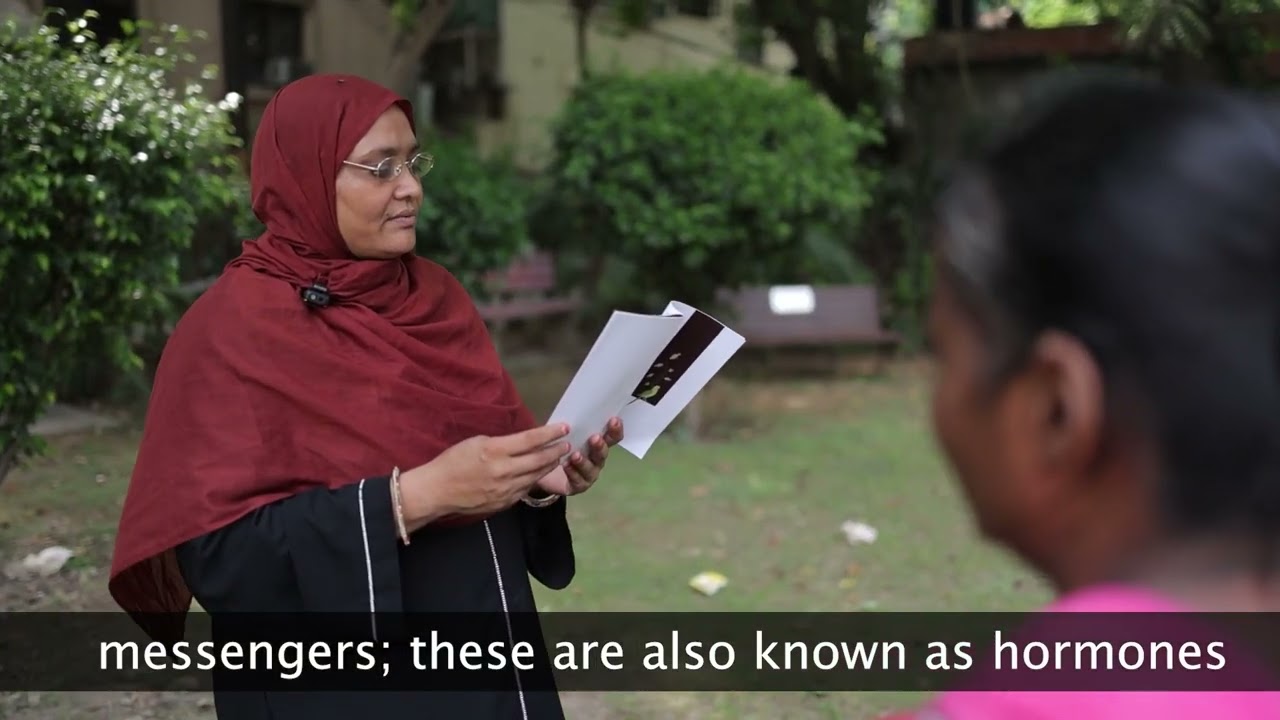
The project grew out of real conversations on the ground: with ASHA workers Mrs Pushpa and Renu Maurya about the stigma and access barriers women face; with a practicing gynaecologist who helped shape a more accurate, combined testing approach; and with a healthcare regulation expert who made sure the device respects Indian law around ultrasound use—leading Saheli to be designed as a risk-awareness tool that empowers women to seek care early, not a stand-alone diagnostic device.
The visual language draws on the pomegranate (Anaar) and the parrot (Tota)—symbols that carry meaning in Indian culture and gently echo the body and fertility themes at the heart of the project.
A companion storybook, "Anaar ki Kahani," walks patients through the process narratively, side-by-side with guidance for the ASHA worker supporting them. A three-role app extends the same care loop digitally—from screening, to diagnosis, to a nutrition plan built around familiar ingredients like methi, bajra, and chana dal—delivered back to the patient at home.


Research methodology and theoretical framework
Saheli was built on a six-stage human-centred design process, with an added step, "Situate," to ensure the device fits the real cultural and regulatory context of rural Indian healthcare, not just the technical one.
The project's direction was shaped by hands-on research: interviews with ASHA workers, a practicing gynaecologist, a healthcare regulation consultant, and a radiologist, each of whom influenced a key decision—from moving to a risk-spectrum result instead of a binary diagnosis, to designing the device so it can be operated without medical training.
We tested an early interactive prototype in review sessions to gather feedback before building the final version.
Dia Sharma
Jade Sia
Sam Li

Akshara Ramanathan
Rakshitha Raghunandan

Sabrina Japit