



About
Jerome Romulus is a Singaporean multidisciplinary artist and designer.
With his own studio and construction practice, his work spans presentation design, research, interior and architectural 3D animation walkthroughs, and photography. Jerome’s practice lies at the intersection of design, art, materiality, craft and human connection. As a material specialist for interior and architectural projects, he shapes spaces that honour both function and emotion, leaving a subtle signature on the environments we inhabit.
Continually informed by global concerns, photography and the capture of fleeting moments that later guide material choices, Jerome thrives as a technical conduit, translating artists’ visions into tangible form, and this collaborative mindset extends into his passion for the culinary arts, where ingredients, like materials, are transformed through thoughtful intervention.
His practice crafts sensory experiences that connect people to places, and in recent years has expanded into video and interactive new media installations, including the ferry-based Threshold series and the hand‑sensor works Trail of liquid rain and Trail of liquid air. He has also collaborated widely with artists on public art projects and culinary publications
His Master of Arts Fine Arts research focus is on the presence of fractals and sacred geometry in the everyday, guided by rasa and other theories of embodiment.
A LASALLE alumnus, he is currently an adjunct lecturer at the Puttnam School of Film & Animation and in the BA (Hons) Design for Social Futures programme, where he teaches digital imaging and photography and leads the community engagement module.
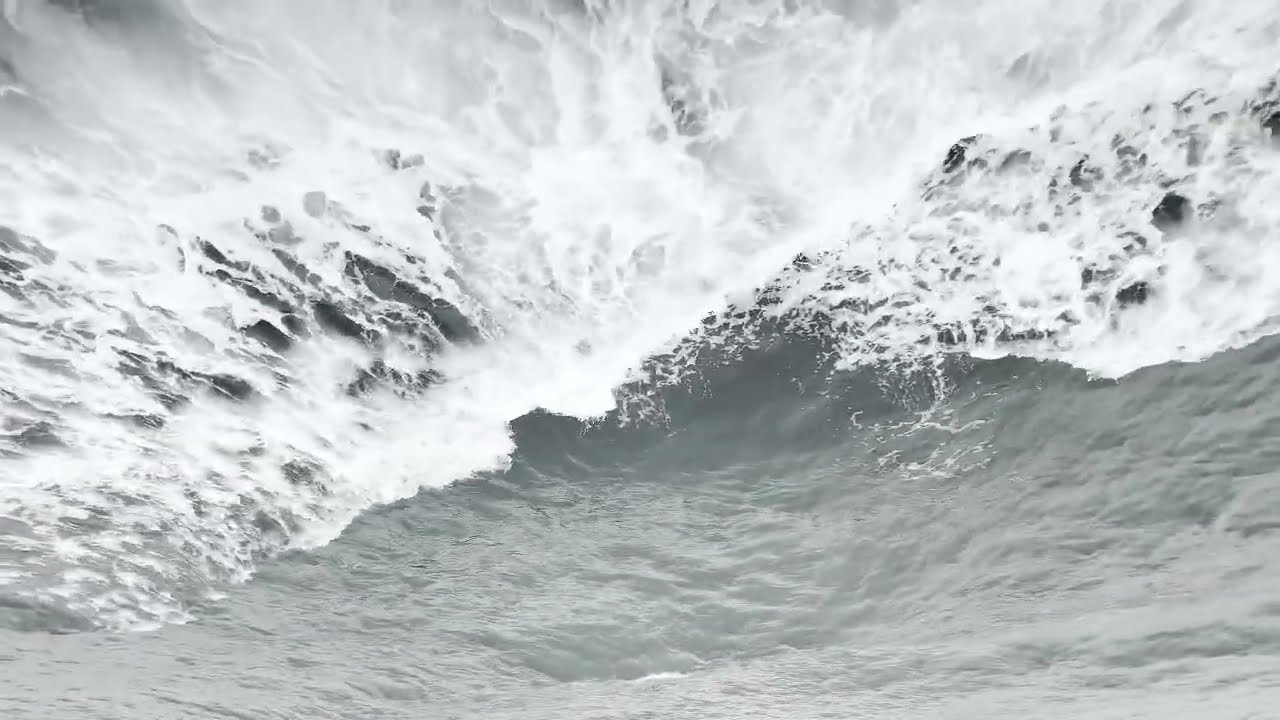
The trail of liquid air
Trail of liquid rain is an immersive interactive installation in which falling droplets become both medium and interface.
Hand sensors and real-time visuals allow visitors to “touch” the rain, tracing invisible paths through a field of liquid motion. As participants move, the installation captures their gestures and translates them into shifting light and image, making each encounter a unique choreography of bodies and drops.
By inviting people to hold out their hands, pause, and feel their way through the responsive rainfall, the work foregrounds the relationship between human presence, environmental phenomena, and technological mediation.
Trail of liquid air shifts the focus from falling rain to rising bubbles, creating an environment where air and water converge in a playful, luminous field.
Here, hand sensors detect proximity, direction, and speed of movement, causing bubbles to cluster, disperse or morph in real time on screen and in light. Visitors sculpt ephemeral constellations of bubbles through simple gestures, discovering how slight changes in motion produce intricate visual responses.
The work treats bubbles as tiny containers of space and light, tracing “liquid air” as it forms, drifts and dissolves. By connecting embodied interaction with the fragile life of bubbles, the installation reflects on breath, atmosphere, and the unseen currents that surround us, continuing Jerome’s interest in thresholds, now at the boundary between the sea, water, air and touch.

An immersive real-time interactive installation.


Research methodology and theoretical framework
Embodied Thresholds: Multisensory Materiality and the Transformation of Transitional Spaces - Through Water, Air, Sound, and Touch
Jerome investigates how multisensory, embodied engagement can reconfigure everyday transitional spaces—thresholds of water, air, sound and touch—into active sites of encounter rather than backgrounds for passive observation.
Beginning from an immanent, non-dualist view of nature as a single creative force, the study develops a practice centred on the wakes ferries leave in Singapore’s southern waters, extending into gesture-responsive, sound-driven, and live-performance-based installation work.
A review of relevant theoretical positions, spanning performative and phenomenological accounts of perception, haptic visuality, and non-Western aesthetic theory, establishes a framework for reading contemporary practice that treats water, data, and sound as active, threshold-generating materials rather than neutral subject matter.
This framework is tested against the exegesis’s own practical outputs, which explore gesture, live sound, and performance as complementary means of transforming a viewer into a participant. The exegesis argues that no single theoretical position fully accounts for the resulting body of work; embodied thresholds are instead constituted through several coexisting modes of encounter, held together as a single continuous research practice.
Introducing data-driven visualisation into this practice further extends the inquiry. By treating movement paths, wave patterns, sound levels and other spatial recordings as material for translation into lines, contours and evolving geometries, the project investigates both architectural and maritime thresholds as fields where hidden orders and relational patterns can be revealed.
This exegesis, therefore, positions my studio work as a multisensory link between body, material, and environment, using tools from design, construction and real-time media to rethink thresholds as charged zones where perception, memory and meaning are continuously negotiated rather than as spaces we simply pass through.

Yin Chua

Deanna Ng
Chong Yanhong

Xin Yue 昕悦

Sharon Hardjono
Agastya Sharma Laimayum
