


About
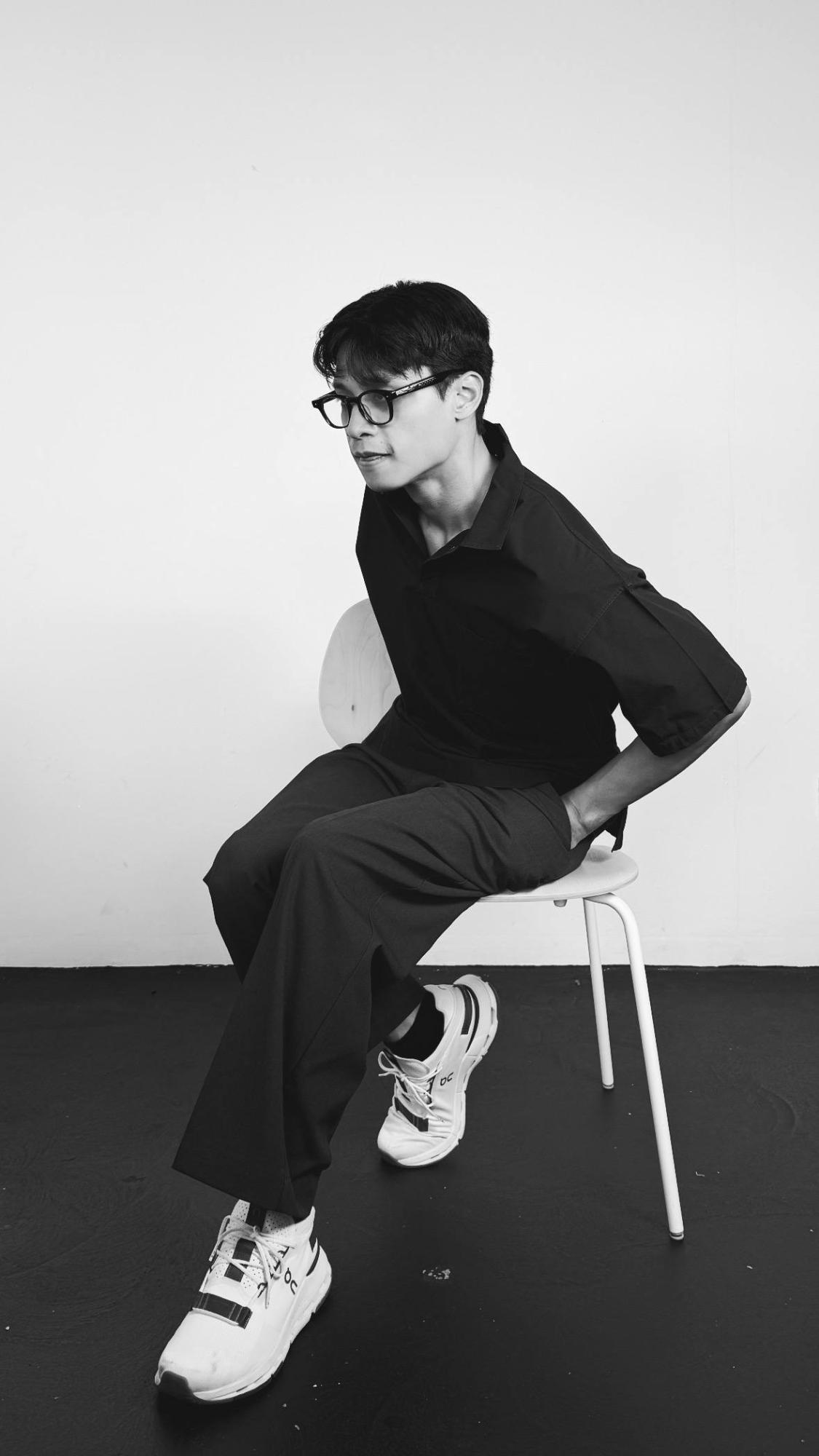
Spaces have identities, and difference is pursued with intention: to create an aura. The feeling of ambience, the feeling in memory and the feeling on the skin—'goosebumps'.
For John David, design is not only about function or appearance, but about creating spaces that leave a physical and emotional impression. The aim is to create unique environments that shock people through artistic, avant-garde designs, breaking away from conventional interventions and pre-conceived spatial experiences.
His approach is driven by the memorable and the unexpected. Spaces are treated as living characters with mood, presence and attitude, where materiality, movement, light and scale work together to impact the five senses. Each design decision is guided by the desire to make people pause, react and remember.
John David absorbs complexity quickly—he refines with detailed attention and pushes ideas beyond what is basic or familiar. He is drawn to carefully considered works that are new, bold and distinct.
With a design practice which balances sensitivity with disruption, precision with instinct, and atmosphere with identity in every spatial encounter created, John David's design process leads to outcomes that are memorable and unexpected.
2126 Flight Nowhere: The future of feeling beyond human scale
In a future shaped by artificial intelligence, what is there left of the human spirit?
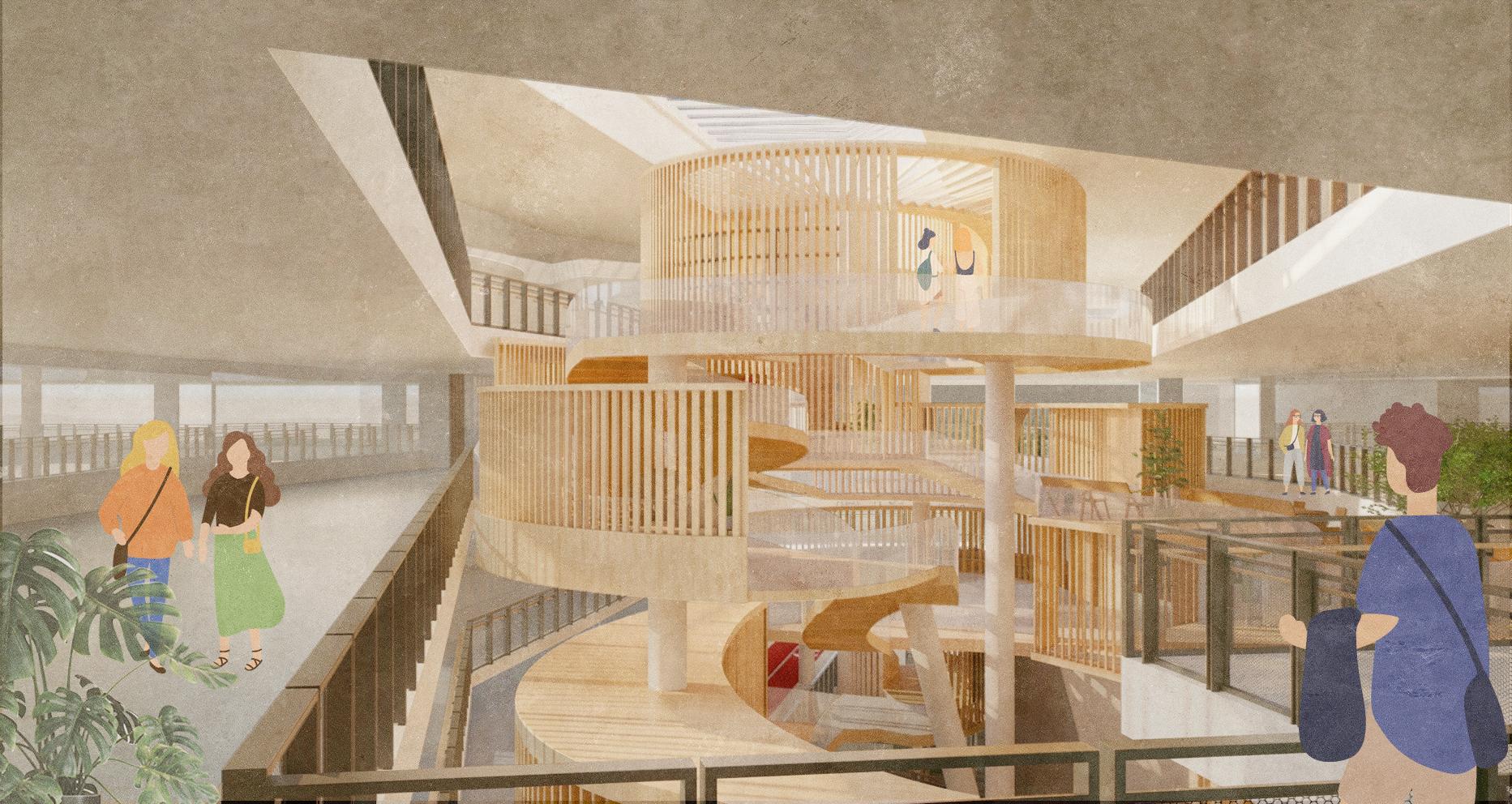
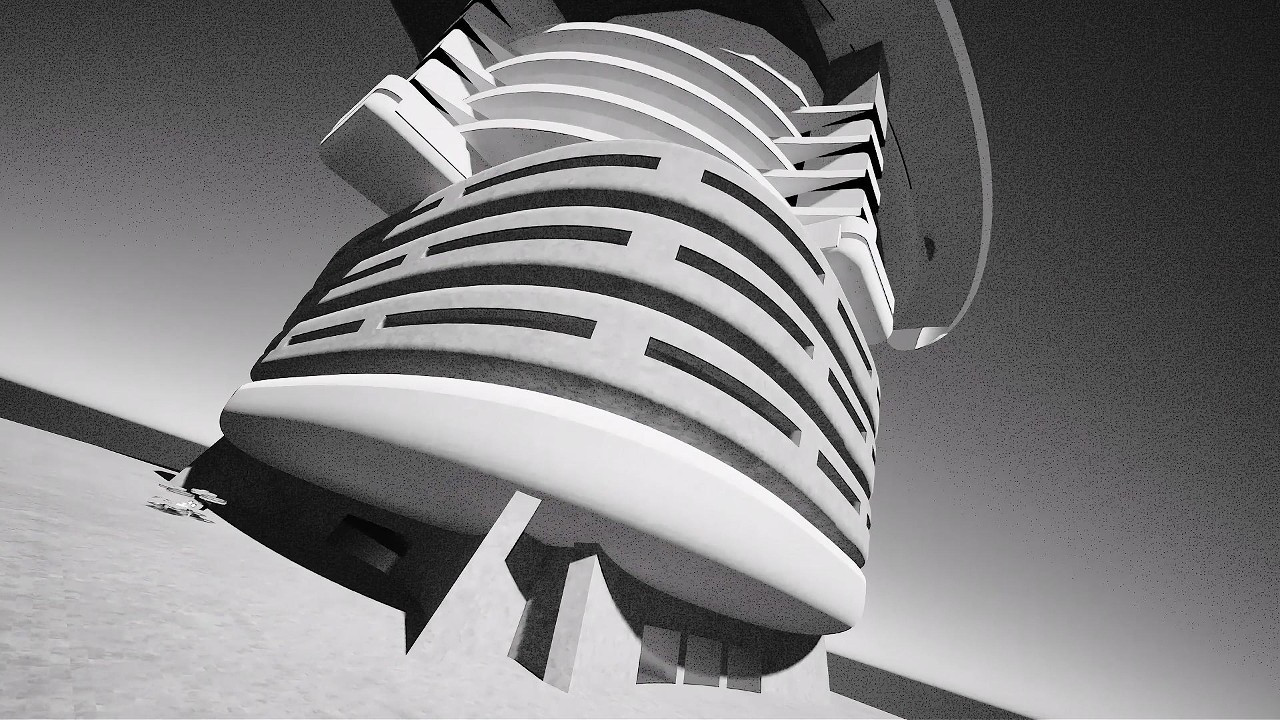
Flight Nowhere is a speculative project which reimagines the airport as a vertical city in 2126, where architecture, interior design and visual merchandising merge into a spatial system shaped by bold forms, oversized scale and emotionally charged atmospheres.
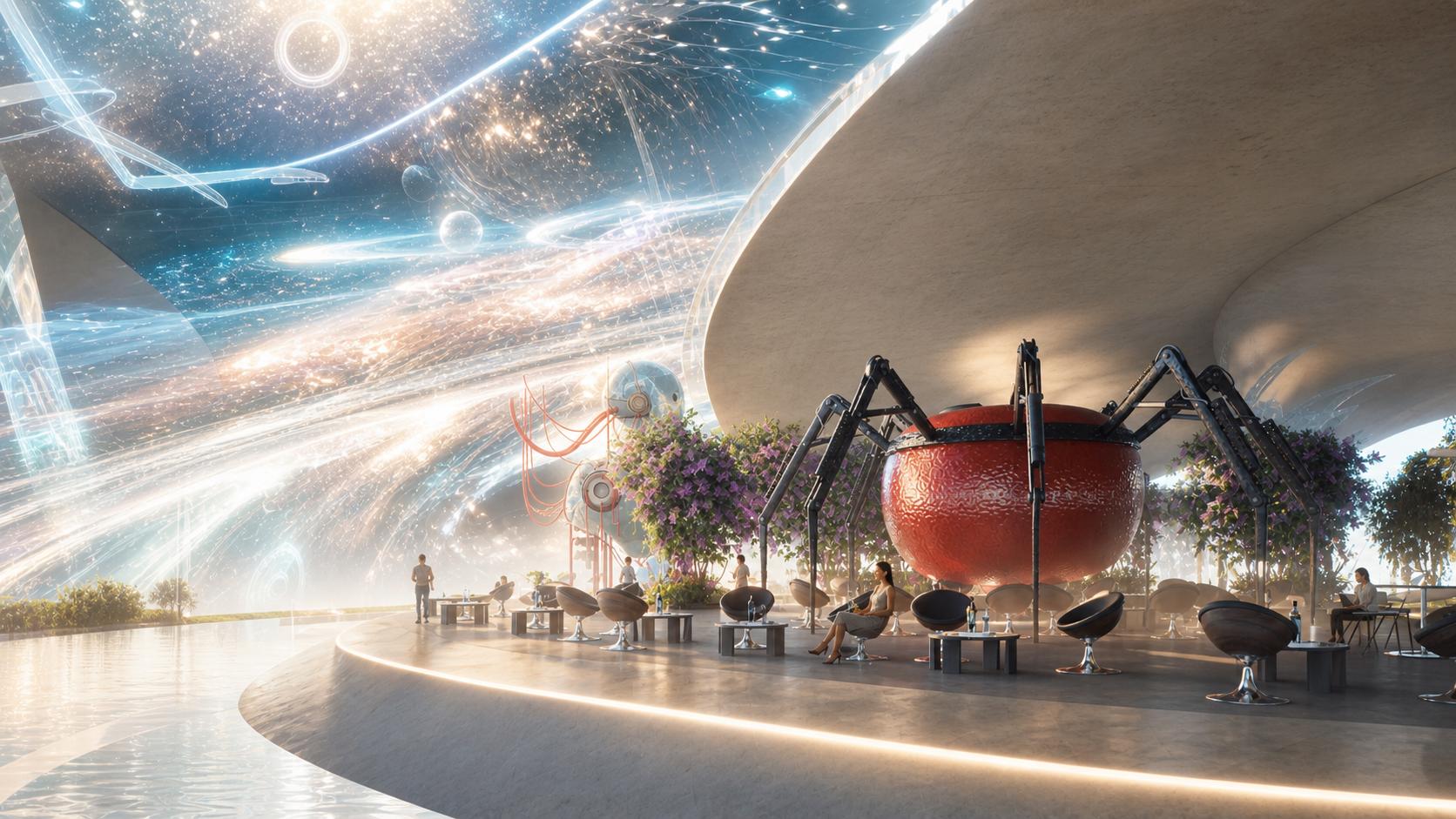
Five distinct factions—Parallax, Conviviality, Paradoxical, Avant-garde and Parasitic—form a collection of experiential environments for gathering, retail, hospitality, experimentation and inhabitation, constructing their own identity through space, movement and visual language.
The project questions how human feelings are reshaped when technology, branding and systems dominate our environment. Flight Nowhere is both a future airport-city and a critique of how spectacle, scale and design influence what people sense, remember and emotionally carry from space.


“I have always felt that as cities become more artificial and convenience-driven through AI and technological advancement, people begin to lose touch with the human spirit and with what feels real. The greenery of nature remains essential in sustaining our true human spirit.”
Dystopian truth:
Yet architecture has grown beyond the human body. Through exaggerated scale and abnormal form, the city destabilises control and makes humans feel small, temporary, and absorbed within a larger infrastructural, ecological, and mechanistic system. Flight Nowhere ultimately represents what happens to human feelings when space is no longer designed around the body, but around the ambiences that exceed it.

Paradoxical _Bathhouse
Intimacy without end. Time held still.
Avant-garde_Nexus
Dining as an experiment. Future Planning.

Conviviality_Emporium
Retail as ritual. Gathering as behaviour.

Parallax_Galerie
Brand Universe display. Curated perspectives.

Parasitic_Residential
Attachment as dwelling. Feeling on edge.
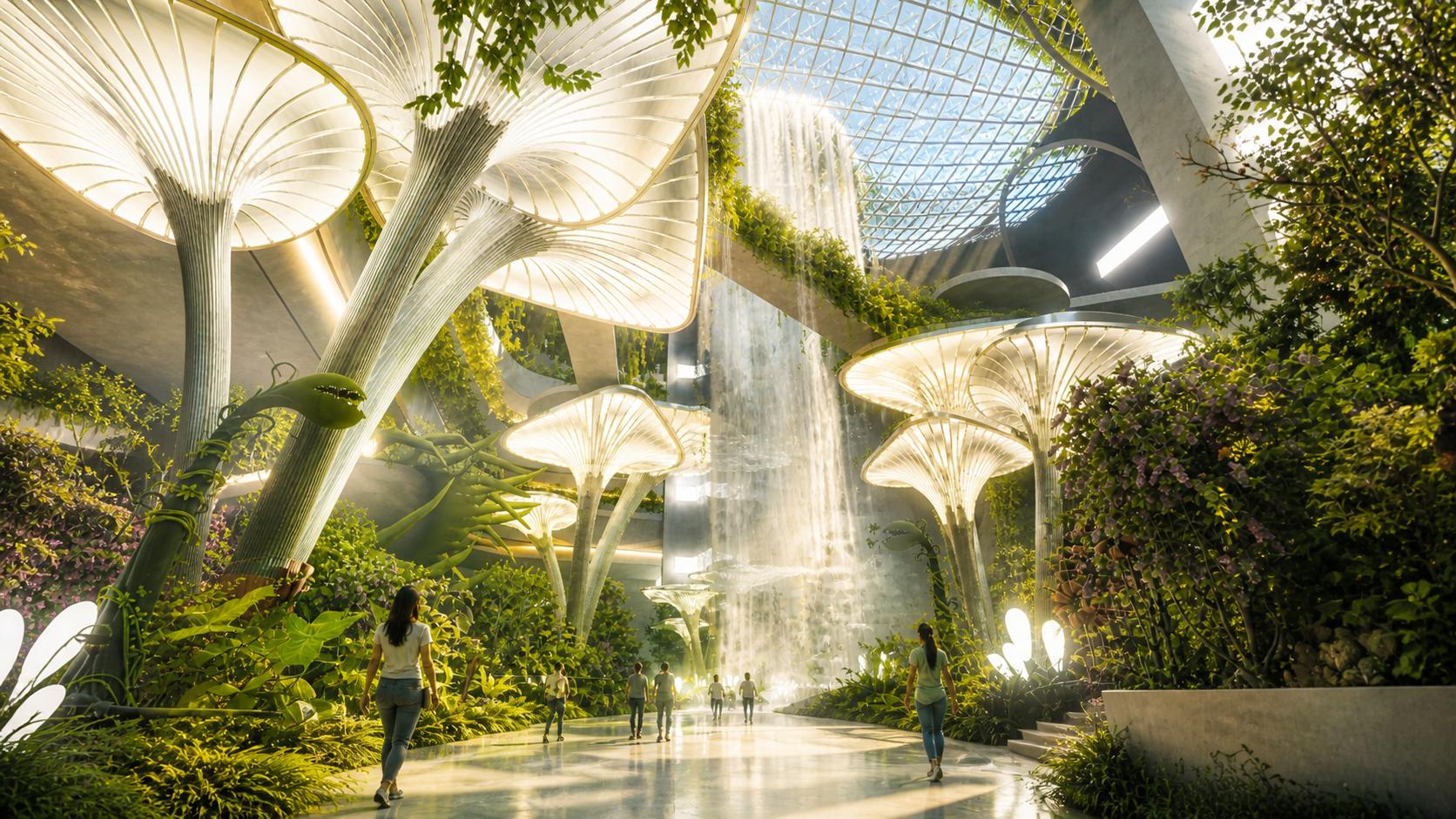
"You won’t find it by following the path, but by following what feels real. And if you’ve forgotten what that feels like, listen closely; the city still leaves traces. Feel them, and the garden will reveal itself."
Kim Hyerim
Mohamed Farhan Bin Mohamed Salahuddin

Nantanie

May Thu Soe (Isabel)
Lee Woosuk

Ren Yiwen