


About
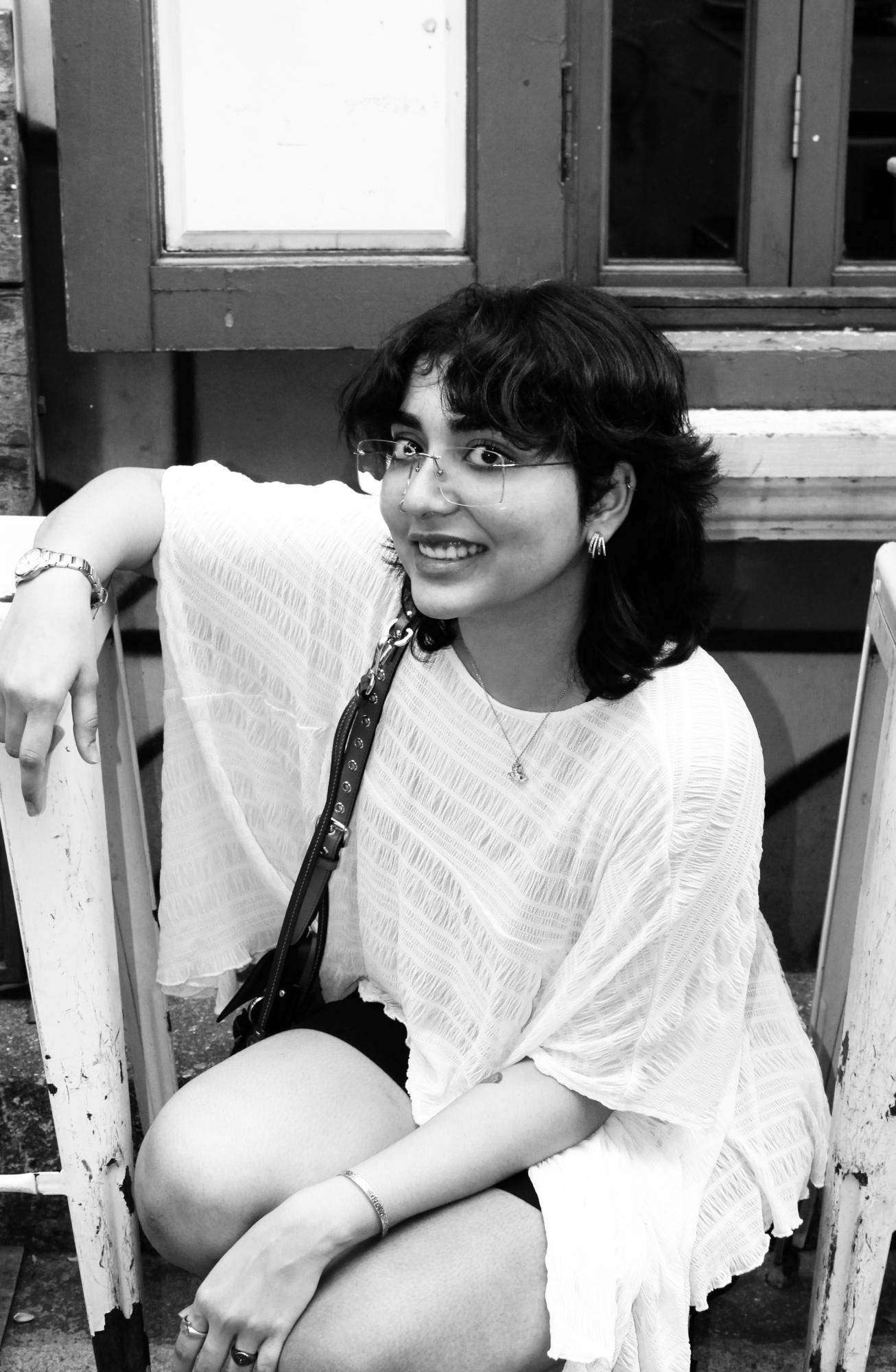
Khushi is a multidisciplinary artist whose work dissects the performance of femininity across religious and cultural spaces. Moving between textiles and narrative, she constructs worlds where the body is unstable- fragmented, adorned, excessive and unruly.
Khushi's practice is rooted in labor and repetition, particularly through handwork techniques such as crochet, which are stereotypically associated with femininity. What is traditionally associated with care and devotion becomes something more volatile: obsessive, ritualistic and violent. These processes echo the rhythms of domestic life while subverting their expectations.
Drawing from mythology, inherited belief systems and personal memory, Khushi’s work inhabits a space somewhere between intimacy and horror. Desire and disgust collapse into one another and beauty becomes monstrosity.
At the core of her practice is the woman who refuses containment, who chooses creation over care, and in doing so, unsettles the moral frameworks that seek to define her.
(autopsy) mother – my hair
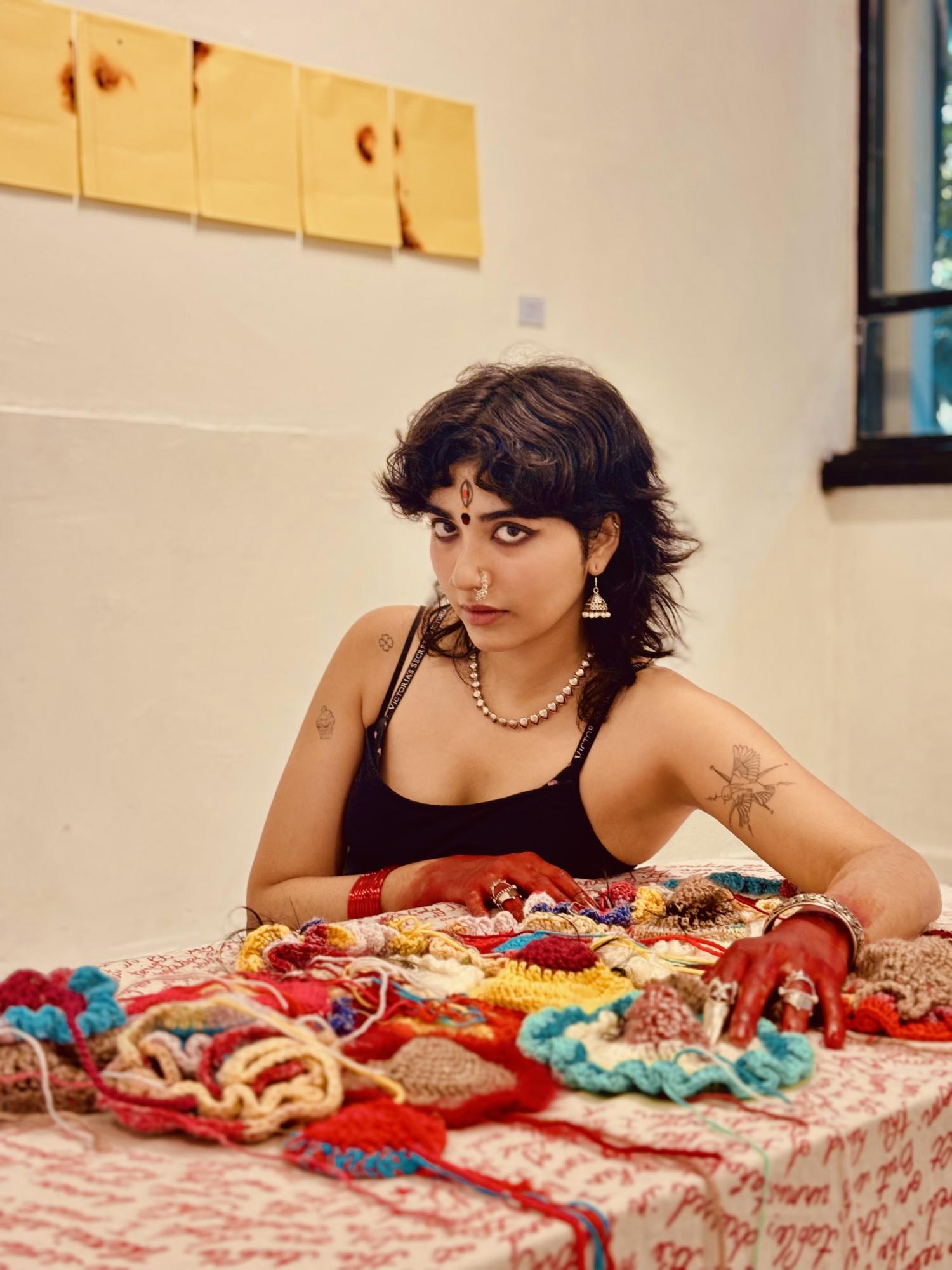
Photographed as Maa Kali feasting at the table.
(autopsy) MOTHER
A tablecloth, decorated with crochet breasts and vulvas, is interwoven with strands of hair—Khushi's mother's and some of Khushi's best friends'—tied into the yarn.
The story of the girl who had to abandon her family and violently self-cannibalises to reinvent herself is written in text around these organs. The work is a metaphorical defilement of the dining table, a monument of the patriarchy where the father sits at the head while the mother serves food to the family.
The bindis on the paper have turned into bruises, representing the patriarchal standards of beauty that force women into certain roles and presentations. Embossed is a story of a girl whose hair is so long and tangled that it catches onto anything she passes by, yet, she is not allowed to cut her hair.

(autopsy) mother – my flesh


Research methodology and theoretical framework
This work is heavily influenced by aesthetics and concepts drawn from Jeanette Winterson's The Passion and Written on the Body, Lauren Elkin's Art Monsters and Deborah Levy's Things I Don't Want to Know. It also borrows from the legend of Kali from Hindu mythology.
The starting point for research was based on the lived experiences of Khushi's grandparents and mother. Personal interviews helped to make this research highly relevant to the past and present of Indian women's experiences.
Using Julia Kristeva's theory on abjection, the project culminates to the use of the monstrous and unruly feminine—embodied through Kali—and the hidden feminine body as the medium of subversion against expectations faced by women in India.

Shakira Zulaikha Binte Zaibaktian
Neo Weiqi

Yong Zi Hui Ployphailin

Ow Yeong Li Wen

Serene Lee

Ye Min Khant