




About
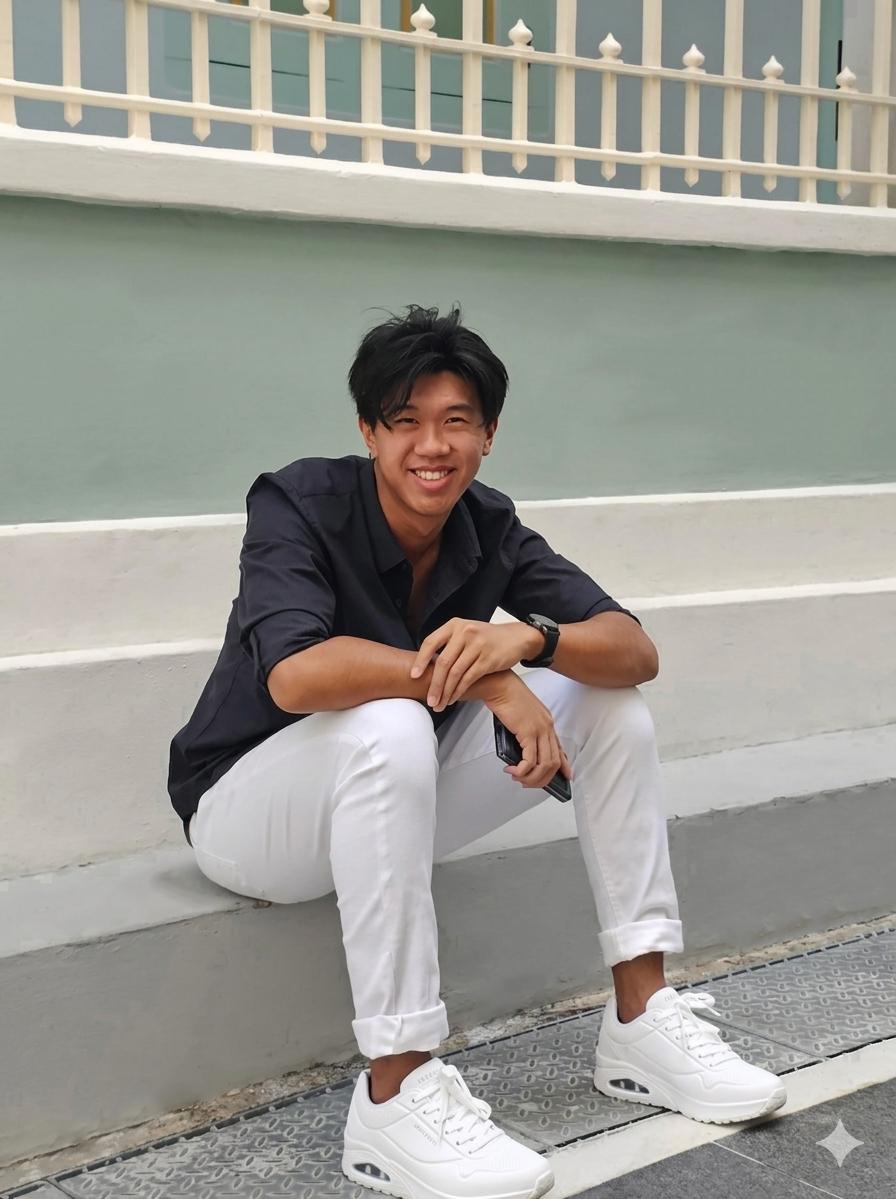
Ryan’s work is shaped by a strong interest in making, materials and the way people engage with objects.
Born and raised in Madagascar with Chinese-Malagasy roots, his background informs a design approach grounded in adaptability, resourcefulness and sensitivity to context.
In 2020, he founded LKY Arrangement, a carpentry business through which he developed practical experience in furniture-making, construction and small-scale production. Working closely with clients and collaborators, he gained an understanding of how design decisions translate into real use, constraints and expectations. This hands-on foundation continues to influence his work, with a focus on precision, detail and thoughtful execution.
Ryan's projects explore how objects can respond to evolving ways of living while remaining connected to cultural memory. He is particularly interested in traditions and ways of living that are gradually disappearing, and how design can retain or reinterpret them in a contemporary context. Working across interactive products and furniture, he aims to create pieces that are purposeful, well-resolved and grounded in use rather than abstraction.
Ryan also explores interaction through movement and behaviour, designing products that respond in subtle and intuitive ways. His approach reflects a balance between technical understanding and sensitivity to user experience, with attention given not only to form, but to how objects are perceived, used and lived with over time.
Redefining Fish Preservation Methods in Madagascar’s Coastal Communities
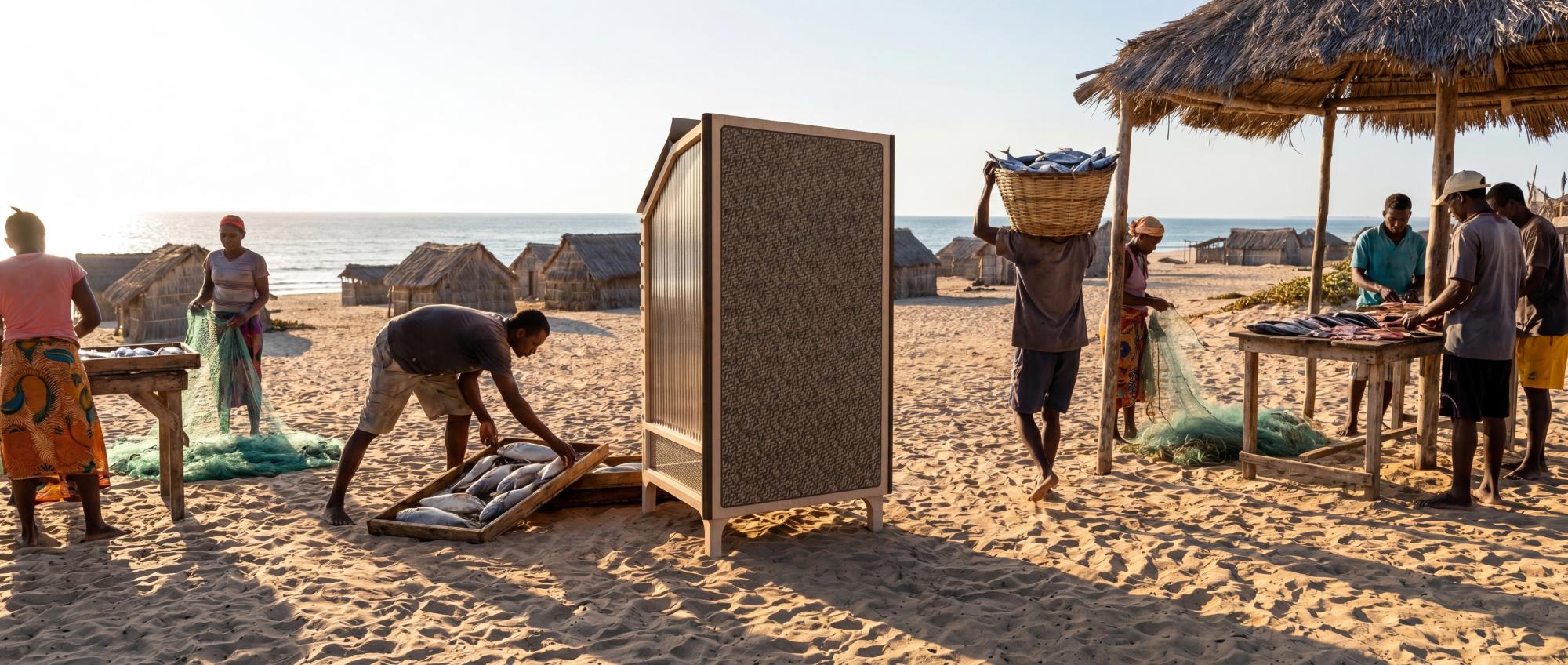
Solvane — Passive Fish Drying System for Fishing Coastal Communities
In many coastal communities, fish preservation relies on simple open-air drying methods that depend entirely on sunlight and ambient airflow.
Solvane is a passive fish drying system developed to address the limitations of these practices. Fish are typically dried in exposed conditions, where drying speed varies throughout the day and the lack of protection leaves them vulnerable to dust, insects, and sudden weather changes. Increasing climate variability further affects drying reliability, contributing to post-harvest losses.
This product introduces a more controlled drying environment while remaining simple and accessible. Solar heat is captured within the structure, while airflow is guided through the chamber to support continuous moisture removal.
Solvane does not eliminate environmental dependency, but reduces its impact by improving consistency, protection and control within the drying process. By stabilising drying conditions, the system aims to reduce post-harvest loss while remaining grounded in real use conditions. The project reflects a design approach where simplicity, adaptability and context are essential.

Tray-based drying — fish are laid flat rather than hung, ensuring stable and consistent drying

Material mapping — identifying key materials within the system components
The system operates through a set of passive physical principles that drive airflow and heat transfer.
1. Stack effect (natural airflow)
Air enters through screened inlets at the base, allowing airflow while preventing contamination. As the air warms, it becomes less dense and rises through the chamber, creating a continuous upward flow that carries moisture out of the system.
2. Constricted outlet (airflow acceleration)
A reduced opening at the top increases the velocity of the exiting air, helping it leave the chamber more efficiently and sustaining continuous airflow.
3. Heat conduction (twin-wall polycarbonate)
Heat is transferred through the twin-wall polycarbonate panels, allowing solar energy to enter and be distributed within the chamber while reducing heat loss.
4. Thermal mass (granite gravel)
Granite gravel stores heat and releases it gradually over time, acting as a thermal buffer that helps stabilise internal temperature conditions.

Constricted outlet—improving airflow through increased air velocity
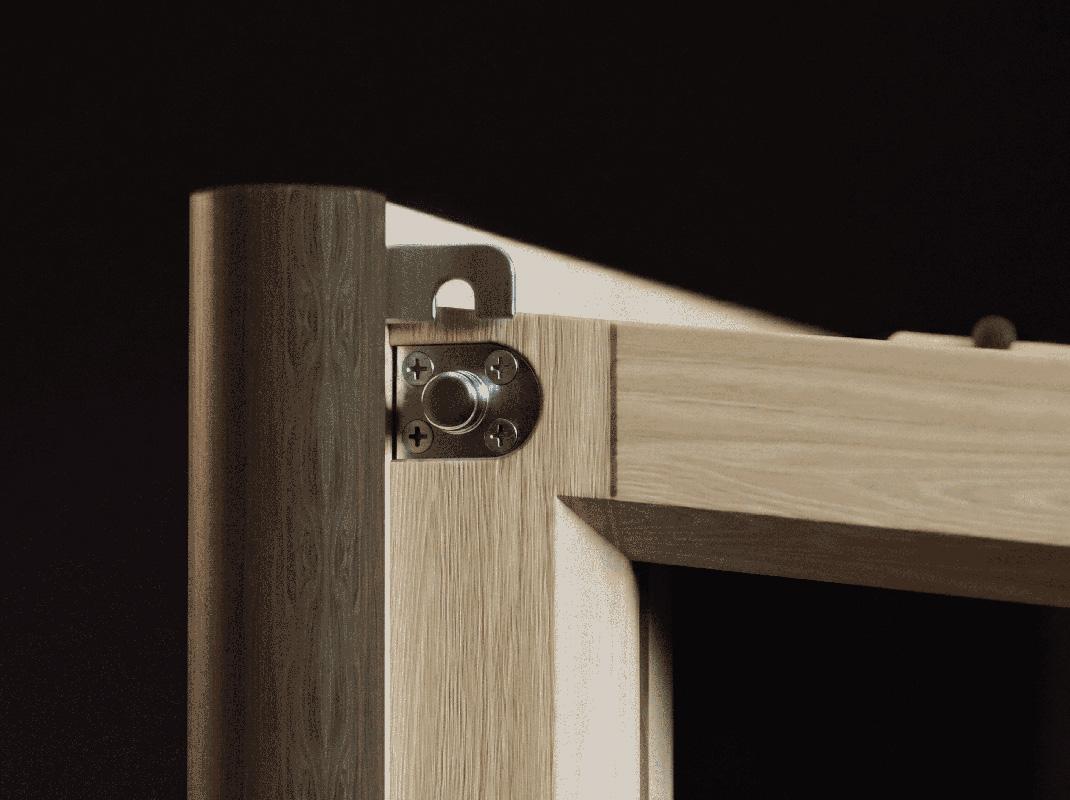
Removable panel lock—reducing mechanical complexity and wear over time

Granite gravel—storing and releasing heat to stabilise temperature
Kong Ying
Kwek Fu Qi

Calvino Kho
Julienne Jo Boquiren
Muhammad Hakeem Bin Hussain
Natalie Wang
