


About
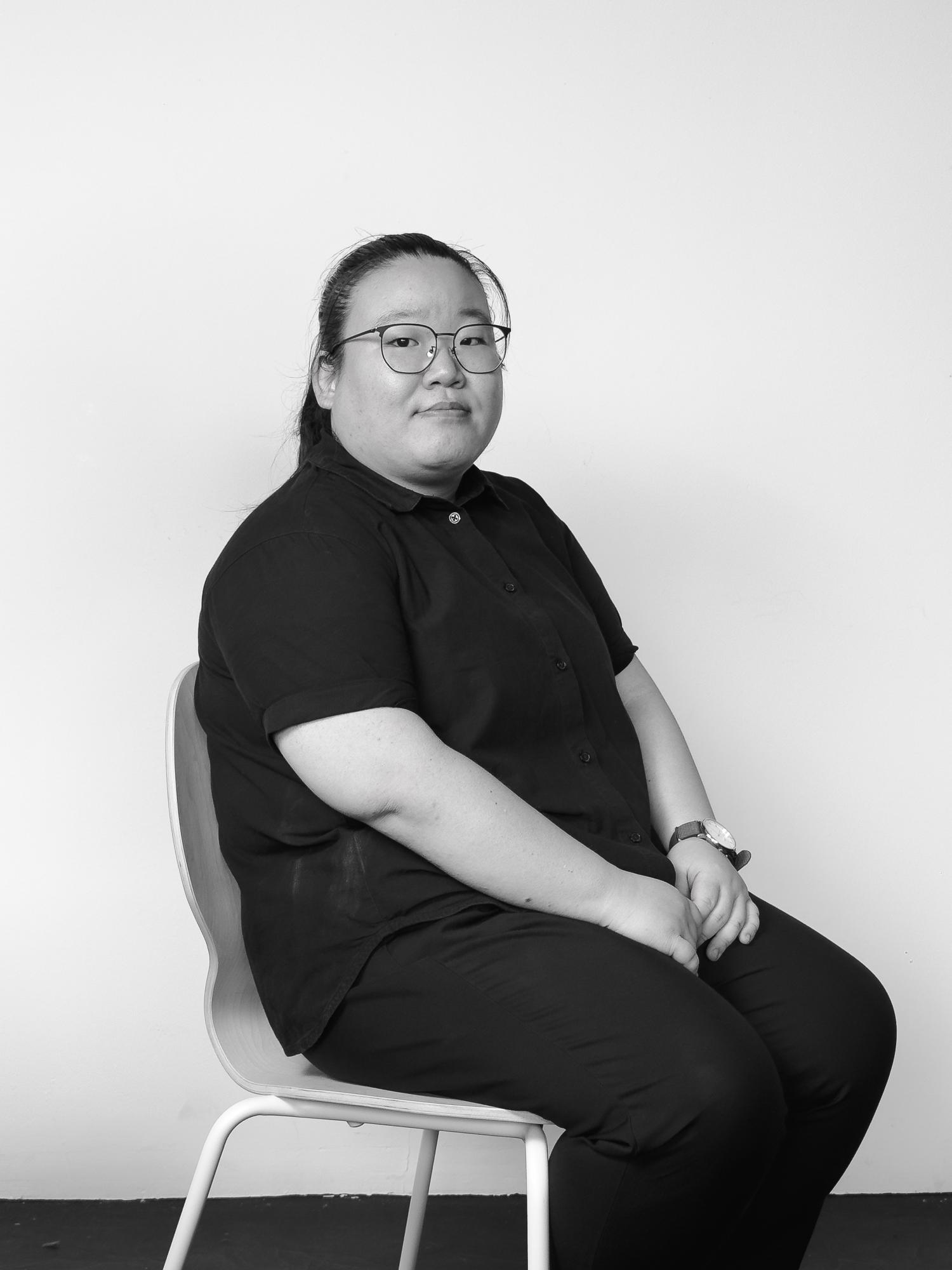
Nantanie approaches design through an exploration of the emotional and atmospheric qualities of space, transforming conceptual ideas into introspective, sensory-driven environments.
Drawn to the interplay of light, material, and perception, she investigates how spatial conditions evoke emotion and shape human experience, often focusing on moments of transition, stillness and subtle transformation.
Her practice blends poetic narratives with spatial experimentation, creating environments that are both reflective and immersive. Through a sensitive engagement with materiality, detail and spatial sequencing, she crafts experiences that extend beyond the visual, encouraging a deeper, more intimate connection between the user and their surroundings.
Nantanie approaches each project with clarity and intention, developing ideas that are conceptually grounded yet emotionally resonant, with a strong emphasis on atmosphere, perception and experience.
THERMA:NULL

Elite's bath
Therma:Null is a dystopian bathhouse set within the City of the Disgruntled, where those excluded from Singapore’s narrative of progress are displaced to Semakau Island.
Driven by the persona of Azeem Rahim, a failed civil engineer turned 'Undoer', the project critiques systemic inequality, meritocracy and the hidden infrastructures that sustain the city.
Using collage as a form-finding methodology, the design translates hollow cores, fragmentation and displacement into a brutalist spatial system.
Organised around a central thermal void, the bathhouse enforces a stark class divide, where elites and workers occupy separate levels yet rely on the same contaminated source. In Therma:Null, cleansing becomes an illusion—revealing how architecture can embody control, neglect and quiet resistance.

Elite's bath entrance
A secluded entrance where hierarchy is enforced through spatial control.
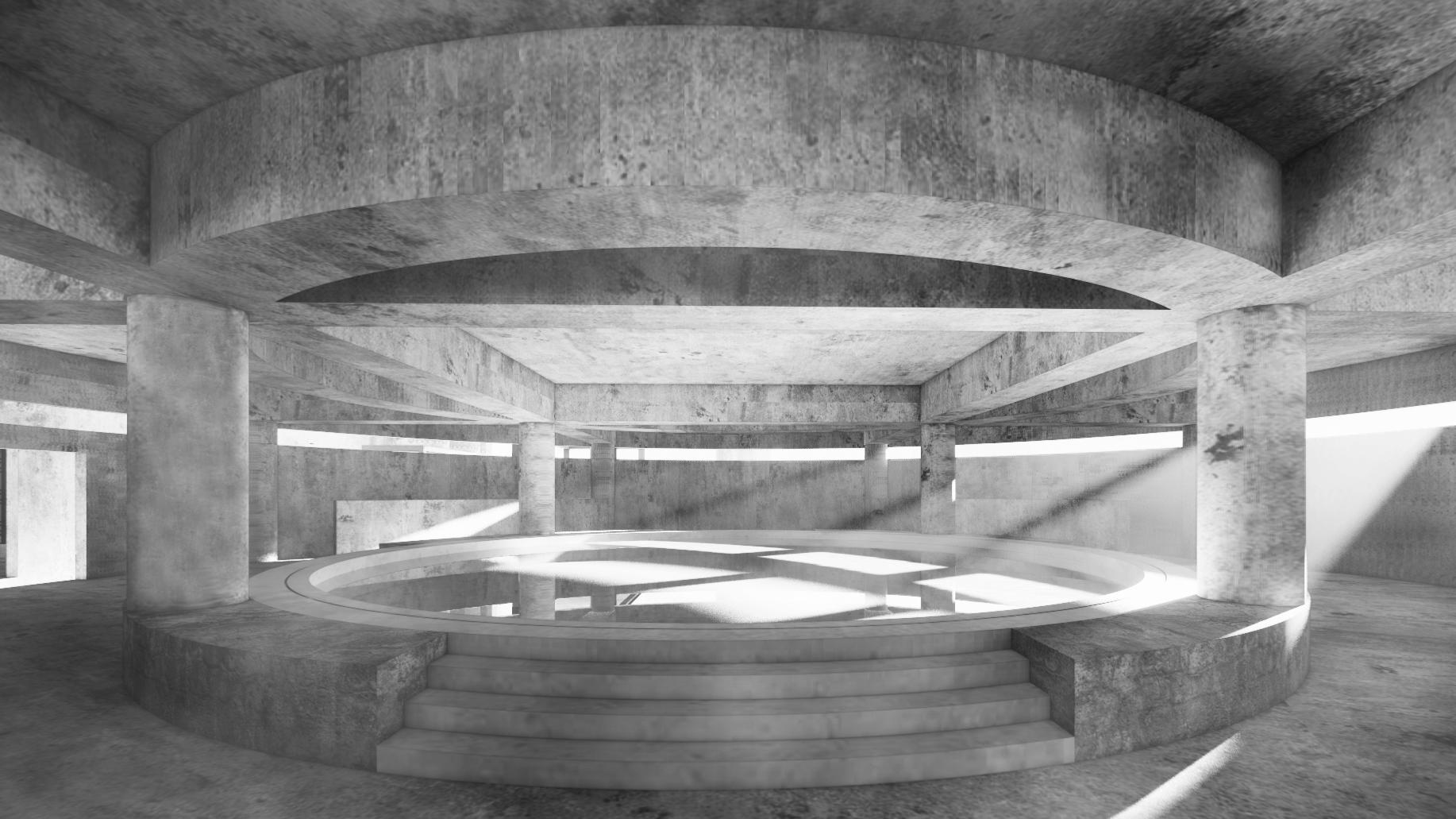
Communal bath
A collective bathing space where openness is emphasised, yet the water reveals a system that is shared, unfiltered and continuously recirculated.
The bathhouse is entered through two contrasting thresholds that embody its underlying system of control and class division.
The entrance for the elites is compressed and inward-looking, defined by a narrow ascent and controlled light from above. It suggests exclusivity and privilege, carefully framing the experience of arrival as refined and intentional.
In contrast, the communal entrance for the remaining residents of the city appears more open and accessible, yet its exposed volume and harsh overhead light reveal a different condition—one of vulnerability and surveillance.
Together, these entrances reflect Azeem’s logic: a system where spatial experience reinforces hierarchy, and where the promise of openness and purity is ultimately a constructed illusion.

Elite's shower
A private system where comfort masks the same underlying contamination.
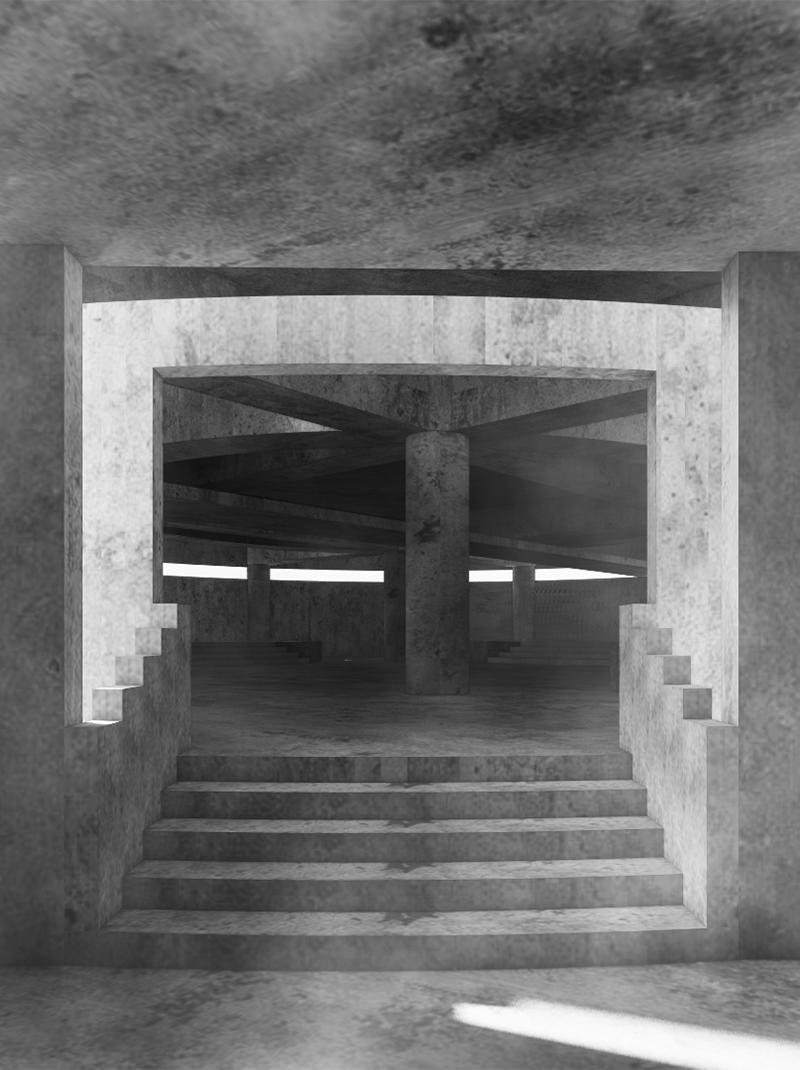
Bath entrance
A transitional space guiding movement into the bath area.

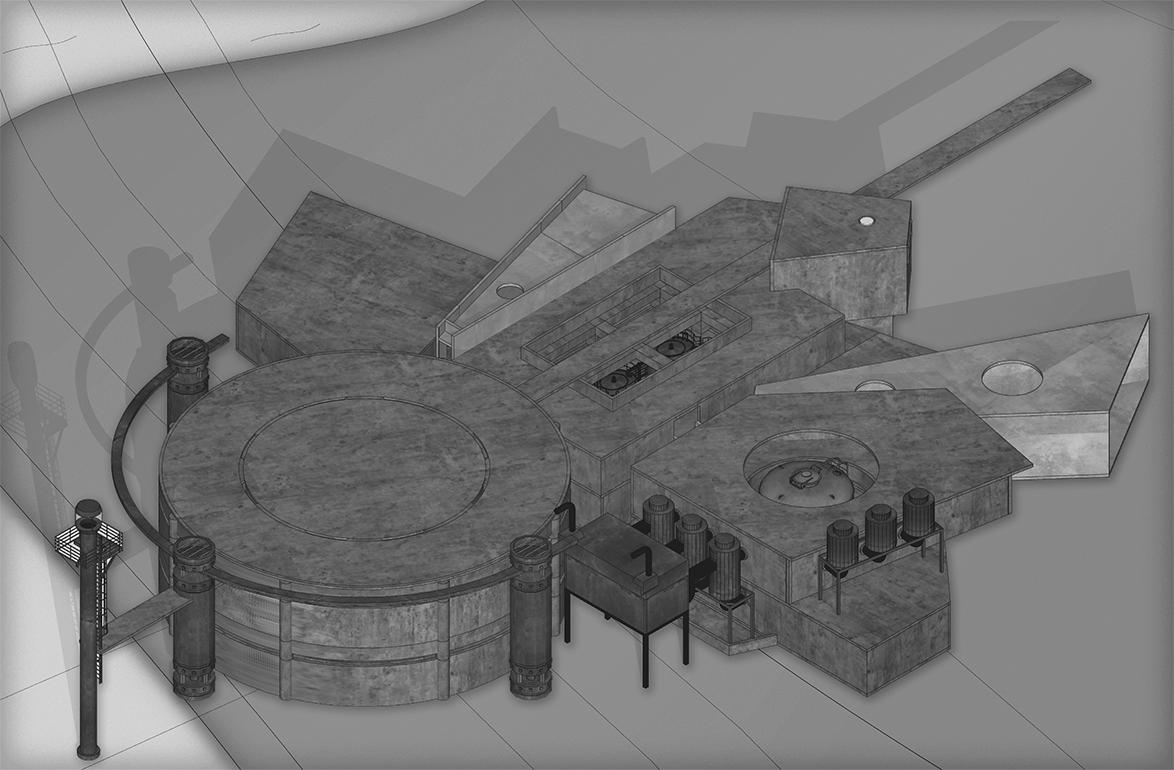
Exploded isometric diagram
A breakdown of spatial layers, exposing the bathhouse’s hidden systems of control.

The filtration and processing core
Where contaminated water is processed, recirculated, and redistributed—sustaining the illusion of purity within the bathhouse.

Thermal chamber
A restricted chamber where energy is extracted to power the system.
Lee Si Qi
Charisse Faith Wong
Syakir Izhharuddin Bin Sahrudin
Cao Yaqi
Yogyata Gadia

Low Jing Fang (Cherylene)