



Ren Yiwen
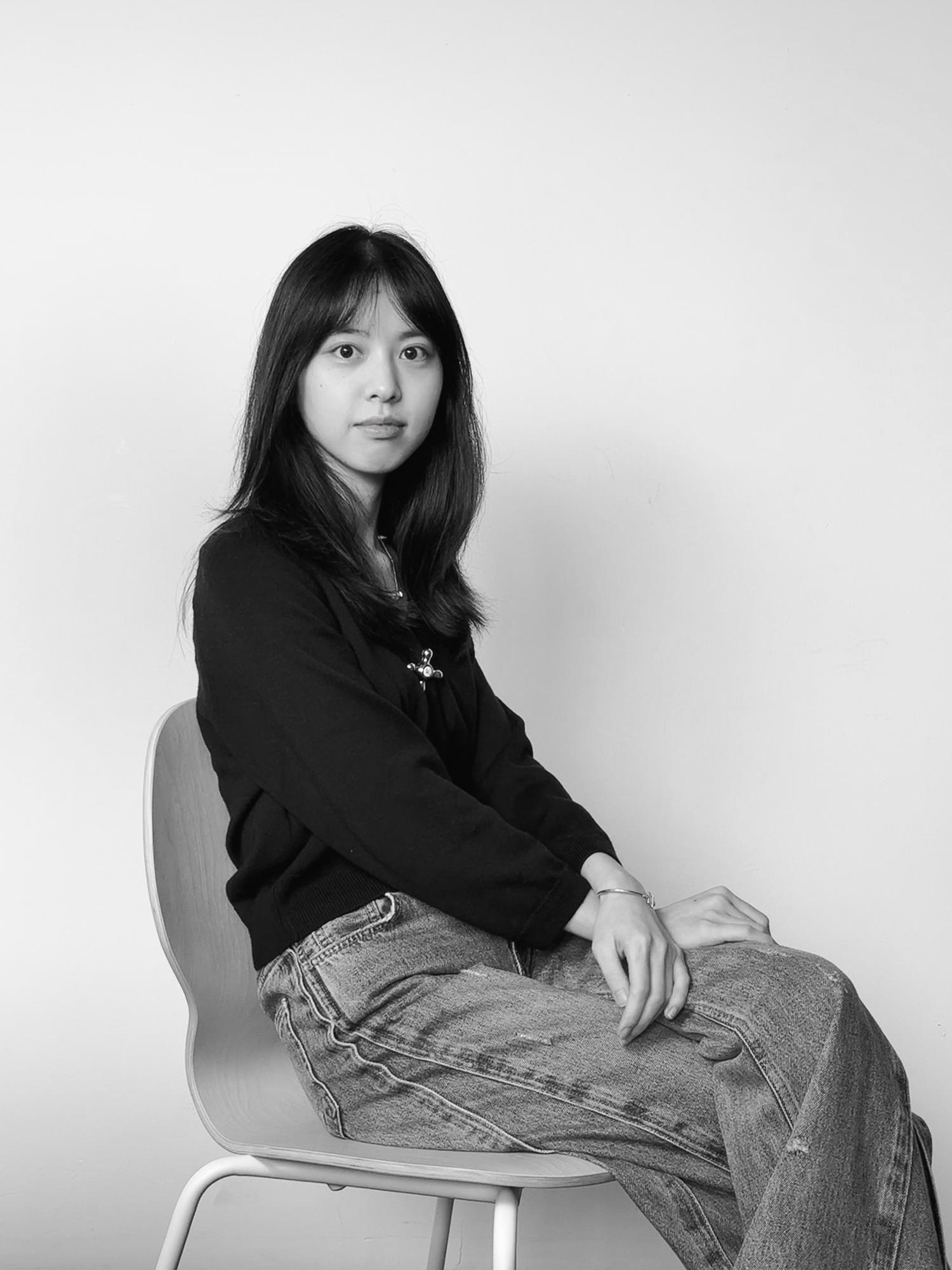


About
Yiwen approaches interior design as a gentle and continuous exploration of space, emotion and everyday life.
Rather than treating design as a purely functional or aesthetic practice, she views it as a narrative medium that connects people with their environments in subtle and meaningful ways. Yiwen draws inspiration from ordinary moments, sensory impressions and the quiet rhythms of daily living, transforming these fragments into spatial stories that shape atmosphere, behaviour and emotional perception.
Yiwen's design practice spans commercial, conceptual and experiential projects, allowing her to engage with different scales, contexts and user experiences. Across these varied typologies, she is particularly interested in how spatial composition can guide movement, influence interaction and evoke emotional responses without being explicit or forceful. She explores the balance between openness and enclosure, visibility and privacy, stimulation and calmness, aiming to create environments that feel intuitive and human-centred.
Yiwen's work emphasises the importance of emotional resonance in space. She believes that the careful consideration of materiality, light, proportion, and spatial sequencing can not only support functional needs but also provide psychological comfort and a sense of belonging.
Funestal: A low-pressure social space
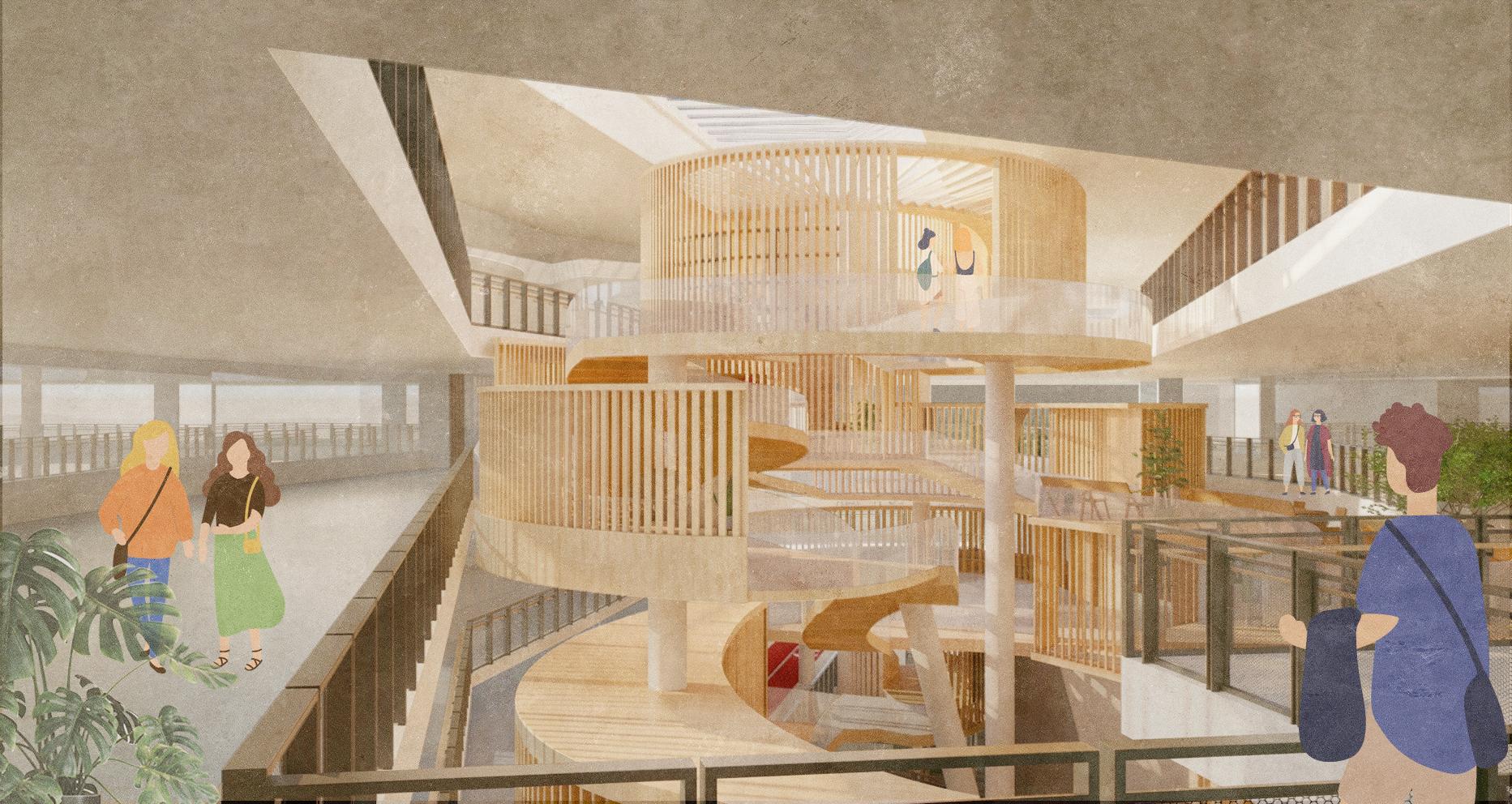
The perspective is taken from the commercial corridor on Level 3 of Funan Mall, looking into the low-pressure social space at the heart of the atrium. 45° angled wooden slats filter the noise of the CBD, while light and shadow are redefined along the flowing spiral circulation. The design creates a pause-friendly, connection-oriented urban nest, offering moments of calm and dialogue within the high-pressure commercial environment.
Funestal reinterprets the atrium of Funan Mall as a low-pressure social space embedded within a highly efficient and fast-paced urban environment. Rather than reinforcing the conventional logic of fully open and highly exposed commercial atriums, the project deliberately reduces the over-reliance on visibility and continuous exposure that characterises contemporary retail spaces.
It introduces a layered spatial strategy composed of transitional boundaries, semi-enclosed conditions and gradients of visibility to mediate the relationship between public presence and private withdrawal. These spatial shifts are not abrupt, but gently calibrated, allowing users to move fluidly between participation and retreat.
By embedding moments of pause, contemplation, solitude and light social interaction, the project constructs an alternative urban interior condition. This approach prioritises emotional comfort, psychological buffering and user autonomy over circulation efficiency or visual consumption.
Ultimately, Funestal proposes a more humane and nuanced spatial experience within high-density commercial environments.

Viewed from the ground floor entrance of Funan Mall, the low-pressure social space is entered directly from the atrium.

From Funestal rooftop garden, the design balances transparency and contextual connection. Angled timber structures act as soft visual partitions, solving the problem of over-exposure and lack of enclosure in public areas. Allowing natural light and ventilation to pass through freely, it reduces direct sight exposure, enhances privacy and sense of belonging, as well as encourages relaxed lingering.


Toh Jing Kang

Cao Yaqi
Yin Phyo Aye Julia
Cheah Zi Wei
Loi Euzen
Jeanette Reviana Tan
