





About
Huaiyu is a BA (Hons) Interior Design graduate with experience in both interior and architectural practices in Singapore.
Skilled in space planning, material selection and detailed drawing production, she has the ability to see through the full design process from conceptualisation to documentation and implementation. She is proficient in AutoCAD, SketchUp, Rhino and Enscape, and is able communicate spatial ideas clearly through drawings and 3D visualisations.
Huaiyu is has experience doing site measurements, inspections and the preparation of technical drawings to support construction. She has also coordinated materials, suppliers and delivery schedules, as well as assisting in resolving on-site issues to ensure smooth project progress.
Able to work closely with contractors, consultants and multidisciplinary teams, Huaiyu contributes effectively to collaborative project delivery.
Hawker Anywhere
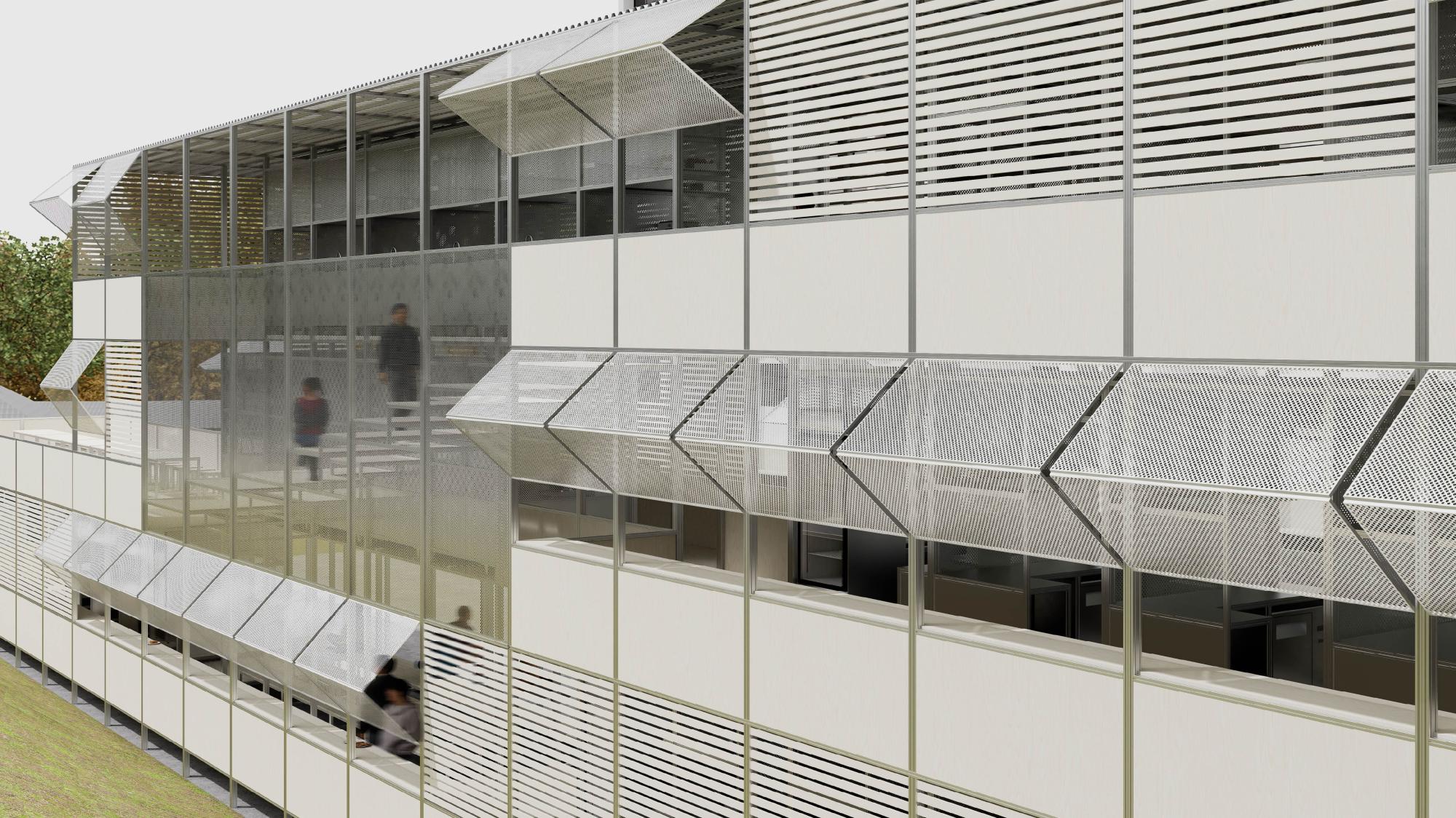
Hawker Anywhere explores how to improve access to affordable food in Singapore’s older neighbourhoods.
Many hawker centres are concentrated in town centres, requiring residents to travel long distances, while space for new permanent centres is limited.
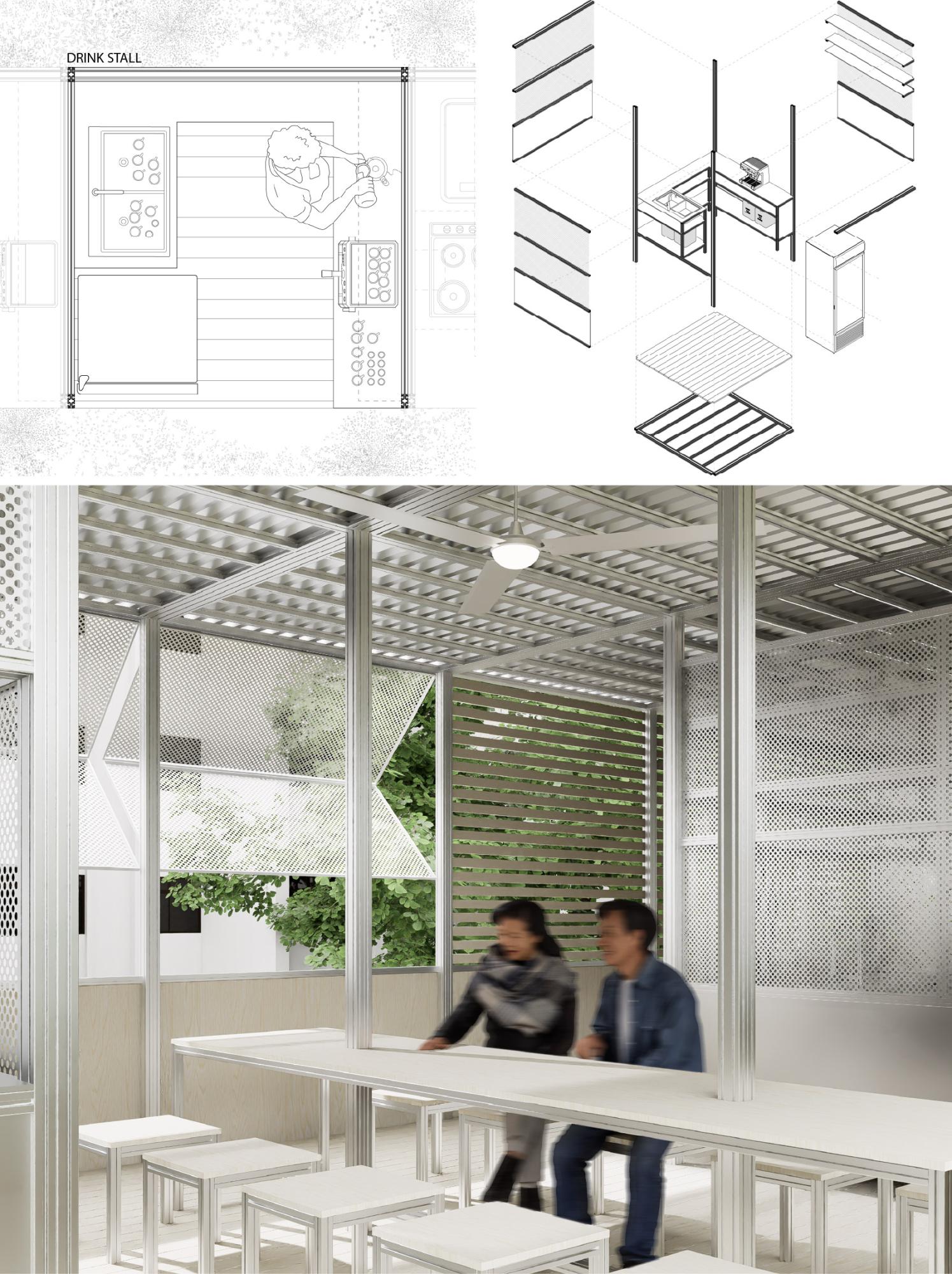
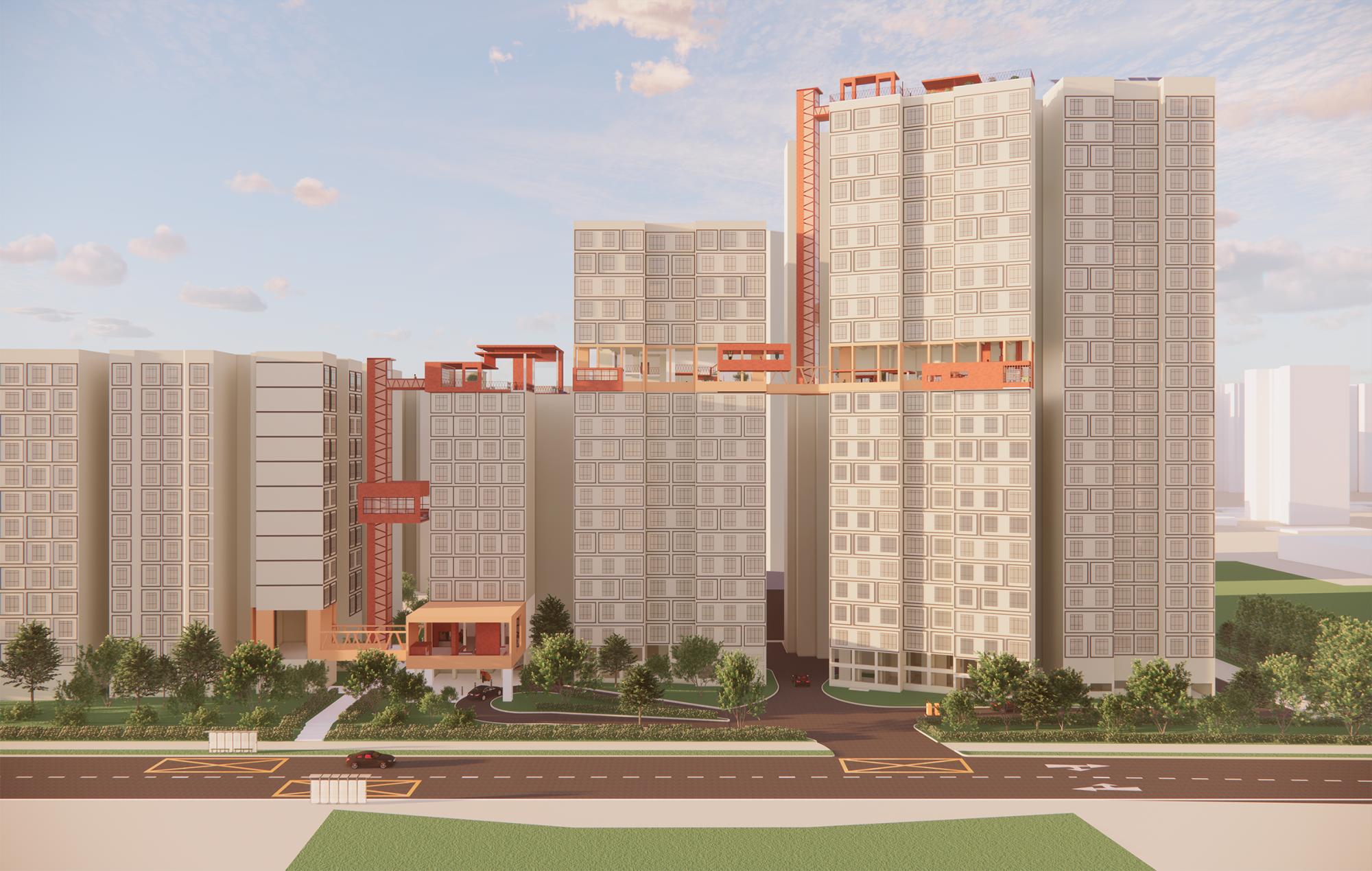
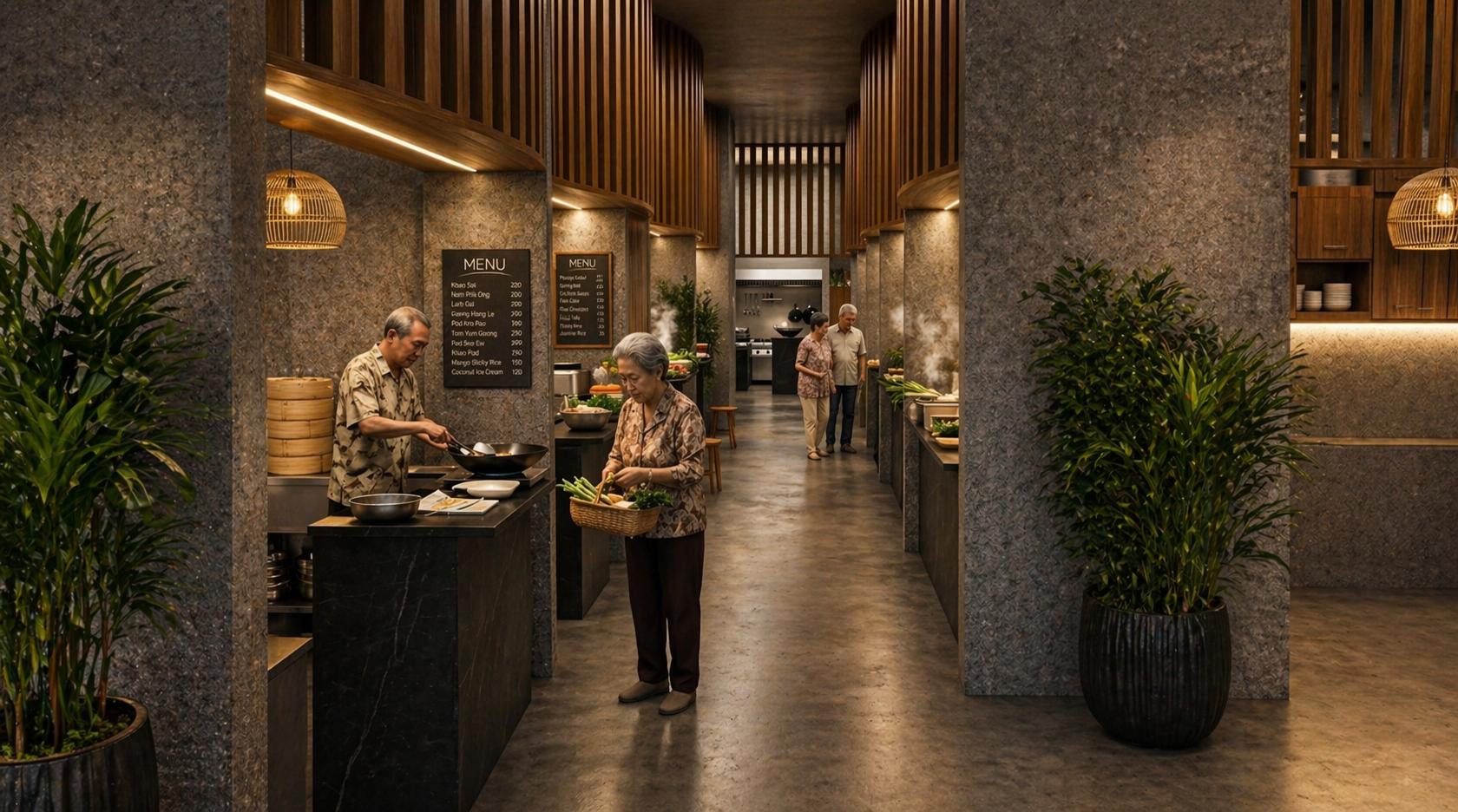
This project proposes small, temporary stalls within community spaces, creating a 'five-minute living circle'. The modular stalls are compact, self-sufficient and naturally ventilated, allowing flexible installation across different sites.


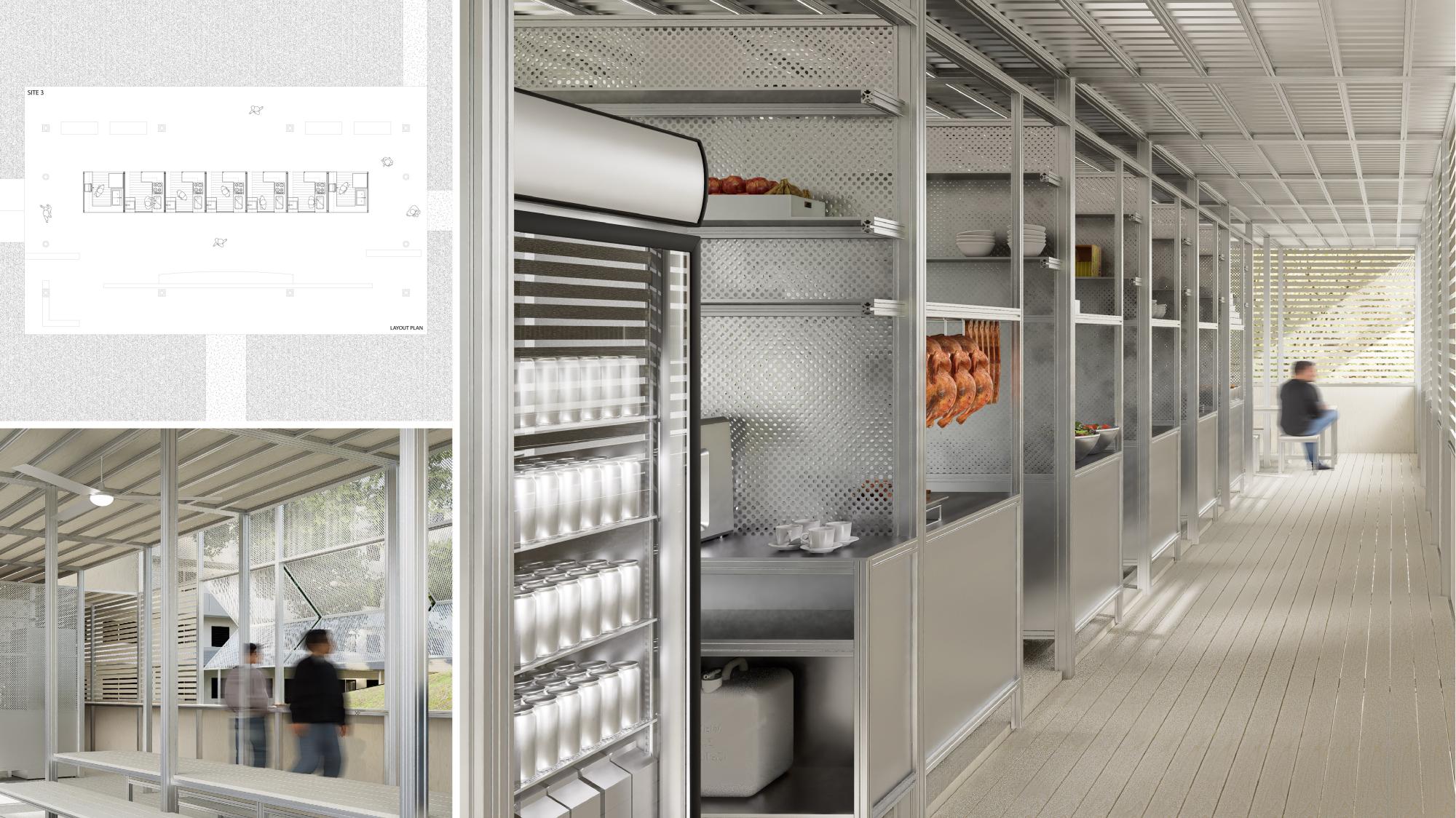
To test the system, three sites were selected, each responding to different spatial and user needs.
The first site, in a residential neighbourhood, focuses on families with communal seating and open visibility towards a nearby play area. The second site, located between a carpark and a community centre, uses a compact vertical layout to provide additional seating and support social interaction. The third site, near a transport node, is designed for commuters, prioritising speed and convenience through a grab-and-go setup with minimal seating.
The design reinterprets the typical hawker stall by reducing its footprint from 2.5 by 2.5 metres to 2 by 2 metres, allowing it to fit into smaller urban spaces. Each unit is self-sufficient, using portable batteries for electricity and water tanks for basic supply. Natural ventilation is achieved through openings at both high and low levels, enabling passive cooling without air-conditioning.
The system includes three stall types: food, drink and shared tray return units, improving efficiency while maintaining essential functions.



Yogyata Gadia

Charisse Faith Wong
Loh Chee Keong Vinc

Manasvi Kedia
Graciella Lim
Nantanie
