






About
As a designer with a background in architecture, Enrique likes to focus on the embodied experience and the intricacies of architecture. He believe good design should be for everyone to enjoy and should not alienate anyone.
Enrique believes design is a conversation, a dialogue between scale, detail and space which can be used to choreograph experience, and the existing and the proposed must converse in order to create something new.
An all round design enthusiast, Enrique is interested in architecture as well as interior, urban, graphic, furniture and fashion design. He is a movie geek who is always up for a food hunt.
Salvation of Semakau
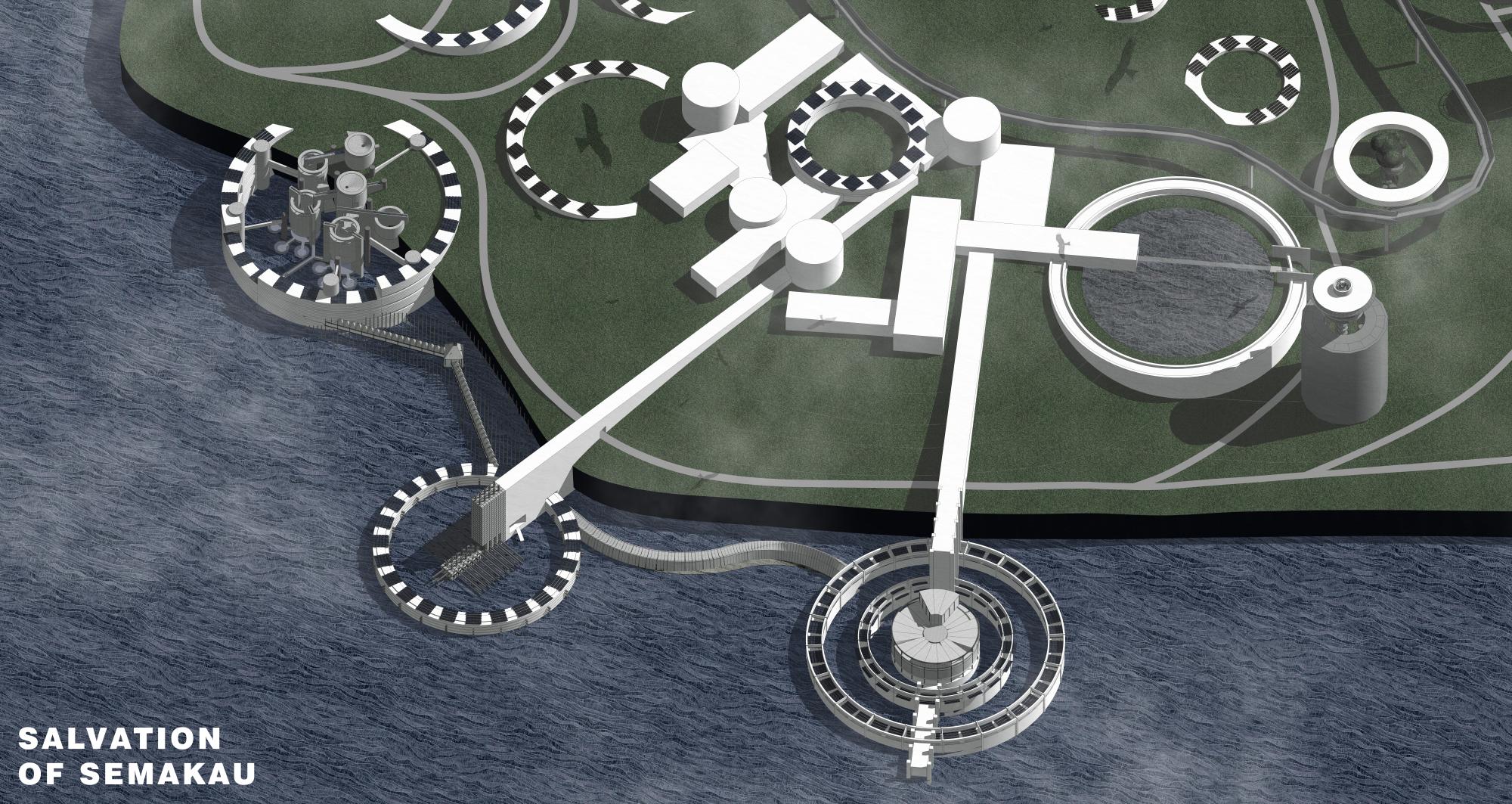
He will make them see.
Salvation of Semakau is a project shaped by one man's madness, as he tries to confront a society numbed by excess and passive consumption, after the loss of a loved one.
Inspired by Mahler's Symphony No. 2, it draws on emotions felt after the loss of a loved one, such as rage, overstimulation, resolution etc., and how they shape the design language of each process.
A continuous spatial sequence unfolds through calibrated transitions, where overstimulation is gradually stripped into states of compression, darkness and disorientation. Light and water operate as orientation elements rather than spectacle. Movement replaces spectacle, and orientation emerges through light and water rather than image.

Set in the City of the Disgruntled in 2125, in a future where screens have become emotional infrastructure, conditioning citizens toward continuous consumption and passive spectatorship.
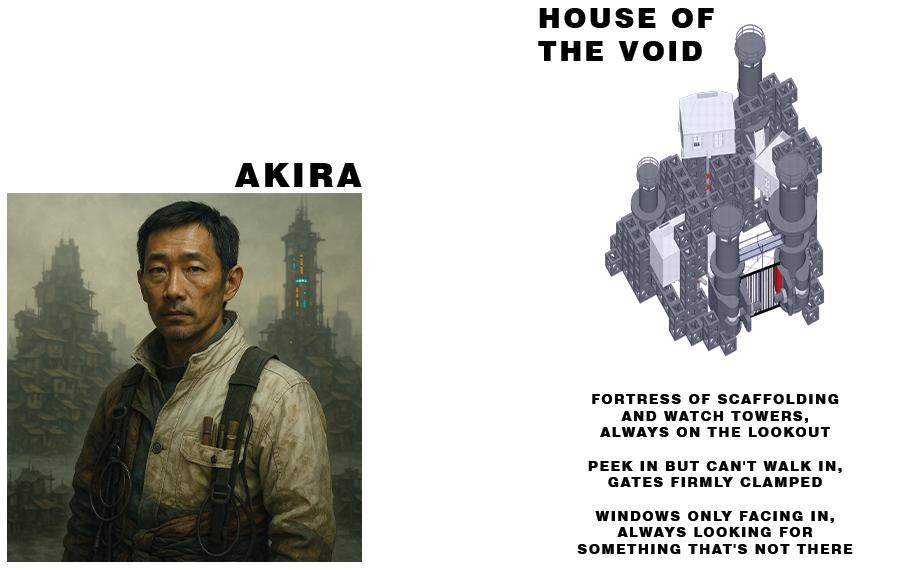
Born in 2079 in mainland Singapore, Akira was raised by a technician and a draftsman, developing a deep appreciation for craft, precision and control in an increasingly synthetic world. After his marriage collapsed, he relocated to New Semakau to work for Solara Industries, supporting his daughter whom he now only sees through weekly video calls.
They will see. They will be cured. They will be healed.
One fateful night, atop his perch, Akira watches as the city decays—empty plazas, quiet streets, fewer interactions.
His phone buzzes. His worst nightmare had come through. His darling daughter Yuna has died.
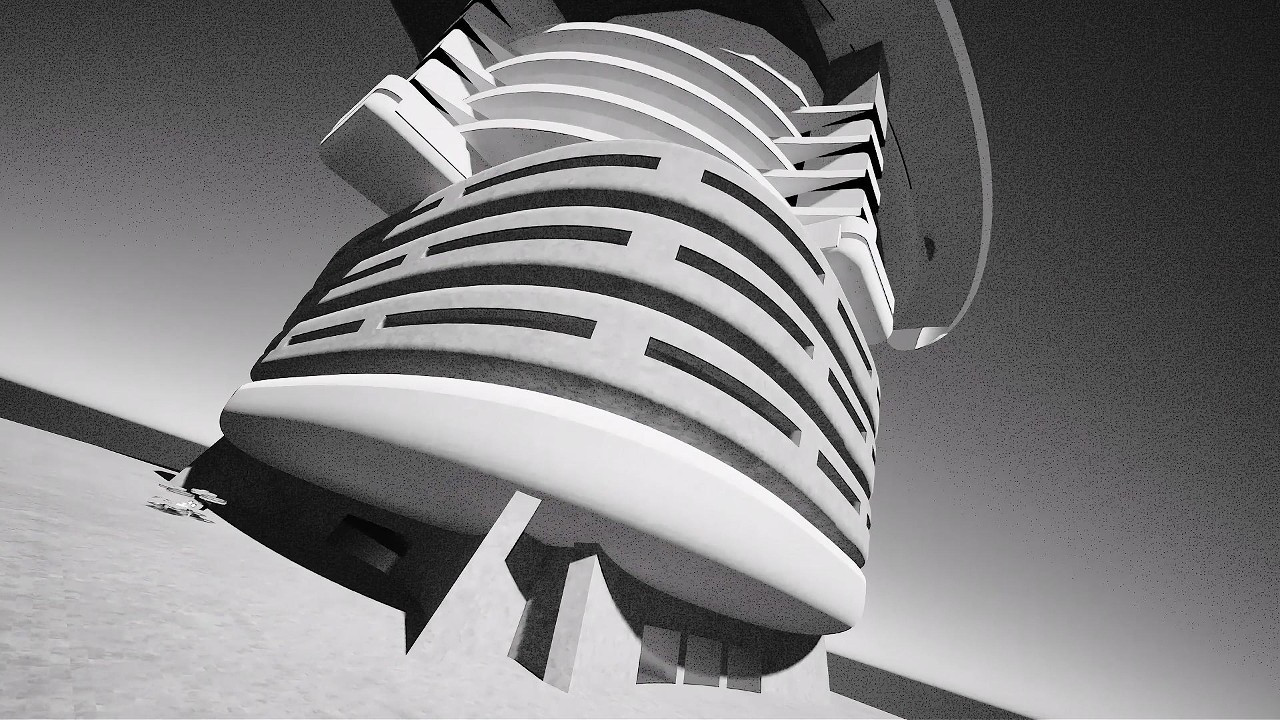
Fueled by grief, Akira, swears to cure these 'infected' individuals, he wants to heal them and make them pure once more. The addicts of Semakau are subjected to a healing journey through the four rings of the defunct Solar Factory. The three rings of 'healing'—condemnation, crucifixion and baptism—will strip them of their technology, to disorient, restrain and enlighten them.
The process will show them what they have become and who they can be.

Condemnation
The addicts are sequestered in these areas by Akira to quarantine and monitor them.
Surrounded by water, this leaves the addicts with no support to rest and under the blazing hot sun to be 'sanitised' before they can proceed with the salvation process.

Crucifixion
Once they make their way past the trial, they will be 'crucified' in these chambers to be detoxed.
This process aims to under-stimulate their minds by restraining them in place and stare as a vast horizon. Contrary to the hyperactive, multi-colour content are on display around the island.
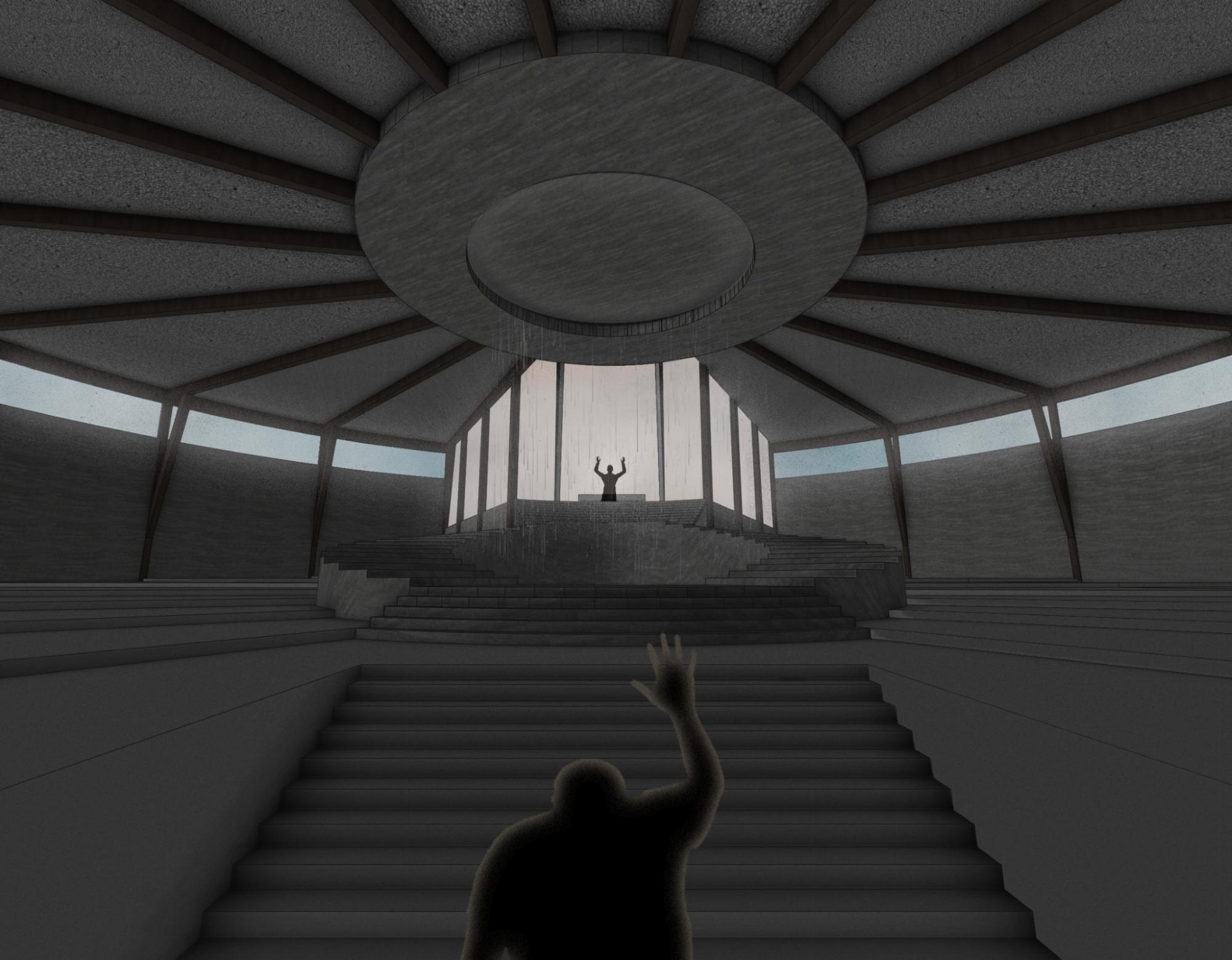
Baptism
As the light at end of the tunnel, the detoxed former addicts will arrive at a big open atrium where Akira is finally standing before them, back lit by natural light, washing over them.
He will embrace them, and this will signify a new life, and that they renounce their former addiction.


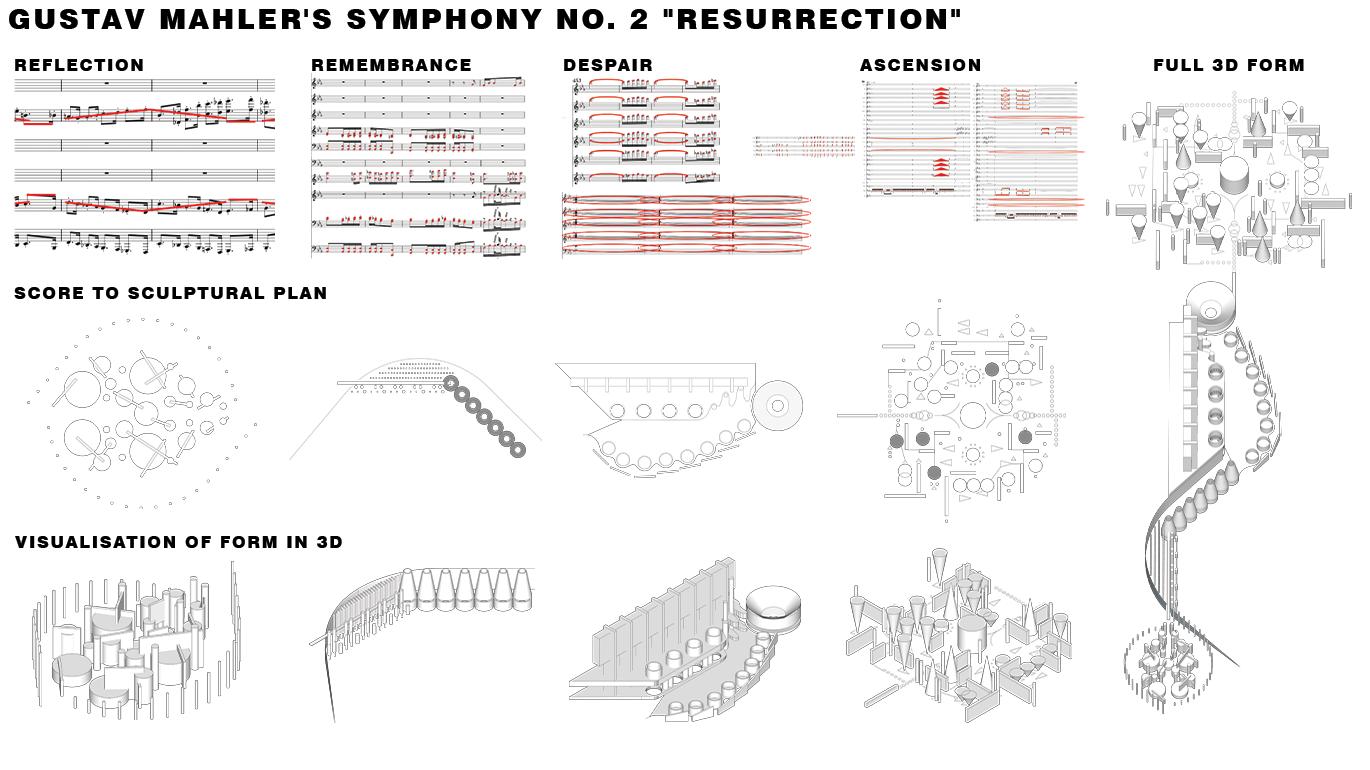
Inspired by Mahler's Symphony No. 2, the score is translated into emotions and the architecture unfolds as a continuous journey from overstimulation to deprivation—reflection, overstimulation and disorientation—using light and water as orientation elements to drive the addicted to salvation.
Jeanette Reviana Tan

Yogyata Gadia

Siau Xi Yu

Cheah Zi Wei
John David Sta Maria Poe
Valencia Prisha Cassandra Malonzo
