


About
A driven designer with a meticulous approach rooted in empathy, Julia aims to craft meaningful environments that enrich and uplifts people's day to day rituals.
Guided by a deep curiosity for knowledge and new experiences, her background in architecture and exhibition design has honed her design instincts and adaptability.
As a burgeoning designer, Julia is committed to creating spaces that are immersive, responsive and enduring.
Here, Together – Where everyday acts become spatial systems
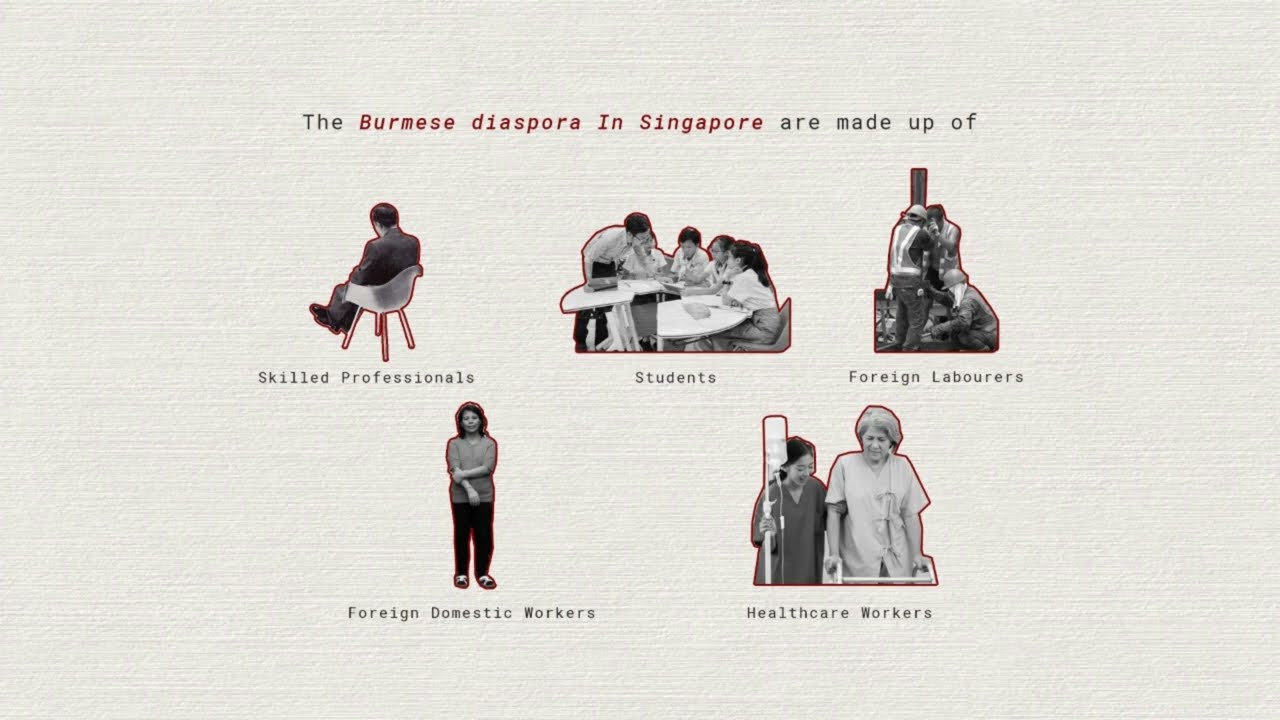
An introduction video regarding my FYP site; Peninsula Plaza, and its (informal) main inhabitants: Burmese migrants residing in Singapore.
Here, Together is situated within Peninsula Plaza’s Burmese enclave and explores how a shared use of space, which emerges from everyday practices and communal culture, transforms Peninsula Plaza's intrinsic commercial typology over time.
The project proposes a framework where individual units expand, overlap and connect. Rather than a monumental form, it supports existing behaviours, turning rigid units into a continuous collective environment, where temporary occupation becomes a quiet act of building life and belonging together.

Exploded axonometric view and spatial typologies

Overall site context and importation of Burmese culture/people into Peninsula Plaza
The programmes for Here, Together originate from dominant 'anchor' functions and behaviours of the 1st to the 5th floor, where the informal occupation of Burmese people is more evident and dense.
1st Floor – Converging [Meetup points, grocers, banking]
2nd Floor – Producing [Restaurants, cargo services, grocers]
3rd Floor – Administrative support [Visa, legal, social services]
4th Floor – Providing care [Clinics, library]
5th Floor – Reflection and celebration [Traditional crafts such as tailoring and religious sculptures, Buddhist altar and 'Mandat', an elevated platform for festivities and rituals]
As one ascends through the floors, the hustle and bustle of the lower floors gives way to a calmer, reflective atmosphere. Similar to how Buddhist altars occupy a higher elevation within domestic and business settings, the expanded altar within Peninsula Plaza resides on the 5th floor.

Narrative – concept – site conditions
Micro-activities by the Burmese enclave were collected through rigorous observational study of their behaviours.

[Top] 1st Floor expanded banking services render
[Bottom] 2nd Floor expanded restaurant render

[Top] 2nd Floor expanded cargo services render
[Bottom] 5th Floor 'Mandat', an elevated platform for communal festivities and religious rites
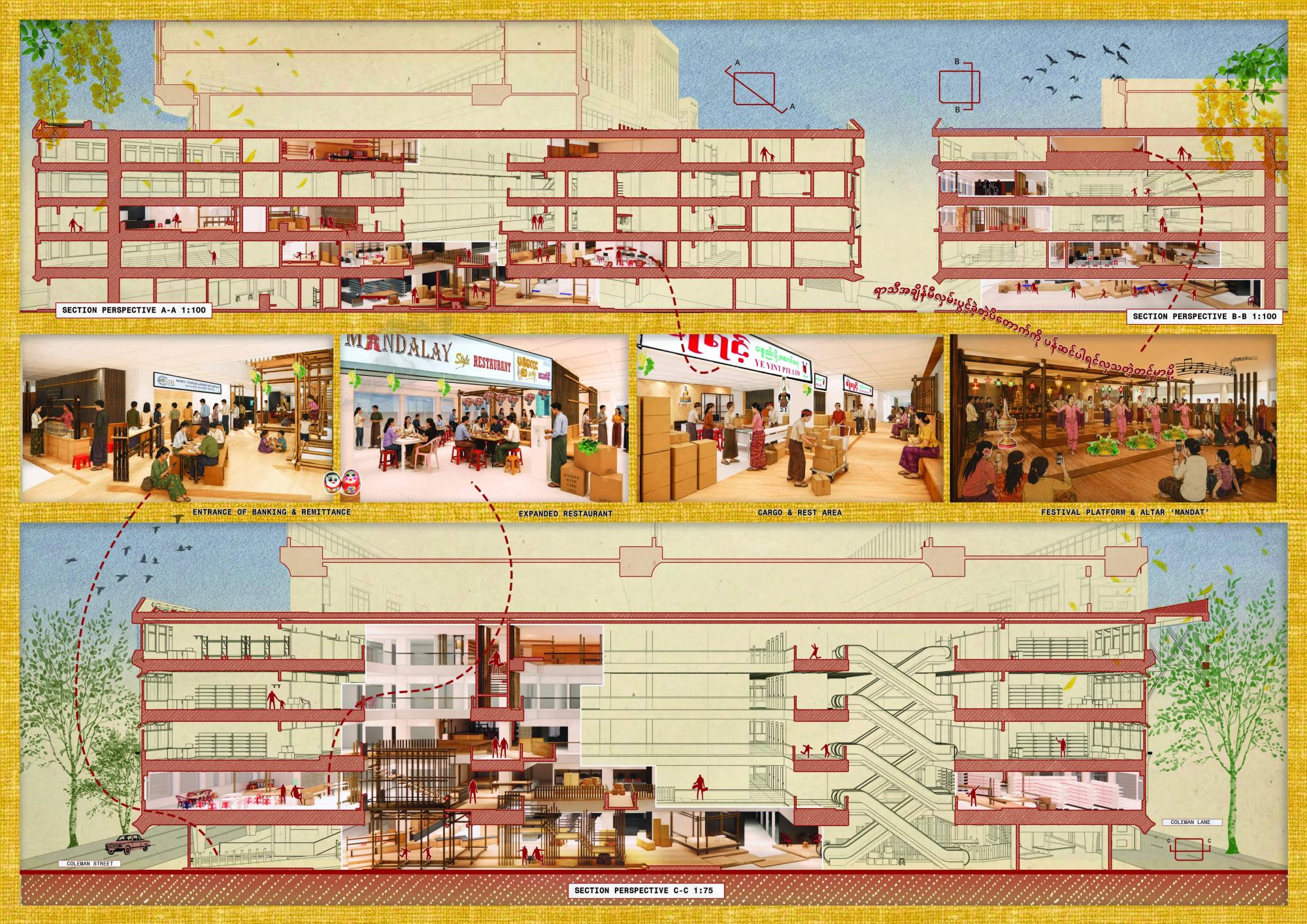
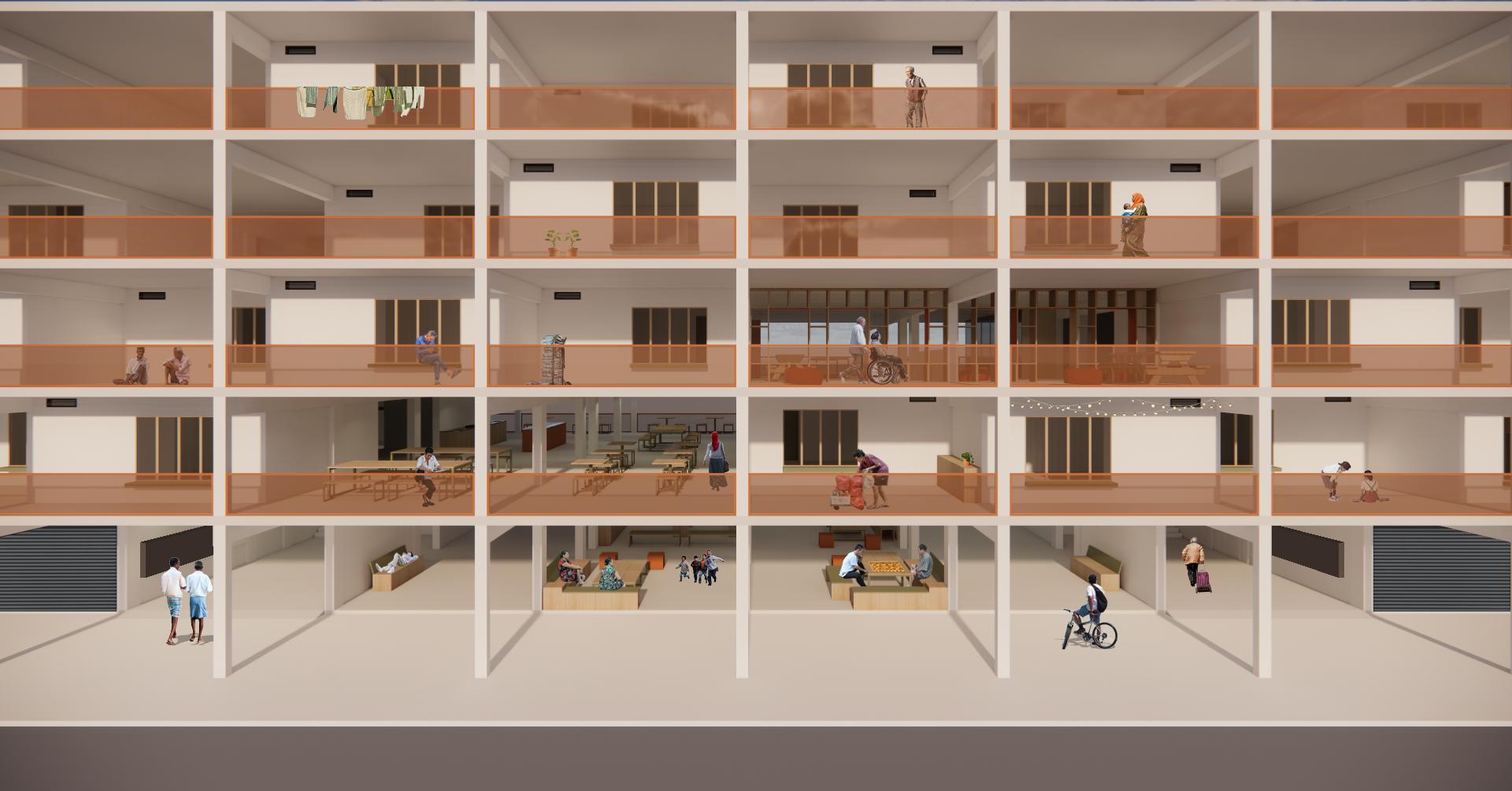
Sectional perspectives – interior renders
The spatial and material language of bamboo and plywood panels signify that they are not fixed architectural objects but adaptable components that mediates shared use. The intention is for the growth to feel incremental, as though it has grown from use over time.
Loi Euzen
Zhou Yupeng
Loh Chee Keong Vinc

Parisha Agarwal
Siau Xi Yu

Trisha Sharma