



About
With a strong interest in graphic design and creative advertising, Celine approaches design as both a strategic and expressive practice.
She actively contributes across the full creative process, from concept development to final visual execution, ensuring that ideas are not only compelling but also effectively communicated to the intended audience.
Through her past experiences, Celine has developed a solid foundation as a social media creative designer, where she creates content that is both visually engaging and platform-aware. This includes translating brand messages into impactful visuals that resonate within fast-paced digital environments.
Her skill sets spans creative pitching, graphic design, motion graphics, video editing and photography, allowing her to work across different formats and mediums with flexibility.
Celine is particularly interested in how design can shape perception, engagement and storytelling in contemporary media. Whether working on campaign visuals, digital content or experimental projects, she aims to create outcomes that are thoughtful, relevant and audience-focused.
With a growing understanding of both design execution and creative strategy, Celine seeks to build a career in design and creative advertising, developing meaningful and effective visual communication.
Gerobak in Java's Urban Rhythm
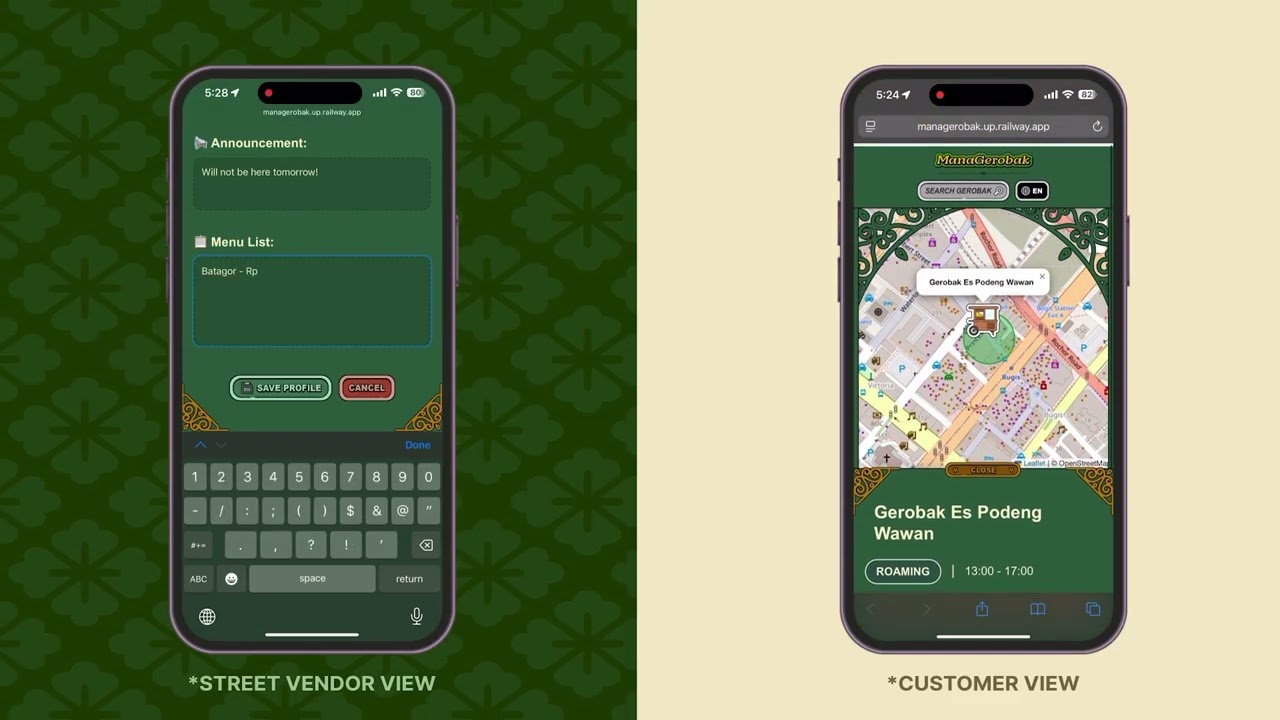
ManaGerobak (“Where’s gerobak?”) provides real-time visibility for Indonesian street cart vendors, treating mobility as a state of being. The platform offers vendor profiles featuring live updates, flexible hours and real-time status (stationed or roaming), alongside integrated maps marking safe “Gerobak Zones.”
Customers access the website via QR pamphlets attached to the street carts, leveraging local street vendor’s familiar habit of using paper-based QRIS mobile payments attached to the street cart. This helps customers stay updated on street carts who often change operations or locations unexpectedly, bringing structured value to an informal sector while validating street carts as a vital, permanent urban pillar.
This project redefines Javanese gerobak kaki lima (street cart vendor) as vital informal placemakers rather than urban disorder.
It positions street cart vendors as essential urban actors whose systems can be empowered through design. By introducing tools that enhance safety, organisation and visibility, the project integrates vendors into the urban infrastructure while strictly preserving their defining mobility.
This inclusive approach shifts from neglect to advocacy, envisioning a city development that embraces the informal sector. Ultimately, it seeks a coexistent urbanism where gerobak are supported as catalysts for local economic resilience and social connection.


Physical miniatures simulating all touchpoints of the gerobak system.

Booklet (cover) exploring the essential role of gerobak kaki lima in shaping Indonesia’s urban cities as everyday placemakers.

Booklet (content pages) exploring the essential role of gerobak kaki lima in shaping Indonesia’s urban cities as everyday placemakers.
Chiang Wen Soon
Jade Sia
Manasvi Kedia
Janice Lwai Jia Shou

Joycey Y Tanesia

Muhammad Hakeem Bin Hussain