




About
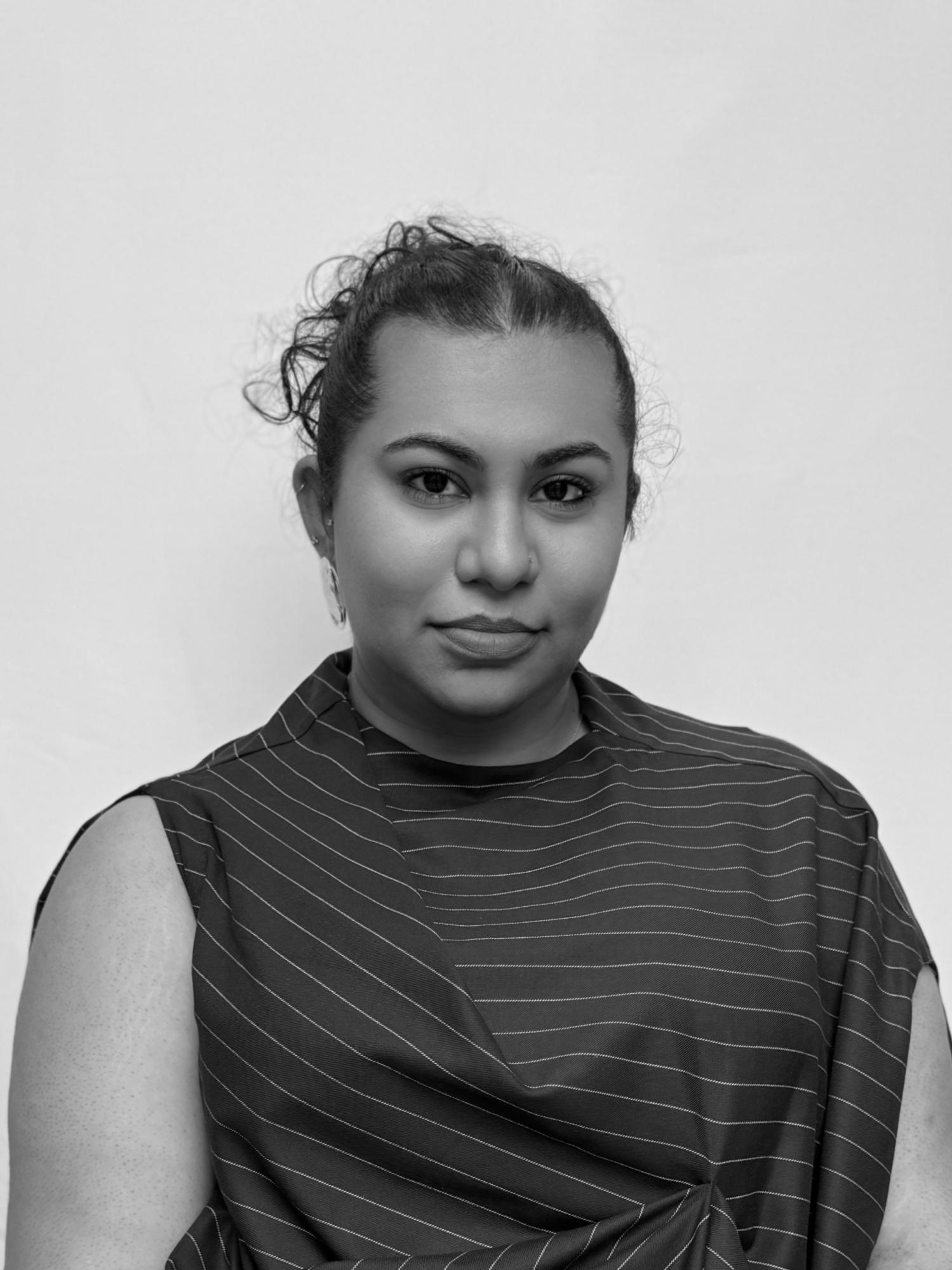
Jahnavi is a BA (Hons) Fashion Design and Textiles graduate from LASALLE College of the Arts who specialises in pattern cutting with an elective focus in bespoke tailoring. Her practice is rooted in construction and materiality, using experimental pattern cutting to explore form, structure and movement.
Her approach to fashion is that of product design, balancing conceptual inquiry with technical precision. She cares about how garments are engineered, and focuses on developing silhouettes that challenge conventional construction while maintaining function and wearability. Jahnavi also considers fashion’s role within broader systems, engaging with ethics, responsibility and the potential for social innovation within both practice and business.
Drawing on themes of heritage, identity and cultural memory, her graduate collection re-stories traditional references within a contemporary context, transforming narrative into garments through expression.
threshold by DARZ/.

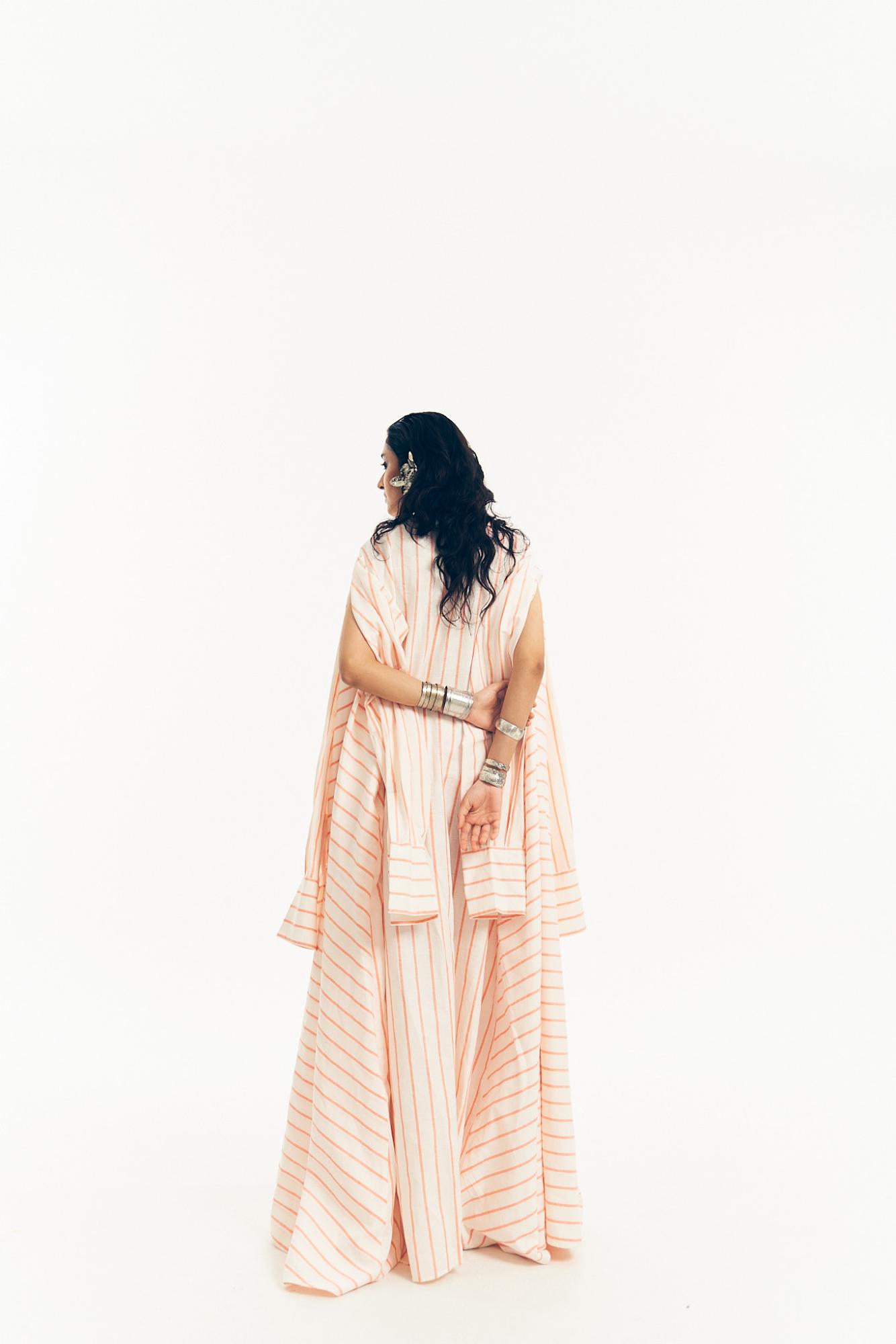
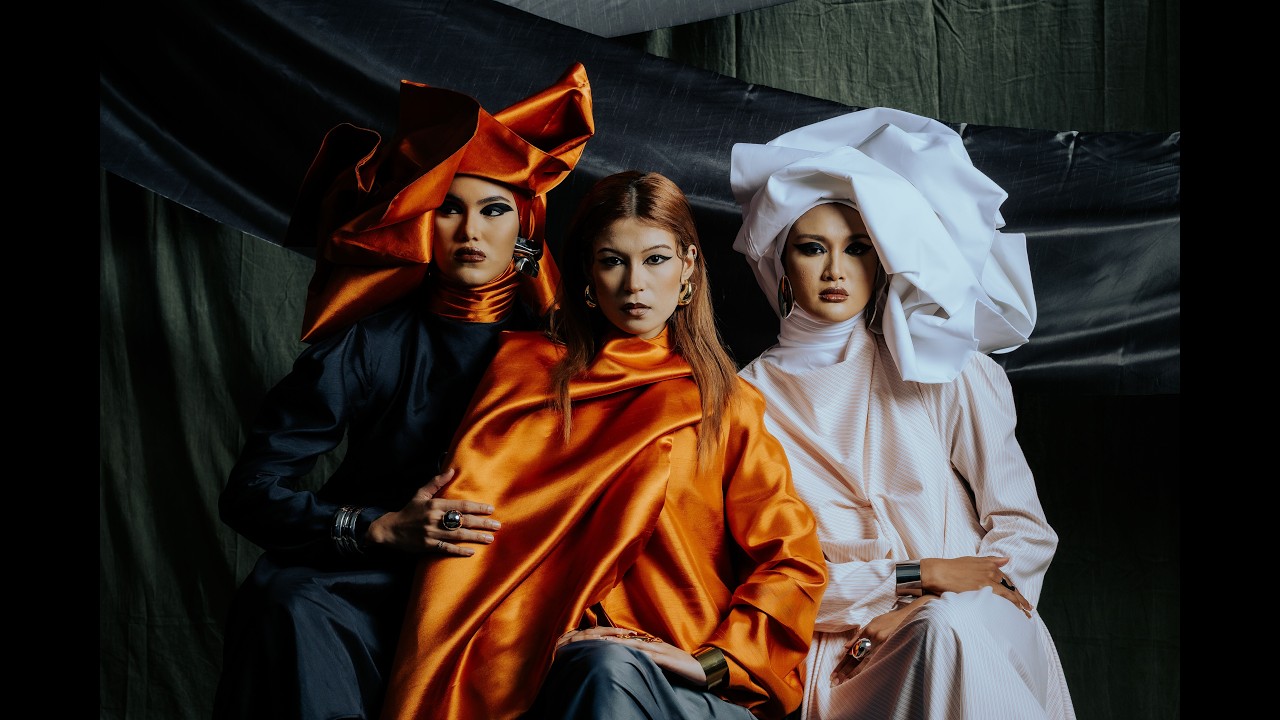
threshold explores sociological rupture and in-betweenness through the lens of the 1947 Partition of India and Pakistan. Rooted in narratives of displacement, survival and identity, the collection examines how dress adapts when cultural continuity is interrupted. It exists neither here nor there—between fleeing and belonging, east and west, draping and tailoring, and the overlapping tensions of trauma and privilege.
The dhoti and the tailored jacket form the starting point for this study. The dhoti reflects indigenous systems of unstitched dress tied to ritual, movement and memory, while the jacket represents structure, control and colonial influence. Their interaction shapes a hybrid silhouette language: modular, layered garments that are held in between fluidity and form.
Construction becomes the primary site of meaning. Draped forms are stabilised through tailoring, while tailored garments are loosened through wrap, pleat and reconfiguration. Garments shift across the body, allowing for multiple ways of wearing—never fixed, always in transition.
Material choices reinforce these ideas. Wool suiting fabrics give structure and permanence, while handwoven textiles such as banarasi cotton chanderi and matka silk retain tactility and continuity with regional craft. Stripes—chalk, pencil and pinstripe—are subtle markers of division, referencing borders and lines drawn across land and bodies.
The collection extends into systems of making. Production offcuts are reassembled into new garments, reducing material waste while embedding reconstruction within the work itself. Unstitched garment logic is translated into contemporary silhouettes, carrying forward methods of dress that risk marginalisation.
threshold holds memory in between: through the structures, gestures and decisions that shape how a garment is made and worn.


Nurul Izza Binte Rahmat
Anchanaa Ashok
Kayla Adelia Rudiansyah

Keila Zaneta Arifin
Chen Geyang
Trudy Grace Fortune
