





About
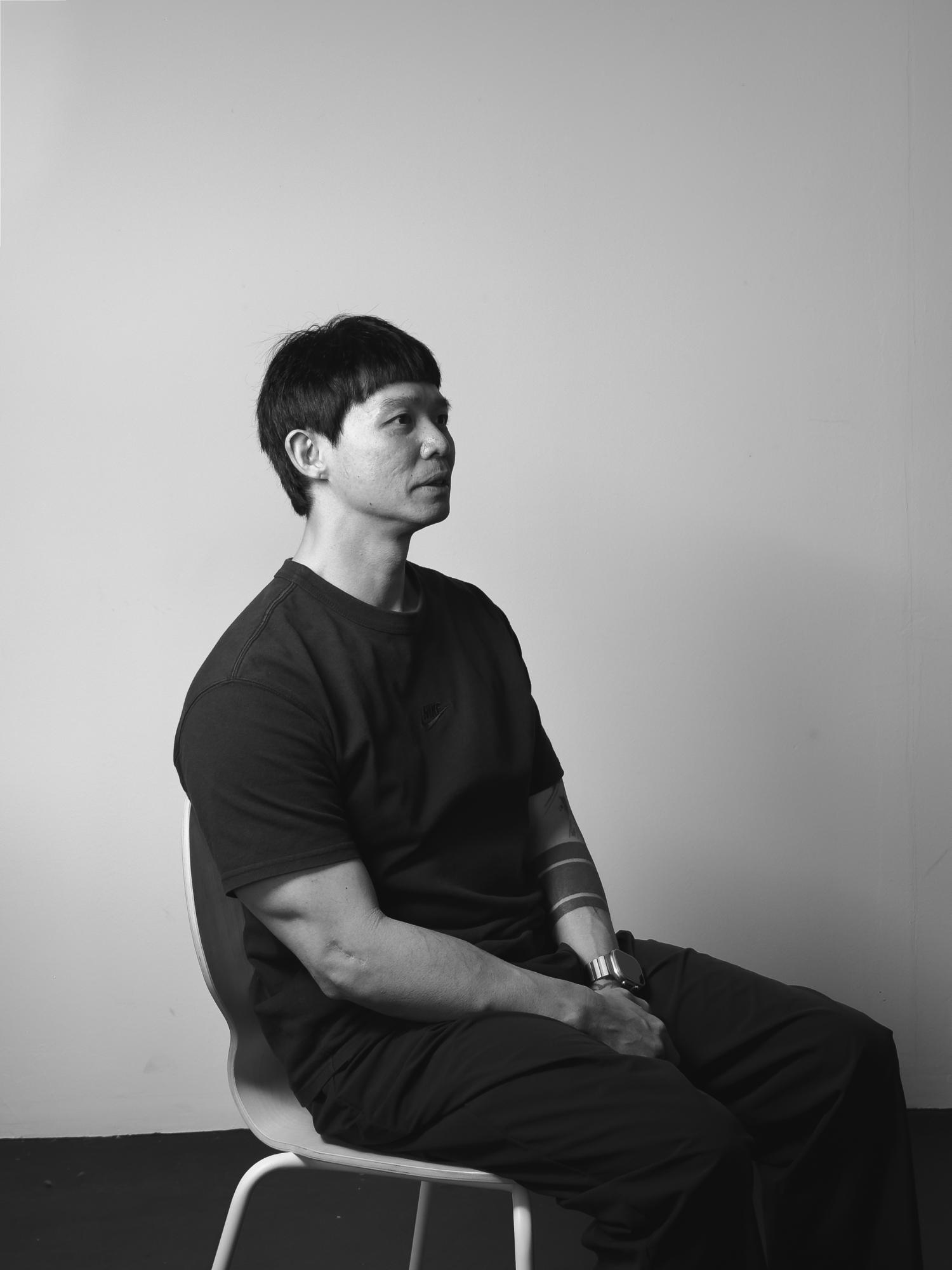
Vinc is graduating from the BA (Hons) Interior Design programme at LASALLE College of the Arts.
His design approach is rooted in minimalism, with a strong belief in creating timeless spaces that transcend trends. He is particularly interested in lighting design, viewing light not just as a functional element but as a primary driver of spatial experience and form.
Vinc's academic work reflects a sensitivity towards both people and context. In a project sited in the National Design Centre, he proposed a farm-to-table learning space for children, where sunlight acts as the main catalyst that serves as spatial organisation and core architectural language.
Beyond academia, Vinc has hands-on experience in managing residential projects from concept through to completion, demonstrating both technical capability and client-focused thinking. He has also developed a strong interest in architectural visualisation, continuously refining his rendering skills to better communicate atmosphere and intent.
Described as detail-oriented, resilient and service-driven, Vinc approaches design with both discipline and empathy. He aims to establish his own studio, focusing on thoughtful, enduring spaces shaped by light, purpose and human connection.
Continous Commons

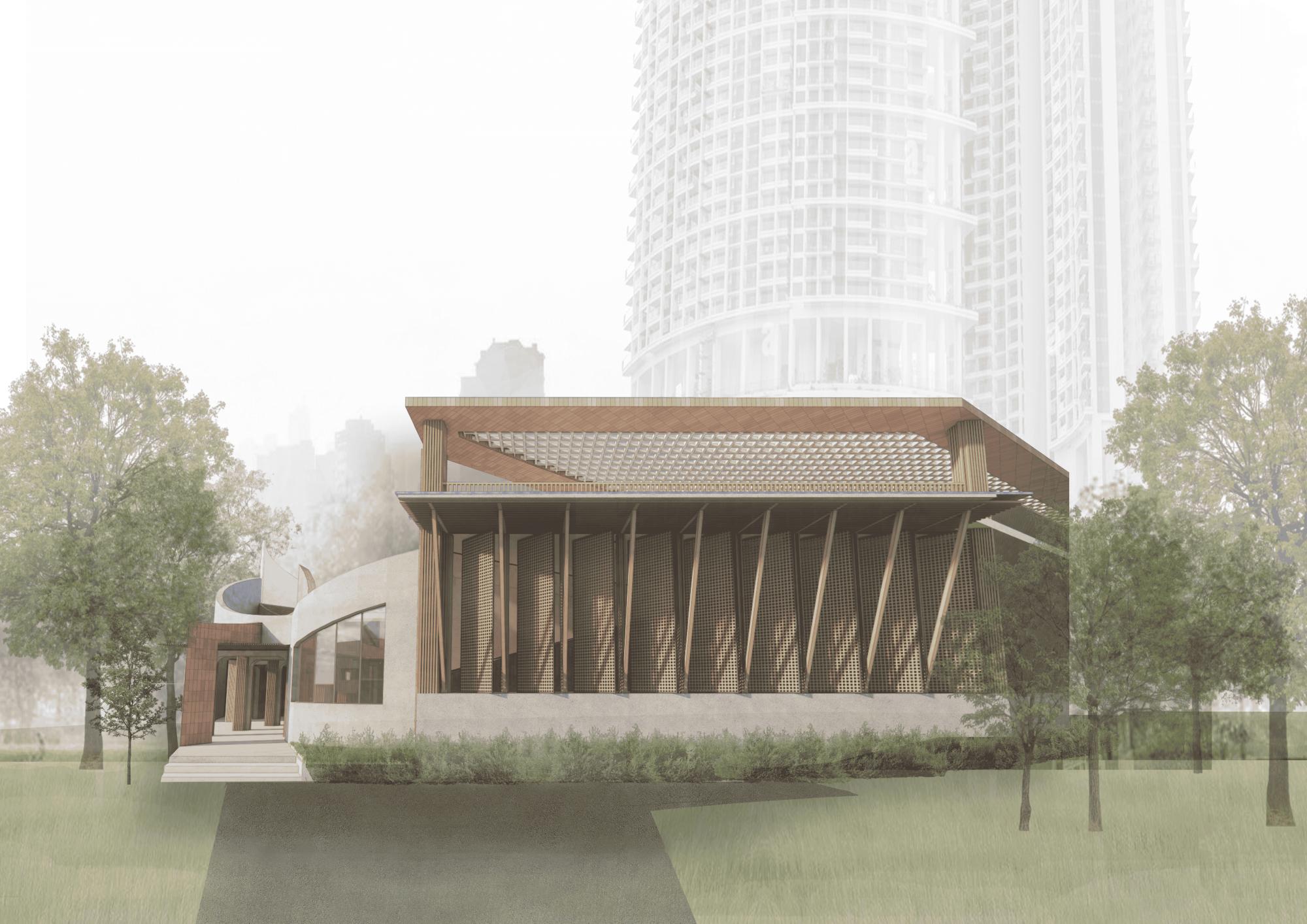
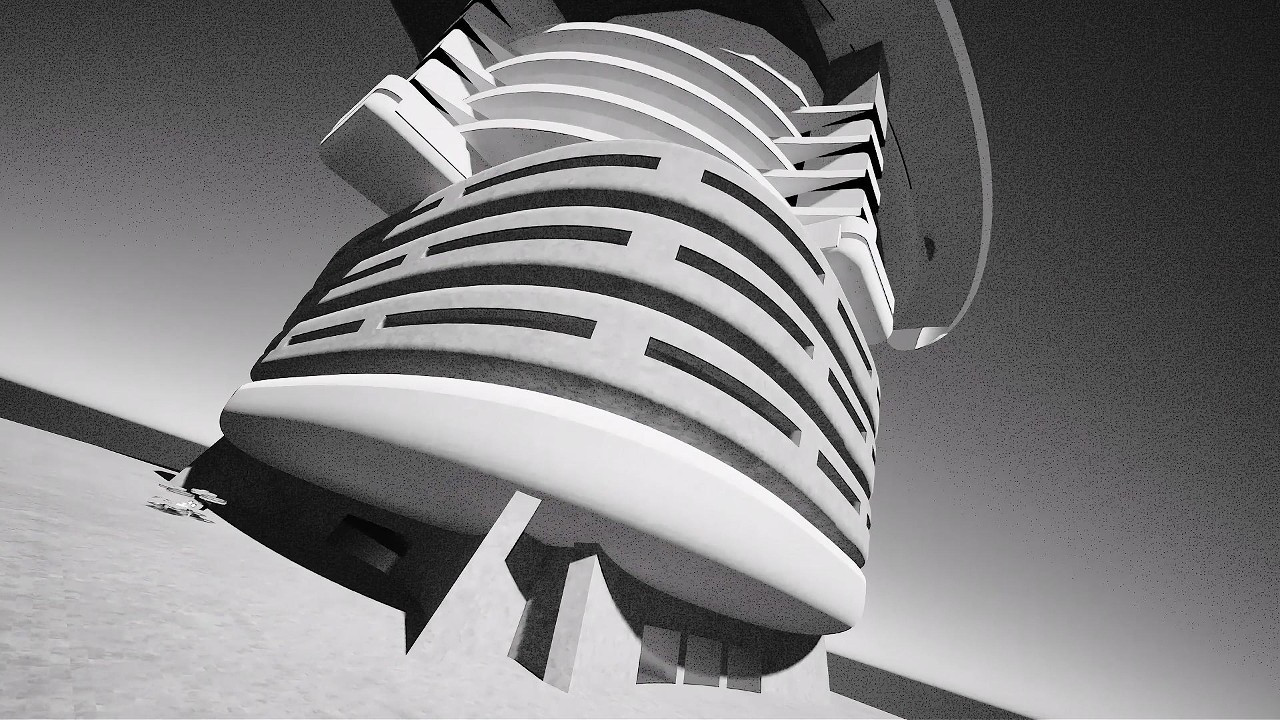
Rear elevation–main entrance
Located in the heritage context of Joo Chiat, the project reimagines two conserved shophouses into an independent senior co-living community for mobile, autonomous seniors. It supports ageing through shared routines, social interaction and a familiar, non-institutional environment.
The design extends the shophouse while retaining its key DNA—pitched roof, spiral staircase and five‑foot way—reinterpreted as spatial tools for circulation, micro-encounters and varying degrees of privacy. In response to heavy activity and noise at the front, the main entrance is relocated to the rear, creating a quieter and more comfortable arrival via the back lane.
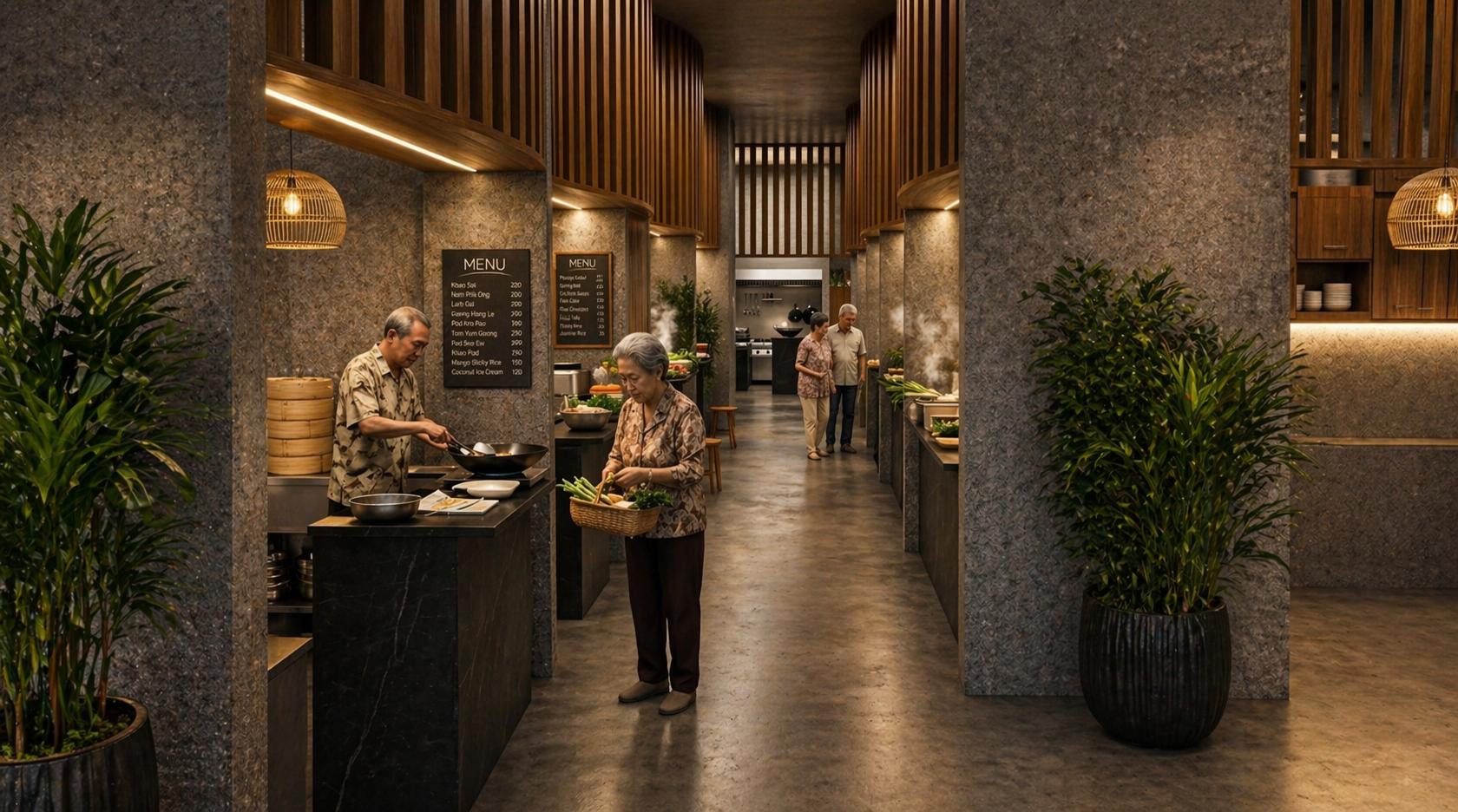
At its core is the idea of Continuous Commons. The spiral stair becomes a social infrastructure that links movement, daily rituals and a closed‑loop food system. Together with the five-foot way, it forms a semi-outdoor threshold where residents can engage or withdraw into their own space.
Everyday living is guided through shared spaces, allowing social interaction to emerge naturally while preserving privacy and autonomy.

Private and public access

Where pauses, observation and participation happens

Iso site map

Side elevation

Sectional perspective

Cafe vanity

Five-foot way
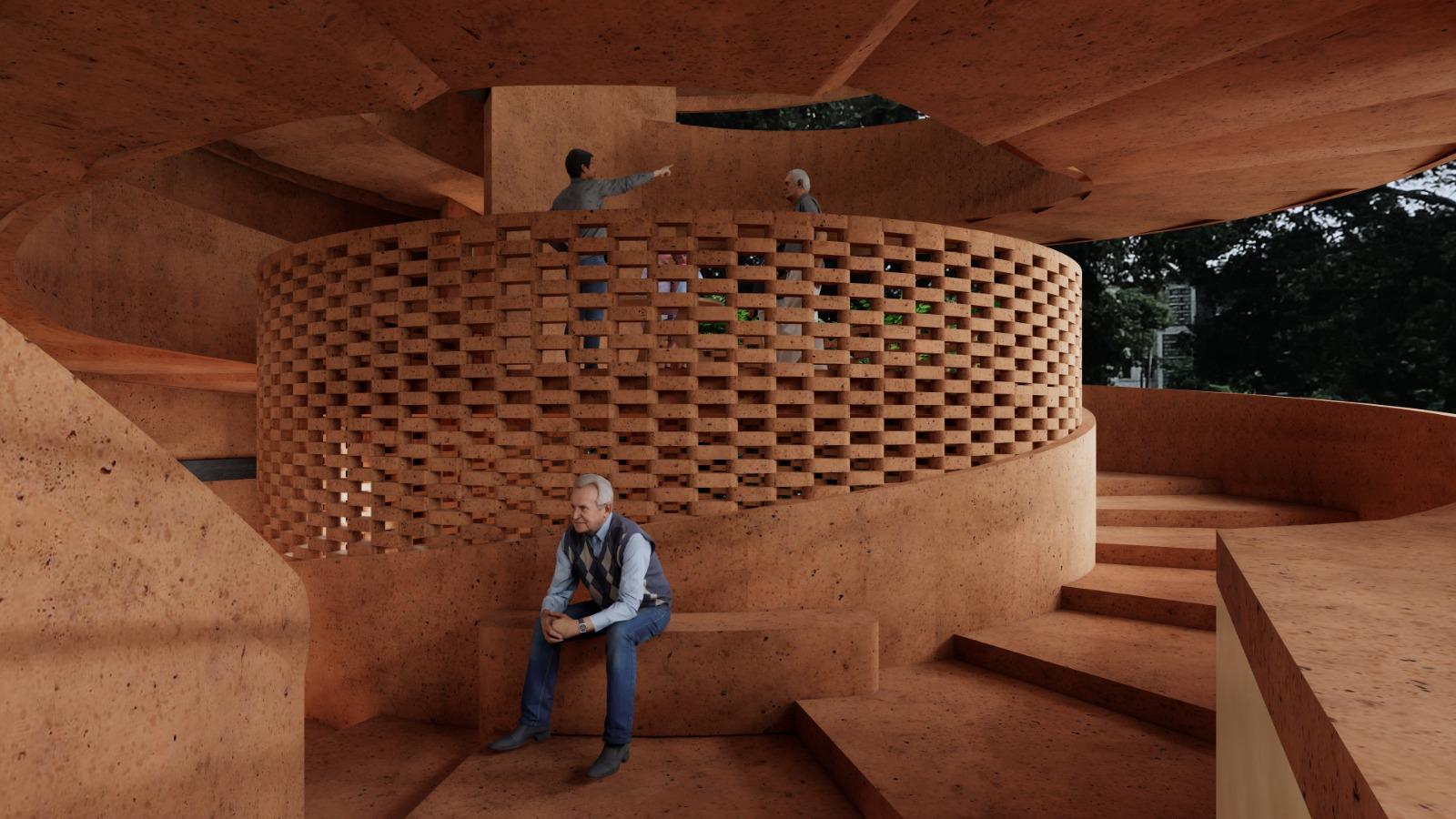
Juxtaposition of being still and dynamic
Manasvi Kedia
Nantanie

Liora Hayugi
Mukesh Sonal Gandhi

John David Sta Maria Poe
Jeanette Reviana Tan
