


About
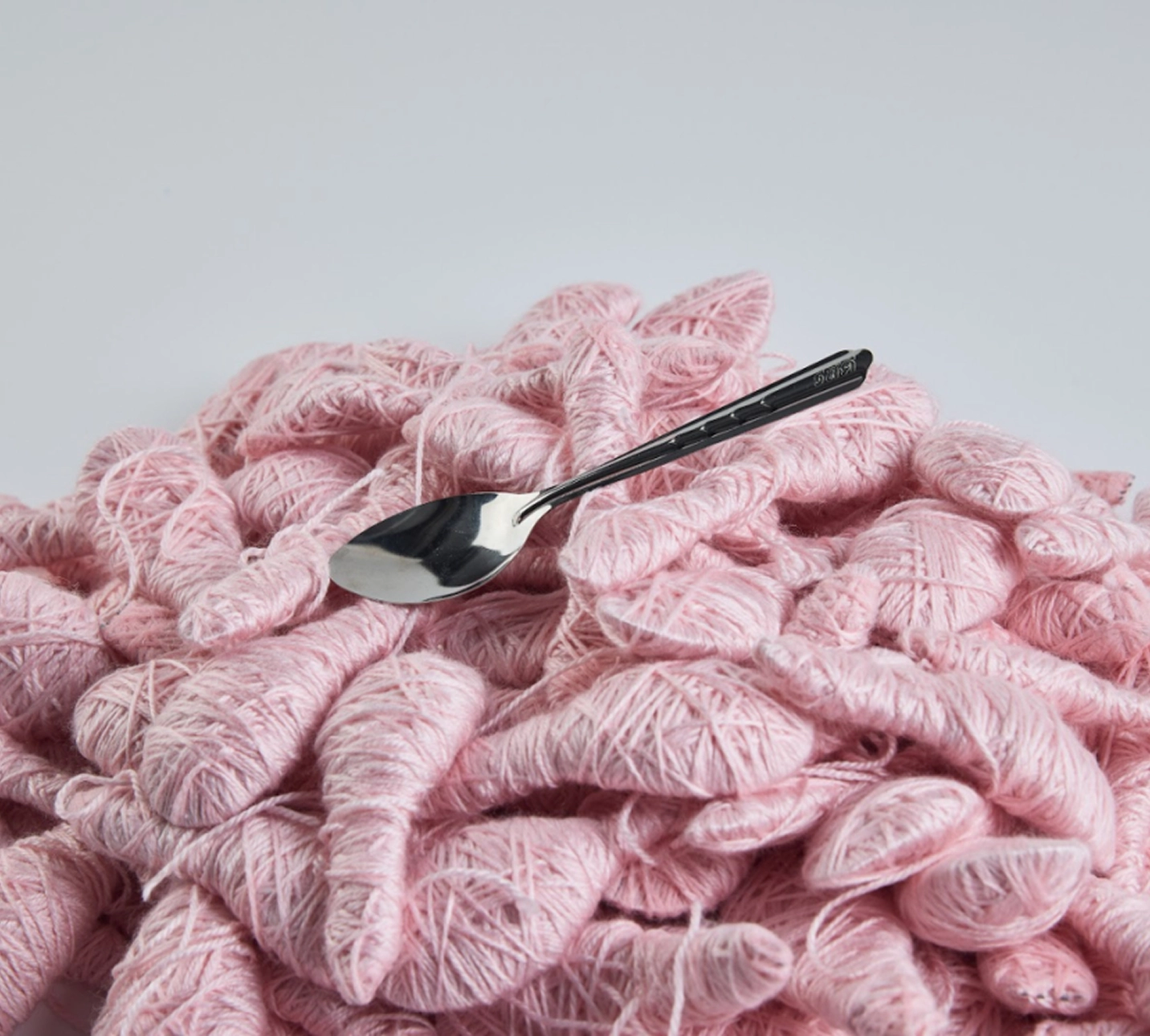
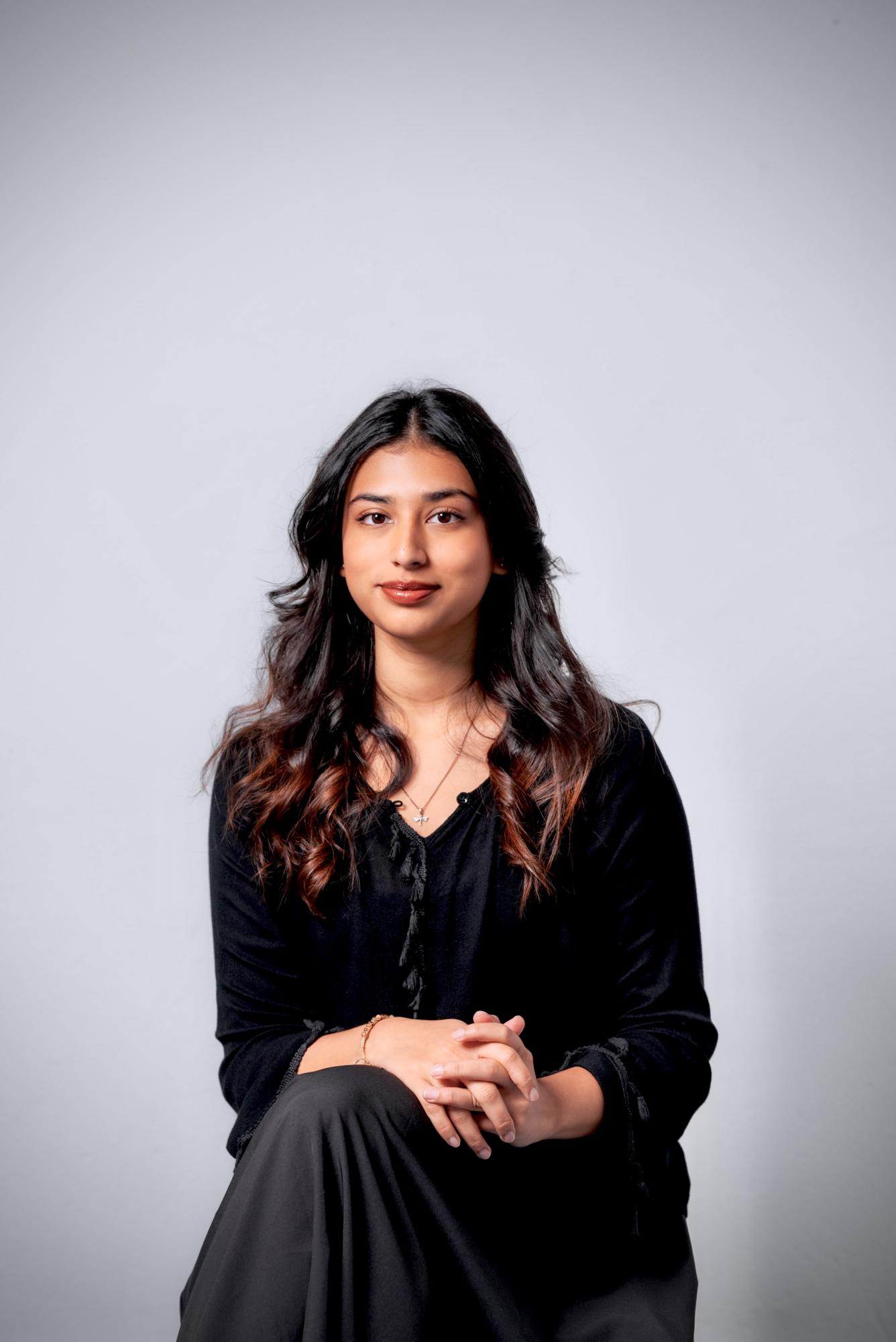
Qalisha is a visual artist whose practice navigates the intersections between presence, memory and materiality. Working across multidisciplinary practices, she explores how the unseen and the ordinary hold quiet registers of being.
Her works translates introspection into form, grounding personal reflection within material and spatial encounters. Informed by the notion of the recto–verso condition, Qalisha reflects on how every visible surface carries a hidden counterpart—an underside of truths, errors, experiences and emotions that quietly endure beneath appearances.
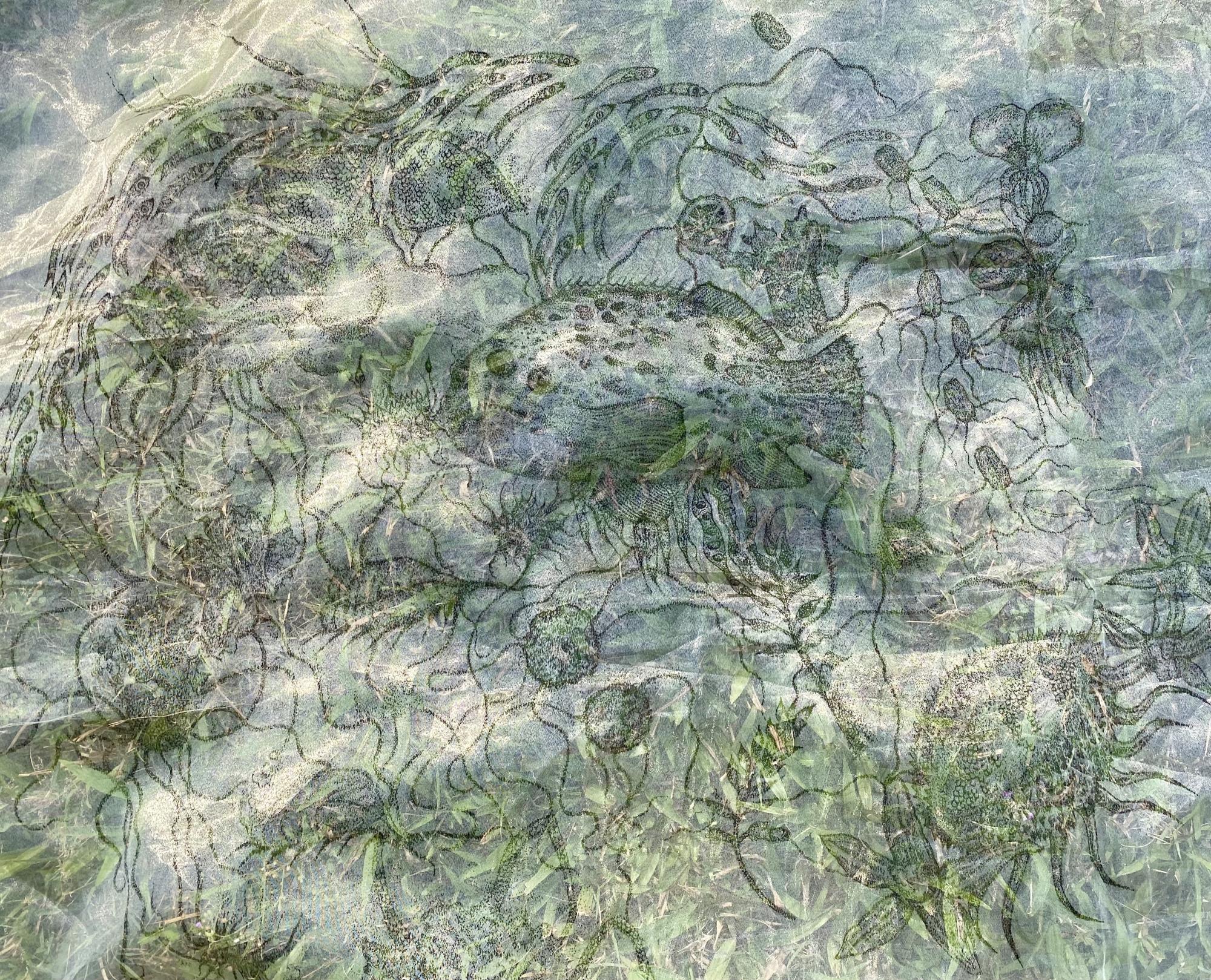
Her current explorations position the rug as a veiling object—a site of intervention between the seen and the unseen—where materiality becomes a metaphor for the layers of perception and experience. Through acts of reflections, unravelling and repetition, she examines how time and consciousness imprint upon the spaces we inhabit, as well as the subtle negotiations between the tangible and the intangible, the visible and the hidden.
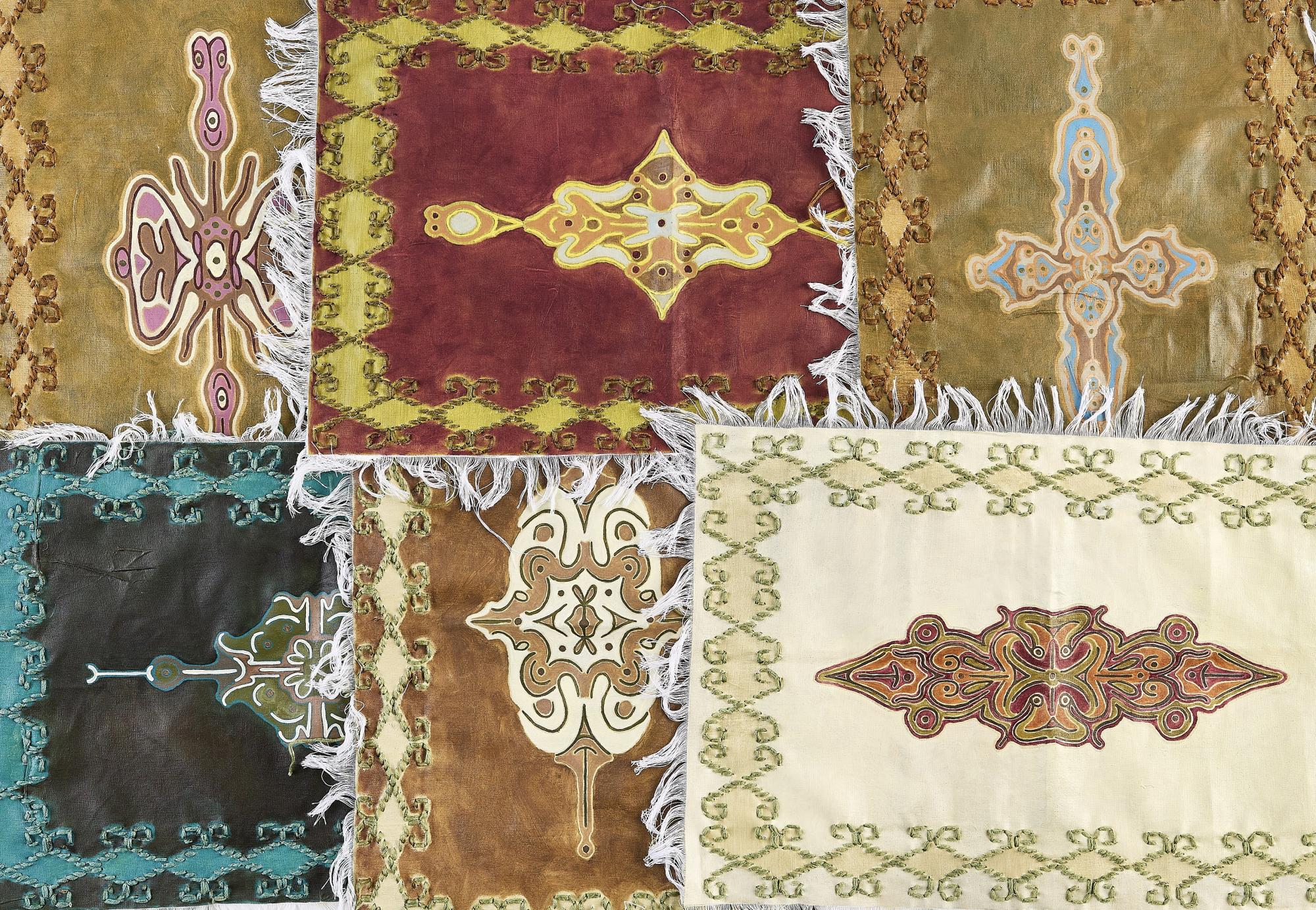
Compilation of rug paintings
Photo: Wong Jing Wei
where quiet thoughts hide, that is where i reside
This body of work is a series of rug-based paintings that explore how something can be seen while still holding back what is not immediately visible.
The work draws from the idea of the recto–verso condition, where there is no fixed front or back, but a continuous surface where different layers exist at once. What is visible becomes an entry point into what is not. The use of kain kafan as both material and structure, carries associations of care, transition and the body. It is not treated as a neutral surface, but as something that already holds meaning.
Central to the work is a process of introspection enacted through writing. Through quiet, repetitive acts of reflection, fragments of texts are produced and then embedded into the work. These are not meant to be fully read, but to sit within the layers—partially visible, partially concealed—like thoughts and conversations that are still weaving through existence.
Through layering and obscuring, the works delay immediate recognition, requiring sustained engagement in the act of looking. Meaning does not present itself as fixed content, but builds over time, through movement, distance and attention. What is unseen is not solely hidden in symbols and motifs, but felt through the process of staying and sharing time with the work.

only the eye of the heart can see (2026)


Research methodology and theoretical framework
This research introduces the recto-verso condition as a framework of viewing artworks as veiling objects, the surface of intervention between the seen and unseen.
The framework is formulated through the exploration of the recto-verso condition as a methodology and the material as a site of mediation. It also considers the unseen as something beyond invisibility. Drawing from artists' processes and engagement in art-making, this approach frames veiling objects not as passive concealments, but as active agents that intervene in the viewer's perception.
The artist’s process involves discernment in the choice of the object and its structure of viewing, the selection and manipulation of material and the methods that shape the viewers’ perceptual engagement with the work. The unseen is considered not as an absence or invisibility, but as a condition of engagement: present yet veiled, where partial access to meaning and viewing allows space for attunement to take place.
Studio practice is the central point of this curiosity where the exploration of the everyday is paired with intuitive experiments. This led to the consistent themes of introspection, concealment, playing with textual visibility and legibility in the research.

Tanika Gupta

Wang Runxin

Emma Chong Ai Chzer (张爱慈)
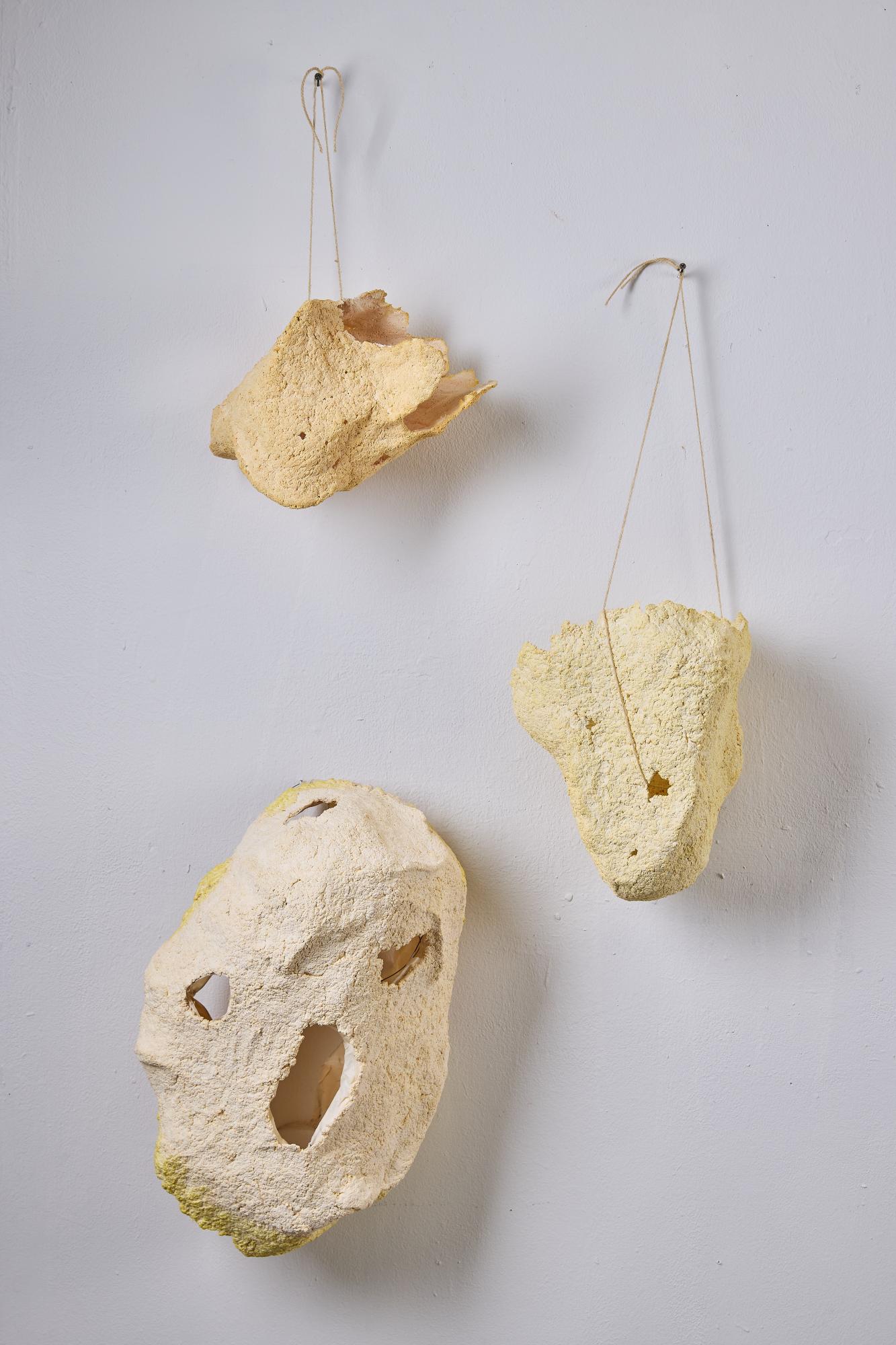
Belvia Yusgiantoro

Erny Ellyssa Munir
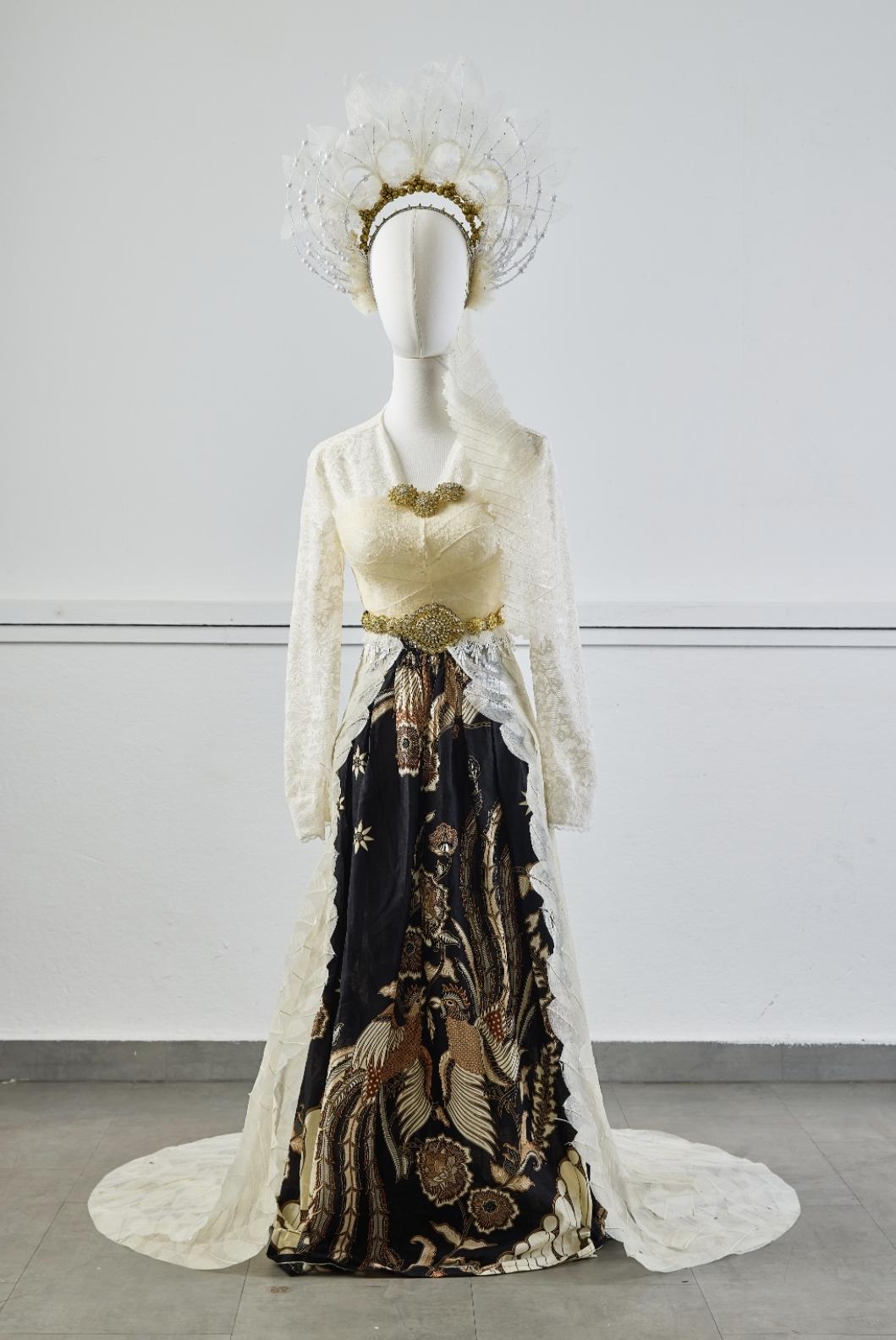
Natalie Savann Oh