

About
Think of me as a cultural translator and strategic architect who lives at the busy intersection of human behaviour, internet culture and brand growth. I do not just churn out standard deliverables. Instead, I treat design as a massive, fun puzzle to solve, bridging the gap between what audiences actually care about and what businesses need to thrive.
At my core, I am a huge systems thinker. I love zooming all the way out to decode wild cultural shifts, then zooming right back in to craft a highly engaging social campaign or a super intuitive UX flow. Whether I'm deep-diving into how Gen Z builds digital identities on Roblox or figuring out what kind of humour makes Millennials smash the like button, my creative choices are always backed by serious, empathetic research.
My secret weapon is versatility. I am just as comfortable navigating the complex, structured worlds of B2B SaaS and healthcare as I am playing in the fast-paced, vibrant spaces of sustainable fashion and streetwear. I prefer to skip the fleeting trends. I would much rather analyse the mechanics behind them to build participatory, community-led brand experiences that genuinely click with completely different crowds.
Ultimately, I am the creative anchor a brand needs when it's ready to stop talking at its audience and start building colourful worlds with them. I bring academic rigour to commercial strategy, making sure every touchpoint is culturally clued-in, highly actionable and built for long-term relevance.
Negotiating The Gap
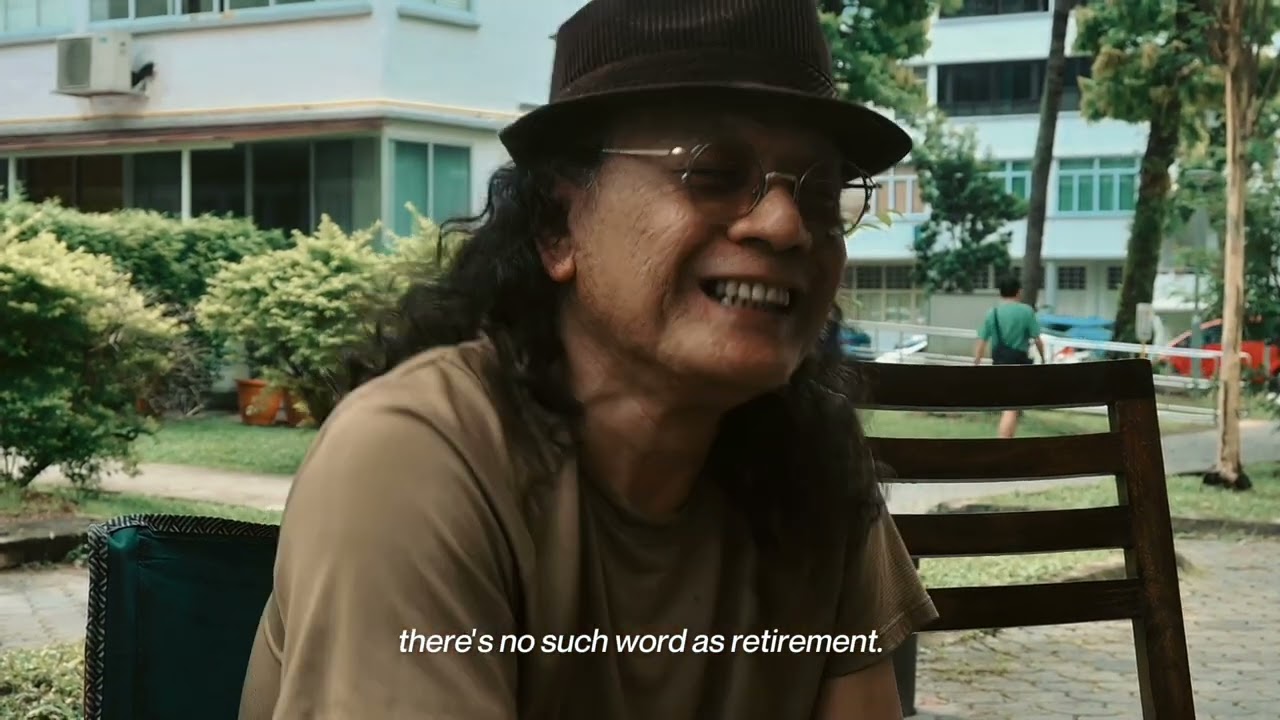
Negotiating The Gap functions as a three-part systemic design intervention, utilising crafted artefacts to surface and test collective governance among Singapore's independent creative spaces.
-
The Ethnographic Film (After The Lights Are Off): A short documentary that cross-cuts the daily realities of different space founders to visualise their shared isolation and invisible labor.
By capturing the physical and administrative tasks performed behind the scenes, it establishes a common baseline of structural precarity without explicitly narrating it.
-
The Tabletop Game (The Shared Crisis): A forced-consensus negotiation workshop utilising a physical Jenga-style mechanic. Colour-coded blocks represent financial, relational, institutional, and temporal pressures.
Participants navigate scenarios, like sudden lease changes or funding conditions, and must reach a group decision before the true cost to the tower is revealed. This design tests whether collective trust and governance capacity can hold under genuinely costly pressure.
-
The Community Archive: A public-facing digital platform built directly from the insights and "Crazy 8s" speculative concepts generated during the workshops.
It acts as a community-owned knowledge commons that preserves operational tactics, traces the provenance of shared decisions, and invites ongoing contributions from other independent spaces.

Phase 2 of the project, exhibited at Interlude 2026
Research methodology and theoretical framework
The project employs a Research Through Design (RtD) methodology, treating the designed artefacts not as final outcomes, but as the primary instruments of inquiry used to test dynamic conditions like trust under real stakes. This process is structured around John Mortimer's Triple Diamond Framework:
Understand (Stage 1): Using film ethnography to map the latent trust and precarity already present in daily practice.
Experiment (Stage 2): Deploying The Shared Crisis game to enact and observe collective governance capacity under designed, costly conditions.
Prototype and Transition (Stage 3): Embedding the generated insights into a durable, self-organizing digital archive.
The theoretical framework synthesises several systemic models to explain why independent creative spaces remain isolated and how design can intervene at a structural level:
Bounded Creativity and Spatial Precarity: Drawing on Lily Kong and Henri Lefebvre, the project identifies that Singapore's institutions prioritise measurable economic returns over relational cultural value. Simultaneously, short-term land leases prevent the physical rootedness required for deep trust to accumulate.
Gestural Politics: Referencing Terence Lee and Sherry Arnstein's ladder of participation, the framework critiques current consultation models as performative. These systems extract information without transferring real decision-making power, fostering a dependency mindset among creative spaces.
Commons Theory and Leverage Points: Following Elinor Ostrom's work on instituted trust and Donella Meadows' hierarchy of systems interventions, the thesis argues against low-leverage fixes like temporary grant increases. Instead, it targets the system's highest leverage point, self-organising capacity, by proposing a relationally defined "trust commons" capable of scaling collective bargaining power beyond a single founder's circle.

Akshara Ramanathan
Pann Lim

Ly Du Khanh Han
Franca Isabelle Pilchner

Mega Mario

Masturah Maidin