


About
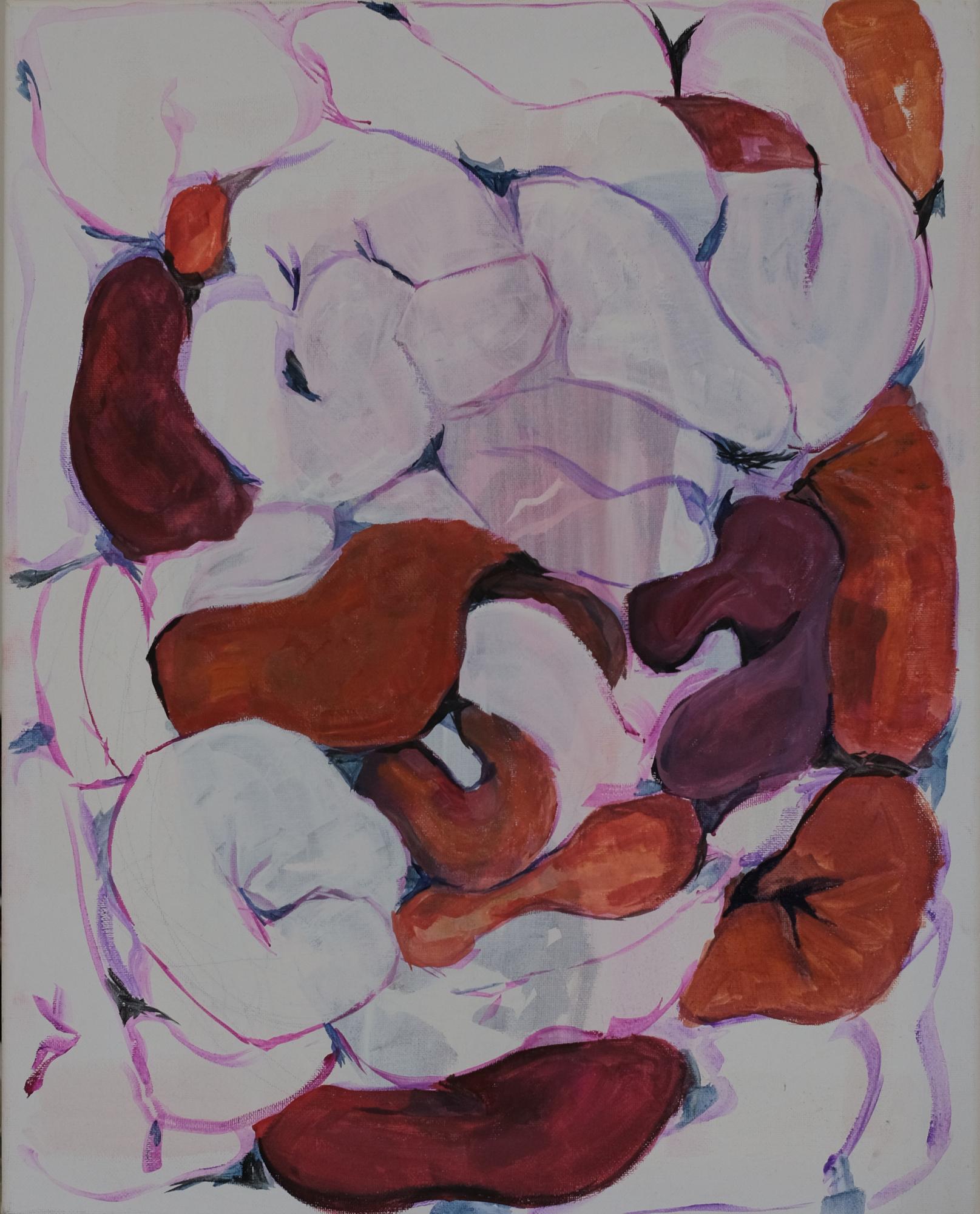
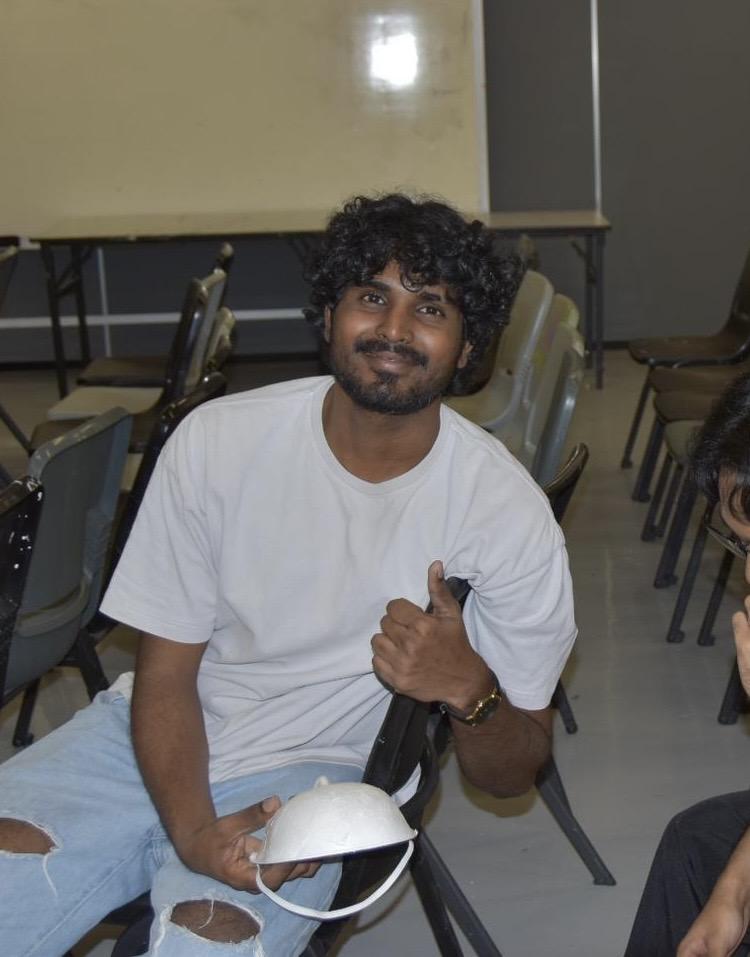
Sakthivel (also known as White Mouse) is a Singapore-based emerging artist graduating with a Diploma in Fine Arts at LASALLE College of the Arts. His practice is driven by curiosity and experimentation, with his medium constantly evolving depending on the ideas he seeks to explore.
Sakthivel is particularly drawn to kinetic works, painting and problem-solving approaches that challenge both concept and form. Rather than committing to a single medium, he allows each project to determine its own direction, working challenges—whether mechanical, conceptual or visual. This approach has shaped his interest in kinetic works, where movement becomes a way to communicate ideas and create evolving experiences.
Sakthivel's work often explores themes of time, transition and emotional reflection. He creates pieces that invite quiet contemplation, balancing simplicity with layered meaning. Recently, he began exploring animation as a new extension of his practice. His short film Ken & Obi marks his first step into animation, combining visual storytelling, sound and pacing to explore the passage of time and acceptance. This shift reflects his openness to new processes and his interest in expanding how stories can be told.
As he continues developing his practice, Sakthivel aims to explore multiple mediums while refining his voice as a multidisciplinary artist. Through his work, he seeks to create thoughtful experiences that encourage reflection and connect with audiences in subtle and meaningful ways.
Ken & Obi
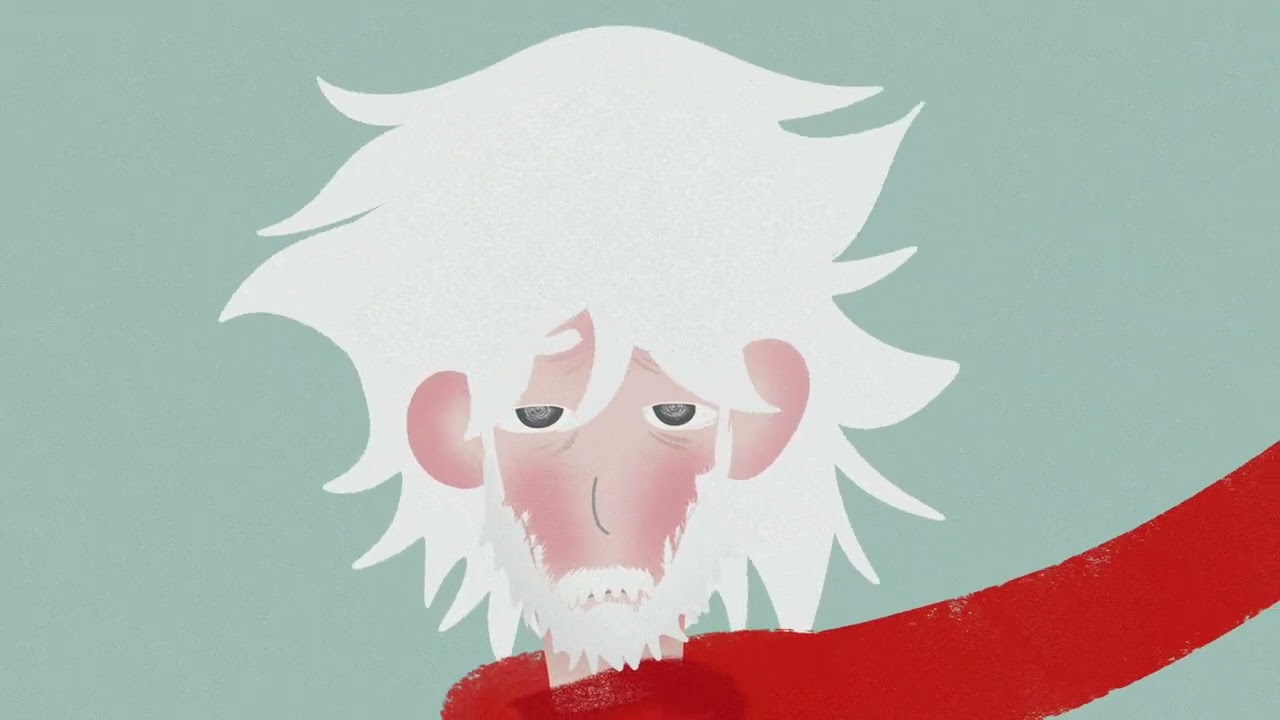
Ken & Obi is a short animated film that explores the feeling of being lost, uncertainty and the search for meaning. The project reflects an emotional journey shaped by quiet contemplation, where the protagonist navigates an internal struggle while seeking answers to an undefined question. Rather than presenting a clear narrative, the film focuses on atmosphere, pacing and subtle visual cues to communicate emotion.
The story follows Ken as he moves through a reflective landscape, accompanied by a quiet presence. Throughout the film, Ken appears to be searching for something—an answer, a reason or a sense of understanding—yet the nature of this search remains intentionally ambiguous. This ambiguity allows the film to centre on the emotional experience of feeling lost, rather than resolving the narrative with a definitive explanation.
Visually, the film uses minimal forms, textures and colour to create a contemplative tone. Moments of stillness and slow pacing allow space for reflection, while monologue, sound effects and original ukulele music contribute to the emotional rhythm of the piece. The combination of these elements aims to create an introspective viewing experience that encourages audiences to interpret the work in their own way.
As the film progresses, the search for answers begins to shift. Rather than arriving at a concrete conclusion, the narrative suggests that understanding may come from letting go of the need for answers altogether. Ken & Obi ultimately reflects on the idea that uncertainty is a natural part of existence, and that acceptance can emerge when we stop searching for questions that may not need to be answered.


Research methodology and theoretical framework
The development of Ken & Obi was guided by a practice-led research methodology, where ideas were explored through making, experimentation and reflection. Rather than beginning with a fixed narrative, the project evolved through iterative visual development, testing pacing, composition and emotional tone.
Sketches, storyboarding and animation tests were used to explore how minimal movement, silence and atmosphere could communicate feelings of uncertainty and introspection. This process allowed the work to develop organically, with each stage informing the next.
The project also drew from reflective practice, where personal experiences and emotional states shaped the direction of the film. By examining feelings of loss, confusion and the search for meaning, the work became a form of self-inquiry. Visual decisions such as slow pacing, minimal dialogue and subdued colour palettes were intentionally used to create space for contemplation and emotional interpretation.
The theoretical framework of Ken & Obi is influenced by existential themes, particularly ideas surrounding uncertainty, meaning and acceptance. The narrative reflects the human tendency to search for answers, while gradually suggesting that meaning may exist beyond defined explanations. Ambiguity and open-ended storytelling were intentionally used to allow viewers to form their own interpretations.
The project also draws inspiration from poetic and philosophical storytelling found in works such as The Little Prince, The Boy, the Mole, the Fox and the Horse and Song of the Sea. These works present simple, child-friendly narratives that carry deeper emotional and philosophical meaning for adult audiences. Similarly, Ken & Obi aims to balance accessibility with depth, creating a gentle and visually minimal experience that resonates differently depending on the viewer.
By combining contemplative pacing, minimal visuals and layered themes, Ken & Obi seeks to create a quiet and reflective experience. The film embraces simplicity as a storytelling tool, encouraging audiences—both young and adult—to reflect on the feeling of being lost, uncertainty and the possibility that not all questions require answers.
Zelfi Chung

Hu Hanyin
Aiden Setiadi

Tyra | ARyT

Quan Xinhui
Chyanne Goh Hui Lin