




About
Aarushi Nagar is a graphic designer and visual storyteller whose work is shaped by culture, societal norms and personal observation.
She is drawn to the way design can communicate beyond aesthetics, creating work that is visually engaging while also carrying meaning. Through her practice, she hopes audiences can find interpretation, emotion and relatability in each creation.
She explores a range of mediums including zines, branding, editorial design, creative writing and visual storytelling. Much of her work focuses on social issues, identity, human behaviour and contemporary culture, using design as a way to start conversations and encourage reflection. She enjoys creating narratives through typography, imagery and writing, allowing each project to feel immersive and emotionally connected.
A large part of her creative process comes from observation. Everyday interactions, traditions, expectations and shared experiences often inspire the concepts and visual language behind her work. She is interested in creating pieces that feel relatable while encouraging audiences to reflect about the ideas being presented.
As a designer, she sees storytelling as a way of building connection between people and experiences. Her goal is to create work that not only captures attention visually, but also stays with audiences long after they have experienced it.
Dollf@ce
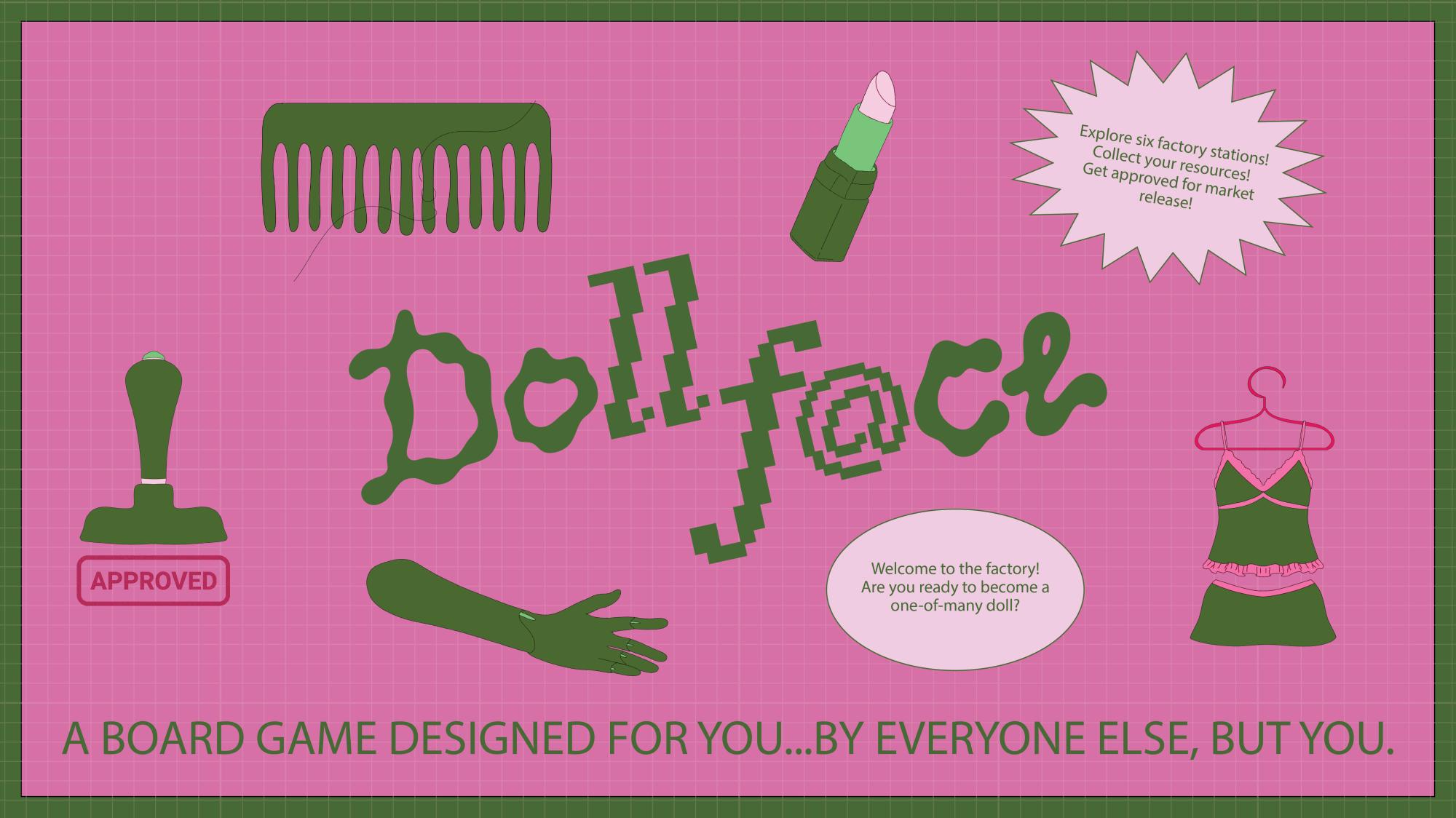
Dollf@ce is a narrative-driven board game that explores how identity and gender expectations are shaped by external systems and societal pressures.
Using the metaphor of a doll factory, players move through controlled stages of production where they build and 'complete' a doll based on predetermined standards. While the game appears playful and familiar at first, the system gradually introduces restrictions, limitations and unexpected disruptions that affect each player’s progress.
Central to the gameplay are 'Problem Cards', which introduce real-life feminist issues such as workplace inequality, body image expectations, gender stereotypes, objectification and societal pressure placed on women. Through satire and interaction, the game reflects how systems can influence autonomy and individuality, often shaping people’s identities and experiences beyond their own control.


Cards

Brochure

Social Media
Xavier Lim Zi Xu

Prakriti Sarawgi
Mohamed Farhan Bin Mohamed Salahuddin

Manasvi Kedia

Mirza M

Lee Chaewon