




About
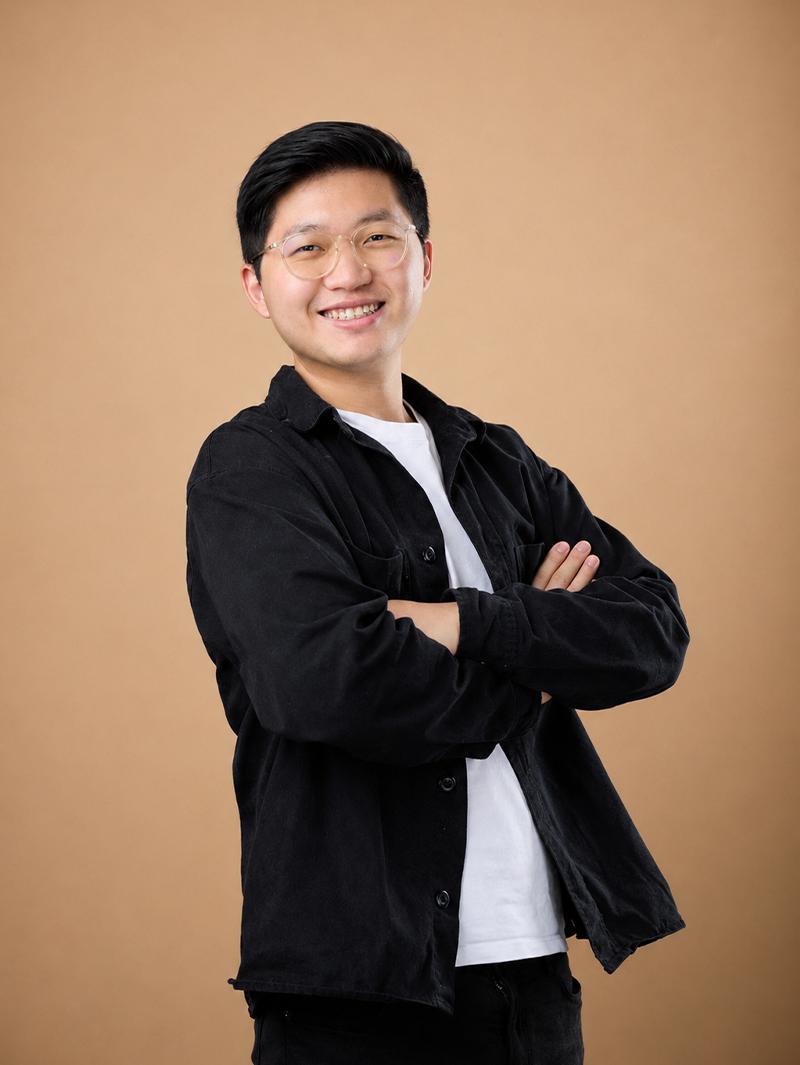
Dave Yu Warsanta is an international student from Surabaya, Indonesia. Living overseas has shaped his interest in social design and user experience, increasing his awareness of how people adapt and navigate different environments.
He is passionate about user experience design, allowing him to explore how people interact with the world in subtle and meaningful ways. His work focuses on observing everyday behaviours and translating these moments into thoughtful design possibilities, with a focus on people’s stories and lived experiences. He is particularly interested in how small decisions, routines and situations influence the way people think and feel in their daily lives.
He is drawn to the process behind design, valuing observation, testing, learning and refining as much as the final outcome. He sees experimentation as a way to build a better understanding of people and approach design with more care and intention.
Beyond design, he enjoys music production and playing instruments such as piano, guitar and drums as a way to unwind and escape from reality.
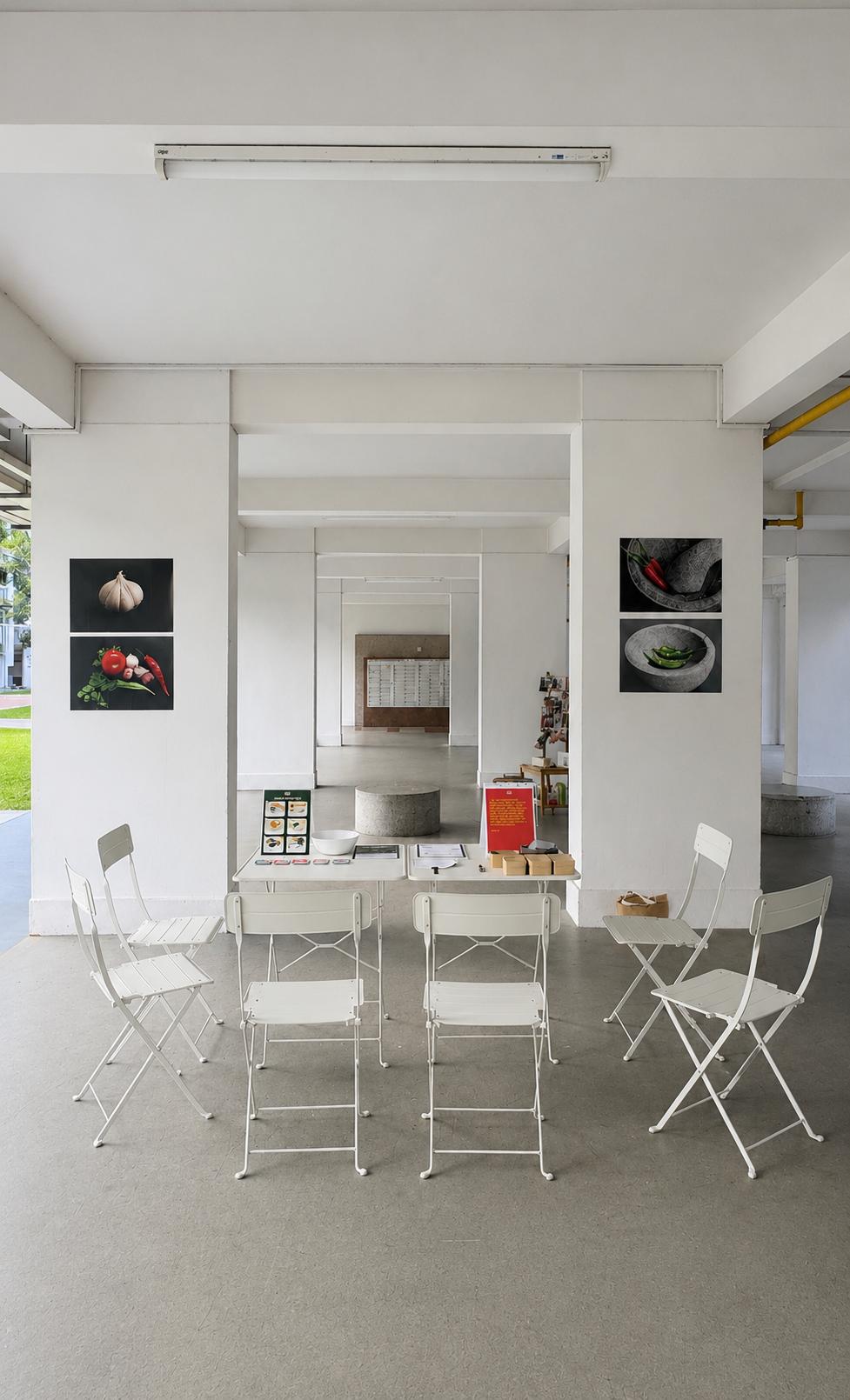
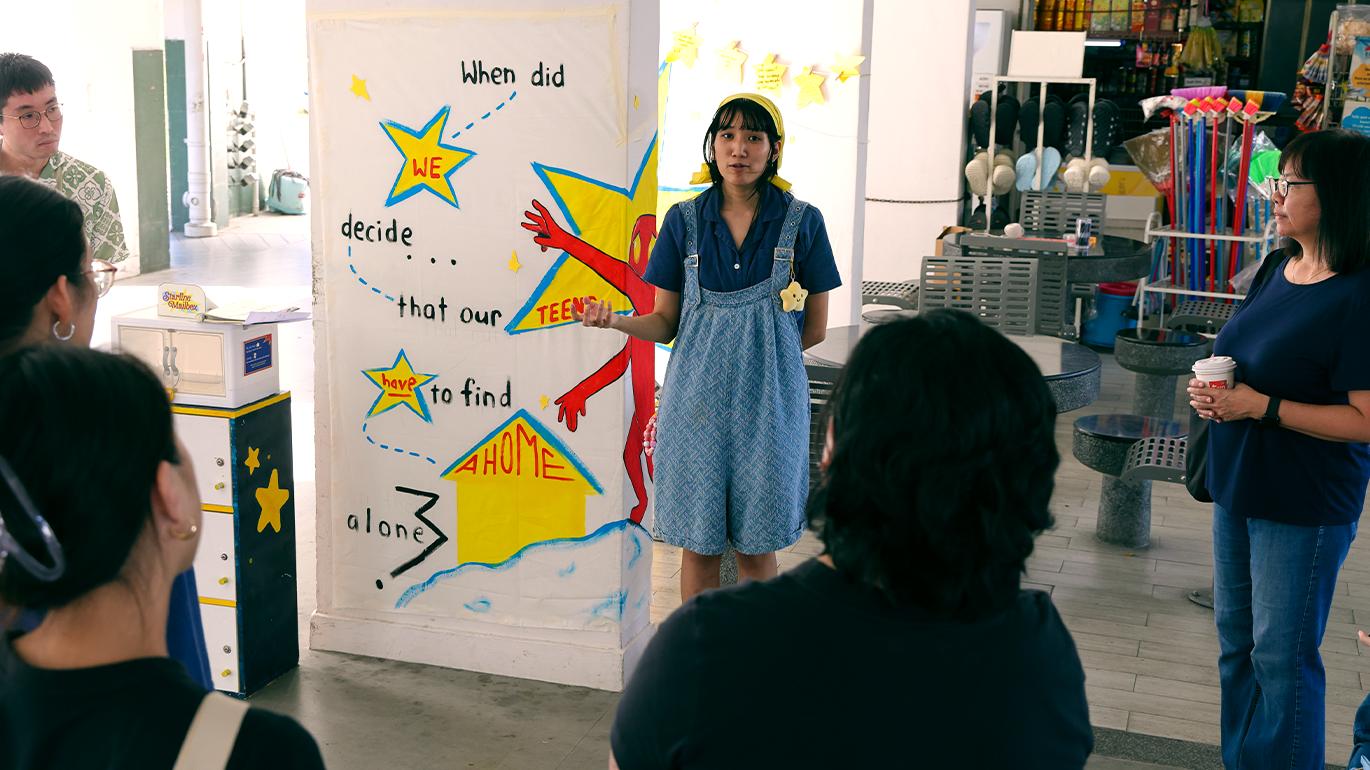
This space at Block 2, Hougang Ave becomes a small gathering point for sharing everyday food memories and community connections. A simple setup of chairs, table objects and ingredient visuals invites people to take part in a shared story of belonging within the neighbourhood.
Shared Table
Shared Table explores how everyday food ingredients can reveal differences in identity, memory and lived experience within a multicultural neighbourhood.
The project is situated in Hougang rental flats, where communal meals are held once or twice a month, bringing together residents from diverse cultural and socioeconomic backgrounds. While these gatherings create opportunities for people to share space, they do not always create opportunities to understand how individuals relate to food differently.
This project focuses on familiar items such as rice, chilli, garlic and soy sauce, highlighting how the same ingredients can be interpreted in different ways depending on cultural background, personal habits and everyday constraints.
For some residents, food is closely tied to memory, family and identity. For others, it is approached more practically, shaped by affordability and routine.

Shared Table is a participatory setup that invites individuals to engage with and express their interpretations of common ingredients, revealing the diversity of thought and experience.
List of Cards:
Preference card: 'Pick ingredients you like to eat.'
Cooking card: 'Pick ingredients for a dish you usually cook.'
Memory card: 'Pick ingredients that remind you of home'—Choose chilli, garlic, onion chicken.
Everyday card: 'Pick ingredients you use most often.'
Question card: Participants are encouraged to respond to simple, open-ended prompts as well.


Research methodology and theoretical framework
The research was conducted through direct observation during communal meals, as well as interviews with residents who live within the rental blocks.
These conversations revealed a range of relationships with food, from emotional and nostalgic connections to simple and functional approaches. A key insight is that food does not carry the same meaning for everyone, even within the same community.
In response, the project proposes Shared Table, a participatory installation that invites residents to engage with a set of everyday ingredients and express how they would use them. Participants are asked to select ingredients and respond to prompts such as what they would cook, who they would cook for or what feels missing.
Rather than focusing on cooking or consumption, the activity centres on interpretation, allowing differences to become visible and shareable.
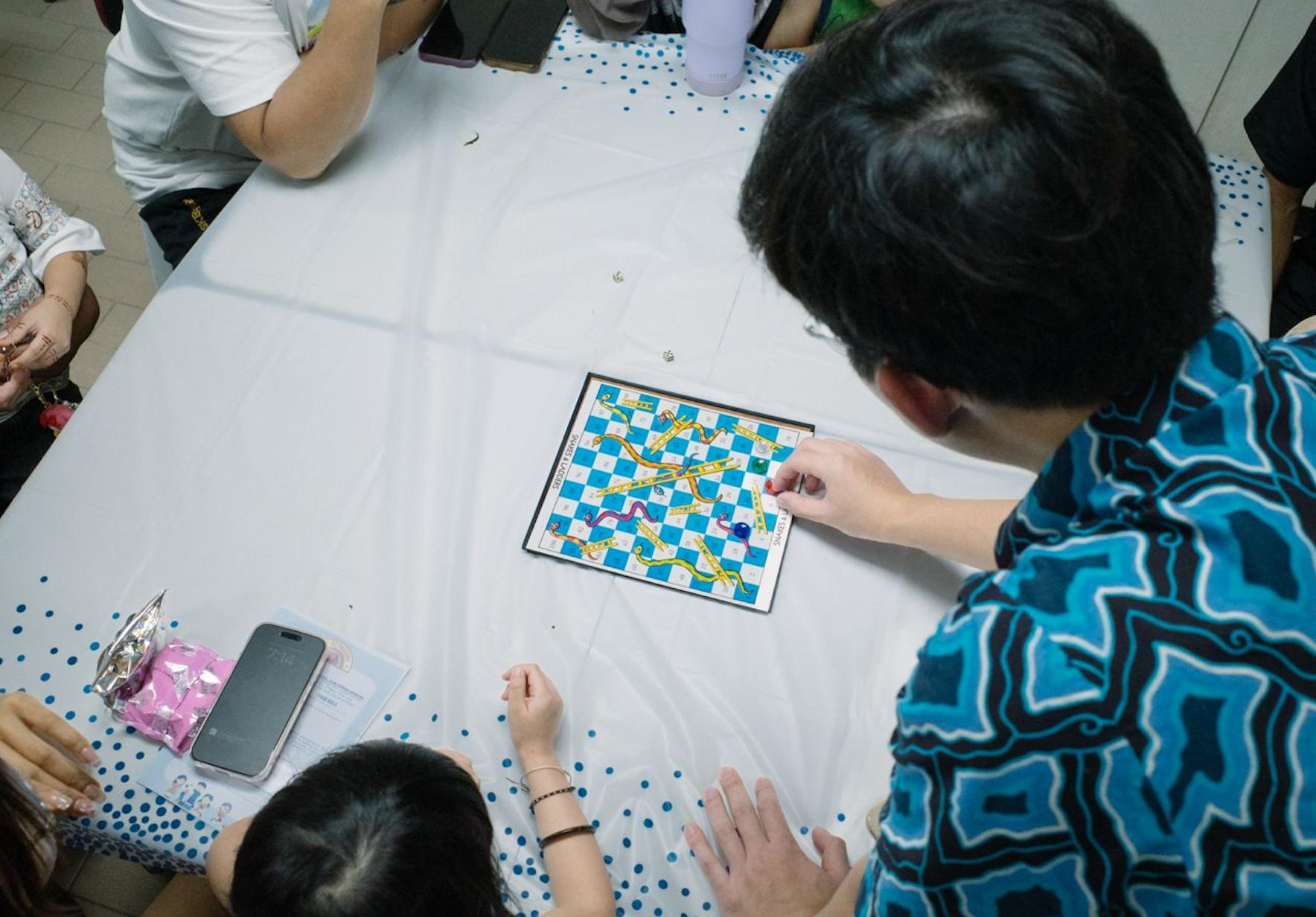
Small participatory activities were introduced to create more natural and approachable conversations with residents. Instead of relying only on formal interviews, ingredients themselves became tools for engagement and storytelling.
Prompt cards, ingredient illustrations and simple food-related questions were used to encourage participants to reflect on their own cooking habits and everyday experiences. Questions such as “What would you cook with this?”, “Which ingredient reminds you of home?” or “What do you usually eat?” encouraged residents respond in a more personal and spontaneous way.
These activities revealed that familiar ingredients could trigger memories, opinions and discussions much more easily than direct questioning. Some residents began talking about family recipes, sambal preferences or meals they cooked for their children, while others reflected on practical and affordable meals they relied on daily.
The use of ingredients as conversation starters also reduced pressure within the interaction, allowing conversations to emerge casually through choosing, pointing, comparing and sharing stories with one another.
Through this process, the activity itself became part of the research methodology, helping uncover how food functions not only as nourishment, but also as a medium for identity, care, routine and cultural interpretation.
Masha Nyanna Wee Junyadi
Lim Bridget
Andrea Lau

Iffa Taheera binte Ibraham

Nigel Sng Wei Jian
Syamimi Binti Sabarudin
