




About
Delia is a designer and visual communicator who believes that improved experiences and systems can be created through communication, engagement and meaningful human connection.
With a background in visual communication and branding, she brings a social lens to her work, ensuring that ideas remain relevant by engaging with stakeholders and understanding their perspectives.
She is keen to explore the various ways she can contribute across industries with a practice that balances practicality with playfulness, grounded in authenticity and passion.
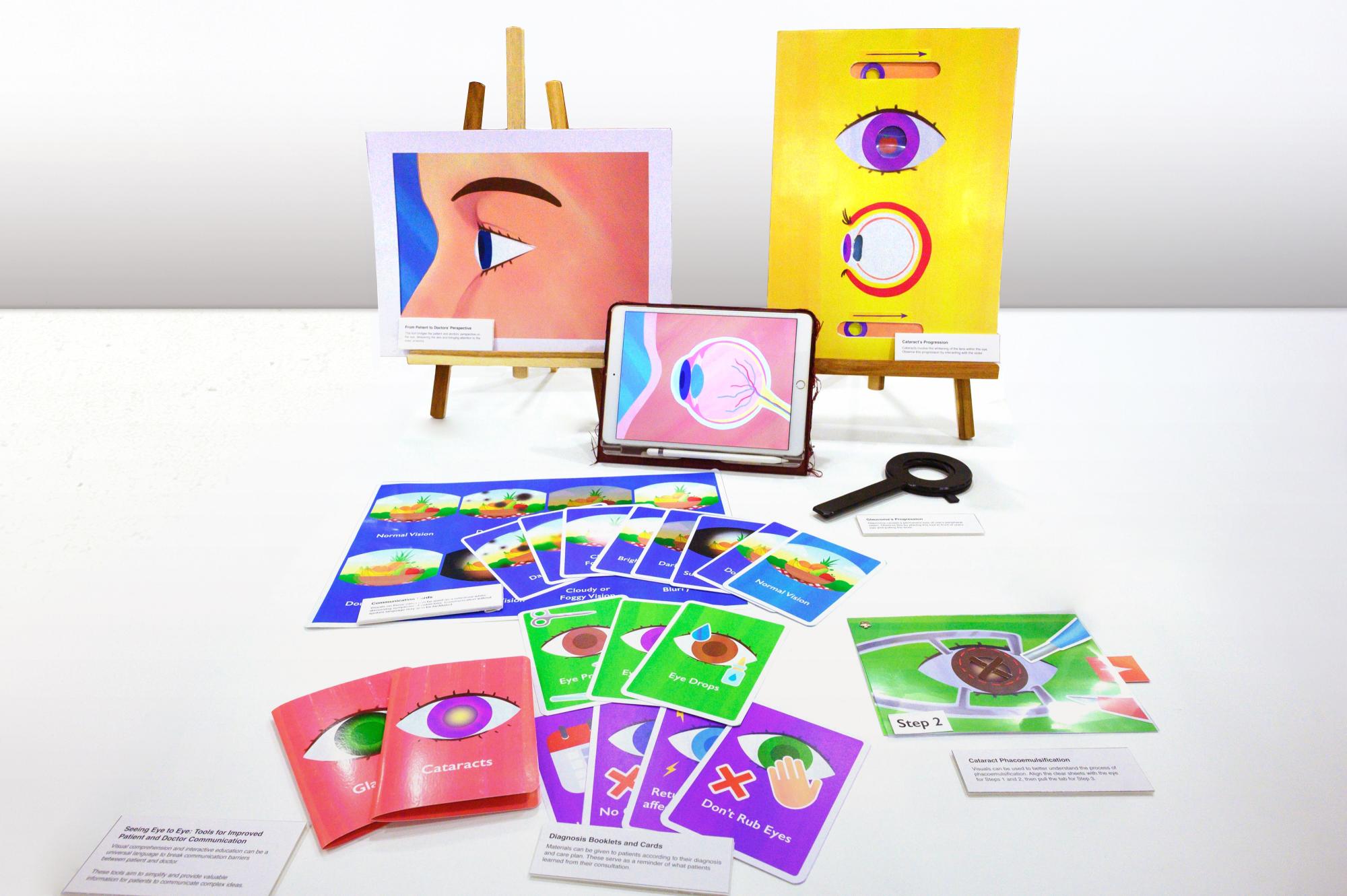
Seeing Eye to Eye: Improving Eye Health Literacy through Better Patient-and-Doctor Communication
Can clinics provide better opportunities for health education? How can we nurture health literacy during a patient's journey? Seeing Eye to Eye is a project that has produced educational and communicative tools to support eye health literacy for patients within clinical settings and health consultations.
Theoretical research, active surveys and personal accounts of patients reveal that patient support and health literacy influence positive patient outcomes. While local healthcare clinics already provide patient-centred care and build patient trust, health literacy is not supported in these settings. As such, how can we strengthen health literacy to enable long-term benefits and improved patient outcomes?
As doctors are the primary stakeholders in a patient's journey, it is important to ensure that they are equipped to help patients understand eye health. However, current communication barriers —such as language differences, a lack of time and eye health knowledge gaps between doctor and patient — can hinder patient comprehension. This leads to the question: how might we design a universal language between doctor and patient to improve patient outcomes through stronger health literacy?
While there are many methods in health communication, visual communication and interactive education can serve as a universal language to overcome barriers between patients and doctors. These tools introduce eye health topics and different conditions, aiming to simplify complexities and provide valuable information for patients. The design is catered to different stages of the consultation process to support doctor—patient communication and improve overall understanding of eye health.


Research methodology and theoretical framework
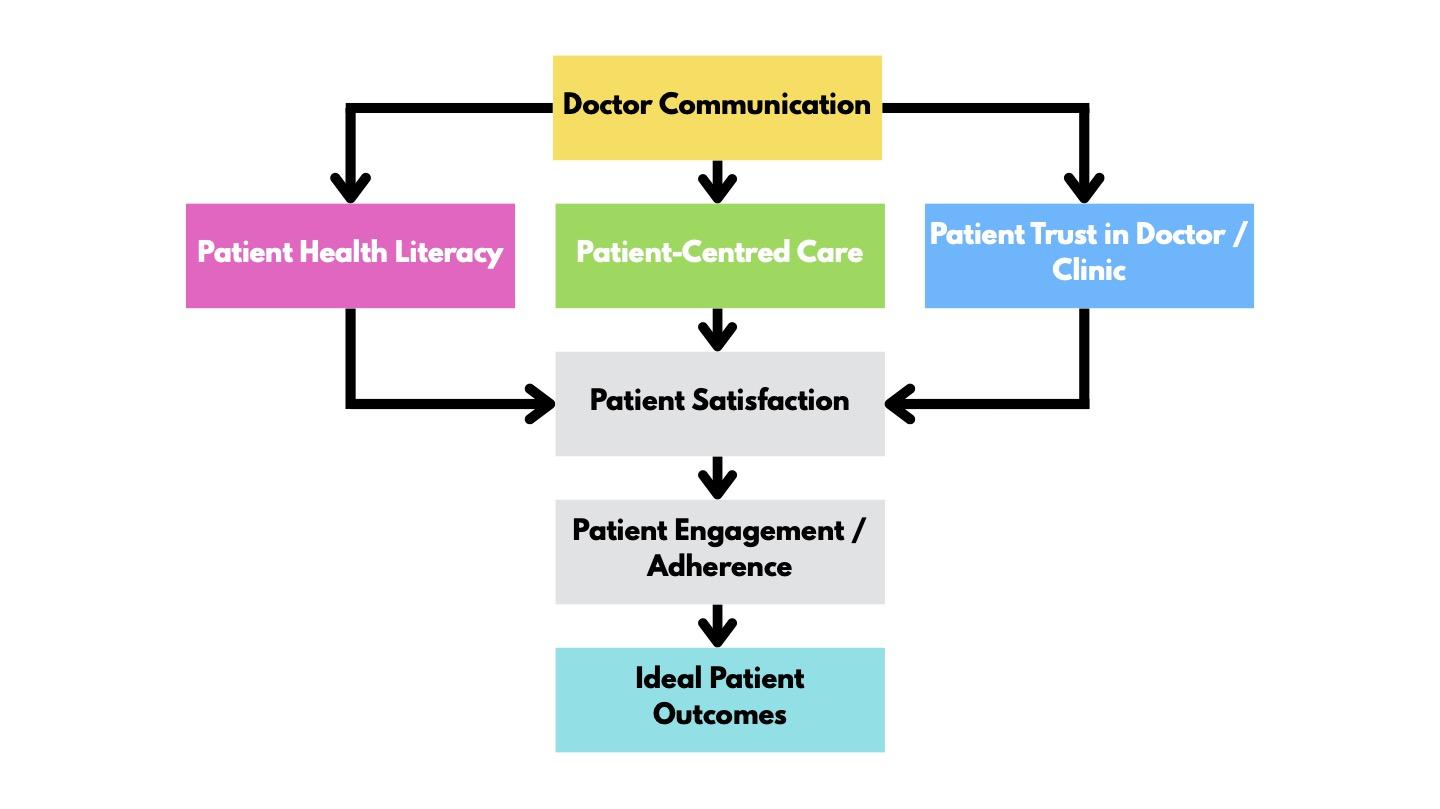
Literacy alone does not produce outcomes. Theoretical research identifies patient support as a key contributing factor, with patient-centred care and trust often helping patients to feel seen and understood, ultimately resulting in ideal patient outcomes.
These three pillars —patient health literacy, patient-centred care and patient trust — work together to enhance engagement and satisfaction, leading to positive patient outcomes. As doctors are the primary stakeholders in a patients' journey, their communication plays a key role in activating these three pillars. Ethnographic research was used to explore how this theory manifests in practice.
Research was conducted through three different methods: 1) quantitative survey and data analysis, 2) behavioural observation and ethnography and 3) interviews with relevant stakeholders.
Quantitative data was first collected to understand patient perceptions. Using a two-by-two matrix, 123 individuals mapped their responses using stickers based on their perceptions, alongside 25 participant rationales. Findings showed that most patients already trusted Singapore's local clinics and would seek them for medical care when needed. However, many participants identified lower perceived health literacy levels, revealing a key gap to address.
Secondly, to explore how doctor communication influences patient outcomes, doctor-patients interactions were observed in three consultation clinics, involving over 38 patients to assess if the three pillars were activated. This process revealed that patient-centred care and patient trust were consistently present, while sharing of health knowledge was less consistent.
Lastly, to identify whether health knowledge shared by doctors was understood well, several first-time patients were accompanied around the clinic and interviewed. One patient demonstrated a strong personal purpose and strong health literacy, while another was puzzled by her referral to a hospital clinic and showed a lower engagement with health literacy. This was not attributed to either the patient or her doctor, but rather reflected a gap in the system that did not effectively activate health literacy.
This process surfaced a key insight: ophthalmologists and patients perceived the eye differently. While doctors visualise a cross-section of the eye with anatomical details, patients primarily understand it from a functional, external view — whether the eye was working as intended. This highlighted the importance of bridging this gap to support a patient-centred approach to eye health literacy.
The methodology used in this study is inspired by children's books, using pop-ups and moving pictures to introduce topics for learning and simplify complex concepts.
Lim Bridget
Cheong Wen Xuan

Tan Yee Jing

Iffa Taheera binte Ibraham

Celine Wong Zhi Qing
Aveline Ang Swee Leng (Tomato)