


About
Fang Kee is a multidisciplinary designer with a background in visual communications and social design. Sparked by her time as a graphic designer, she gradually moved toward a design practice with greater impact on everyday lives.
Currently, her work is guided by research and socially-engaged approaches to respond to evolving societal constraints within and beyond, translating insights into new potentialities. At the heart of her practice is a curiosity about human behaviour, connection and the potential that people hold. She believes that design does not always have to arrive at a solution. Sometimes it speculates, reimagines and opens a myriad of possibilities for the future.
When not designing at her desk, she can be found people-watching in the community. Her long engagement with communities has shaped her into a designer who leads with empathy and stays close to the ground. She enjoys sharing food over stories and heartfelt conversations with people in the community.
Mapping Connectedness: Understanding the Social Networks of Seniors in Communities
How does a community invite itself? This project began with a simple exploratory activity: strings of yarn passed between hands, connecting those who invite and were invited.
What emerged was a web of connections, tracing the relationships that quietly existed in the neighbourhood. This relational web is often overlooked in the pace of life, and systems have never quite known how to see it.
Mapping Connectedness examines the social lives of seniors in community through their relationships and the places they share, revealing the unseen strength that holds them together.
By surfacing these invisible networks, this research seeks to offer something of value to those working with ageing communities. It offers a methodology that is participatory and grounded in the lived realities of seniors rather than top-down assumptions.
It offers a strength-based perspective that looks not just at who is isolated, but at who is connecting others and sustaining the social fabric. It also prompts reflection for seniors themselves to look at their own social worlds and consider what they might tend to or change.
Loneliness among seniors and the spectre of lonely deaths are challenges that no single programme or policy can fully address. However, understanding how connection actually works is a meaningful place to begin.
This project attempts to first surface connectedness so it can be understood. The question is: who is ready to act on what these communities reveal about how we are connected?

Social network map of a senior community


Research methodology and theoretical framework
This project employs an ethnographic-based research alongside semi-structured interviews to understand how seniors connect and interact within the community.
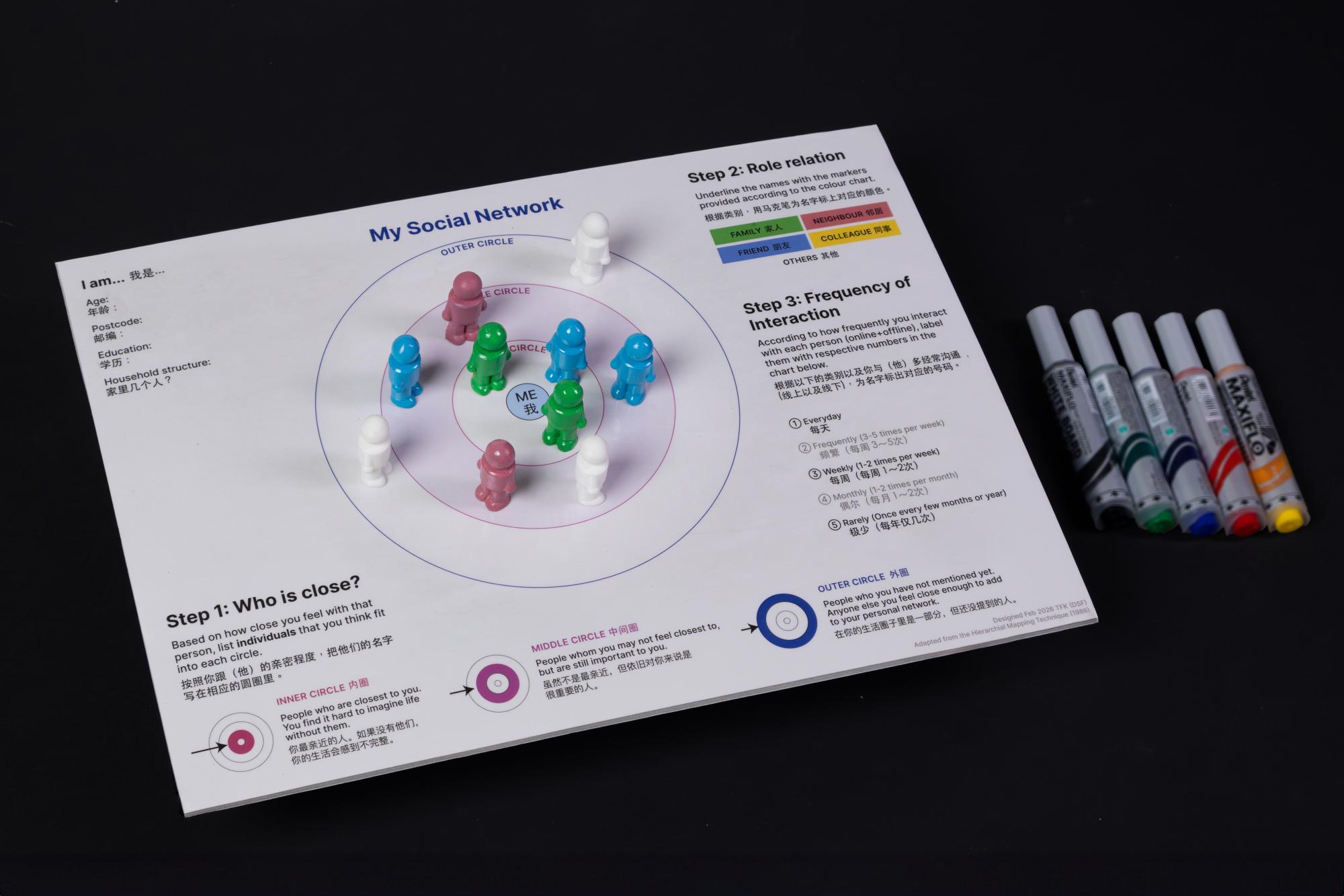
Seniors were invited to map out their personal social networks to surface the family, friends, neighbours and community figures that populate their everyday lives. Alongside this, low-barrier participatory activities were designed to enable place-based mapping with seniors.
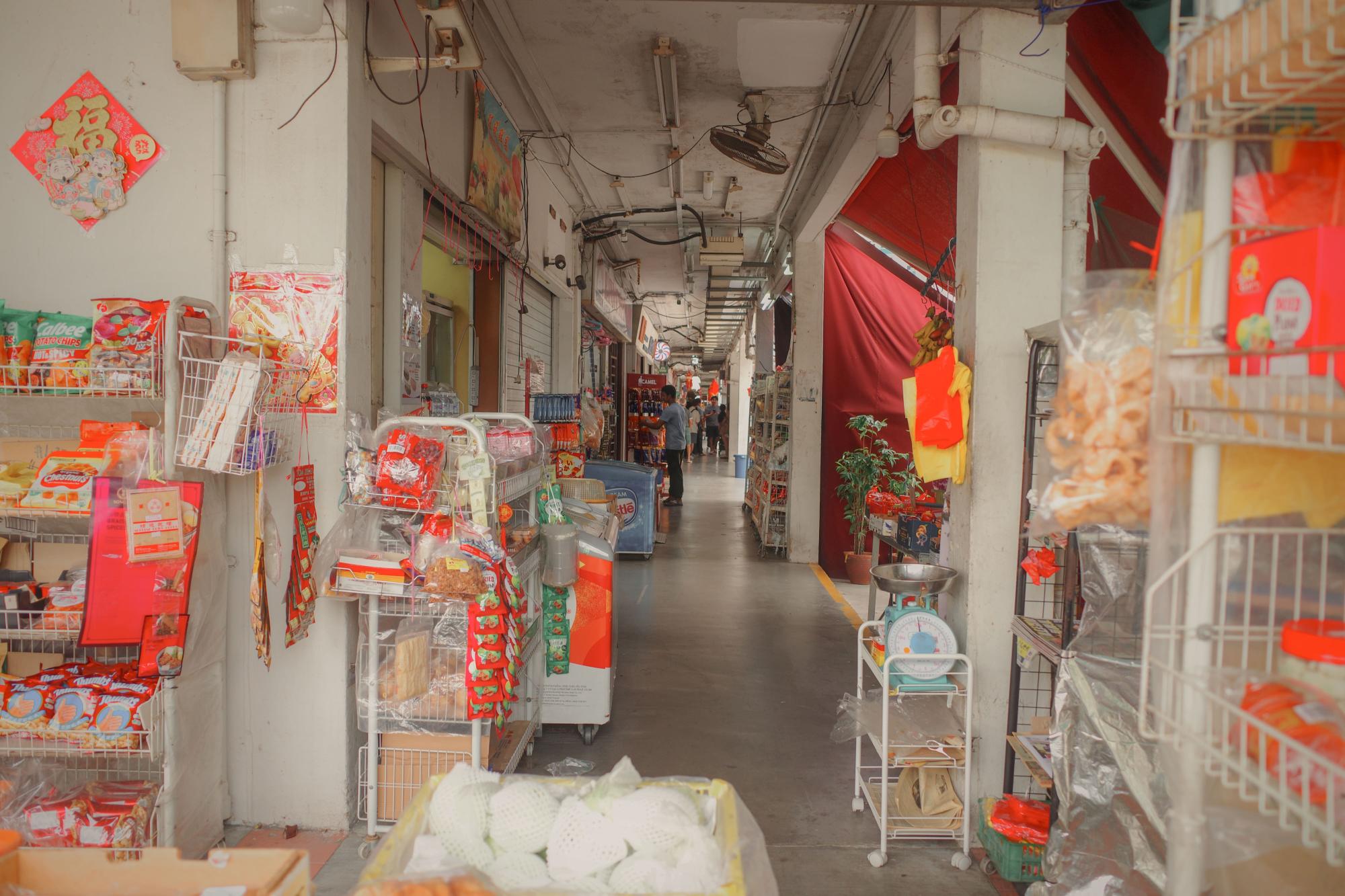
The map centres around questions such as where they live, where their social lives concentrate and what the places they value and recommend are in the neighbourhood.
This project derives at two distinct types of maps: a relational map and a place-based map. When the personal social circles of individuals were put together, a mega social network map revealed the social characteristics of the community.
Meanwhile, the geographical map showed the shared assets in the neighbourhood and surfaced the residents’ relationships to the commonalities around them. Read together, these two maps begin to tell a more complete story of how a community holds itself together.
The insights uncovered through this project challenge some of our assumptions about vulnerability and social isolation among seniors. Two close friends, in particular, tell a story that numbers alone cannot capture, and yet it is precisely through these relationships that social resilience is quietly self-organised. Communities hold themselves together in ways that formal systems rarely see or credit, let alone know how to strengthen.

Syamimi Binti Sabarudin

Dionne Yeo

Nur Aliyah Binte Mohammad Noor Azman
Andrea Lau

Iffa Taheera binte Ibraham

Lim Bridget