



Elijah Chia



About
Elijah is a designer driven by a simple, albeit slightly 'cheesy' conviction: design is the medium, but love is the outcome.
A graduate of the BA (Hons) Design for Social Futures programme at LASALLE College of the Arts, with a background in product design, he bridges high-level speculative thinking with tangible 3D prototyping. His practice is rooted in community co-creation and a desire to amplify voices, solve friction and extend grace through thoughtful intervention.
He enjoys using narrative and humour as tools for his designs. Whether he is building logical systems or provocative, conversation-starting objects, Elijah approaches every project with resourcefulness and wit. He believes in taking the work seriously without taking himself too seriously.
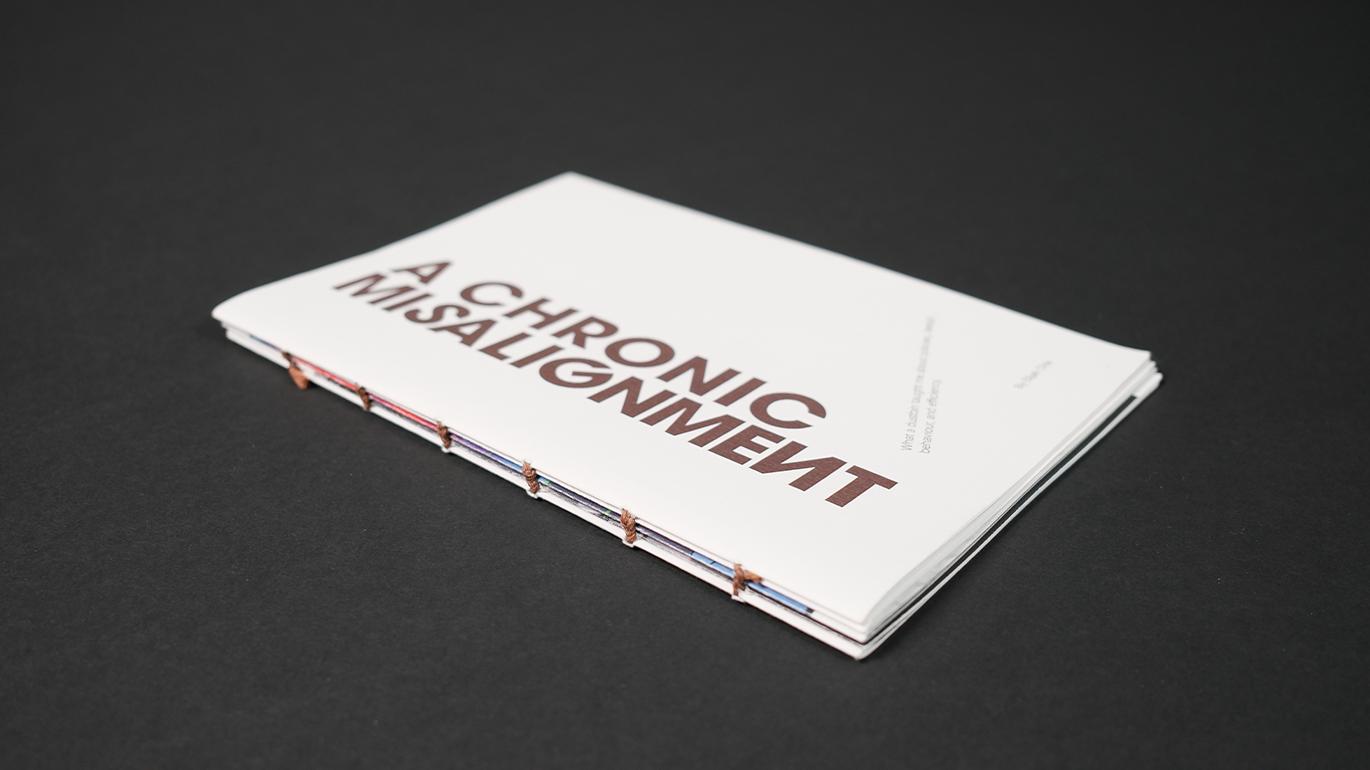
A Chronic Misalignment
Hospitals are among the most sustainability-conscious institutions in the world, yet they are also among the most challenging places to implement sustainable practices effectively. 'A Chronic Misalignment' is a semester-long thesis investigation exploring this paradox within the ophthalmology department at National University Hospital Singapore.
The project began with a simple observation: three sustainability initiatives were introduced in the department; one succeeded while two did not. The focus of the investigation was not on the failures themselves, but on understanding why they failed and, more importantly, what these failures reveal.
Using ethnographic research methods, the project employed extended observations, semi-structured interviews with staff and a series of live behavioural experiments to map the difference between how sustainability initiatives are designed from the top down and how they are experienced on the ground.
While the findings were not surprising, they revealed that behavioural change initiatives often underestimate the cognitive load faced by clinical staff. Nurses, doctors and support staff are not resistant to sustainability; rather, they are navigating a complex web of protocols, time pressure and patient responsibilities. Recycling compliance does not fail because people lack concern but because the system complicates the process unnecessarily.
The most unexpected finding surfaced from what had initially been dismissed as a problem: the hack bin. Throughout the department, staff had discreetly taped plastic bags to the edges of tables, creating improvised waste receptacles that were neither designed nor approved, yet widely used.
This project illuminated a staff-designed solution that outperformed the official initiative. The hack bin shifted the focus of the investigation from "how do we get staff to comply?" to "what are staff already telling us through their makeshift solutions?"
The project culminates in two interconnected outputs: a design zine that documents the department's bin archetypes, staff behaviours and experimental findings as an editorial artefact, and a set of physical models that speculate on potential improvements for the clinic or hospital.
'A Chronic Misalignment' does not propose a redesigned bin or a new policy. Instead, it argues for a more challenging approach: acknowledging that the mismatch between institutional logic and clinical reality is structural. Surfacing this disparity is more valuable than covering it up with another initiative.
The staff already know what works; the design question is whether the institution is willing to listen.


Research methodology and theoretical framework
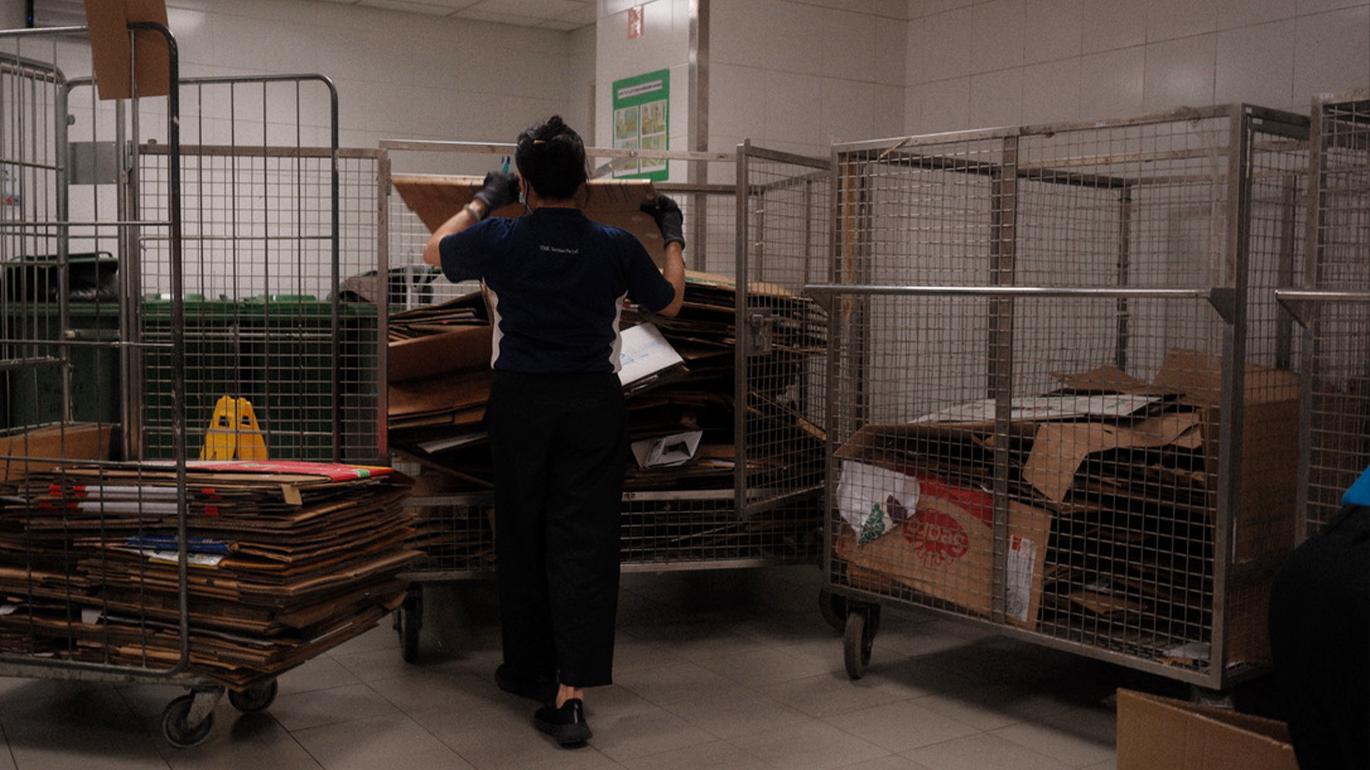
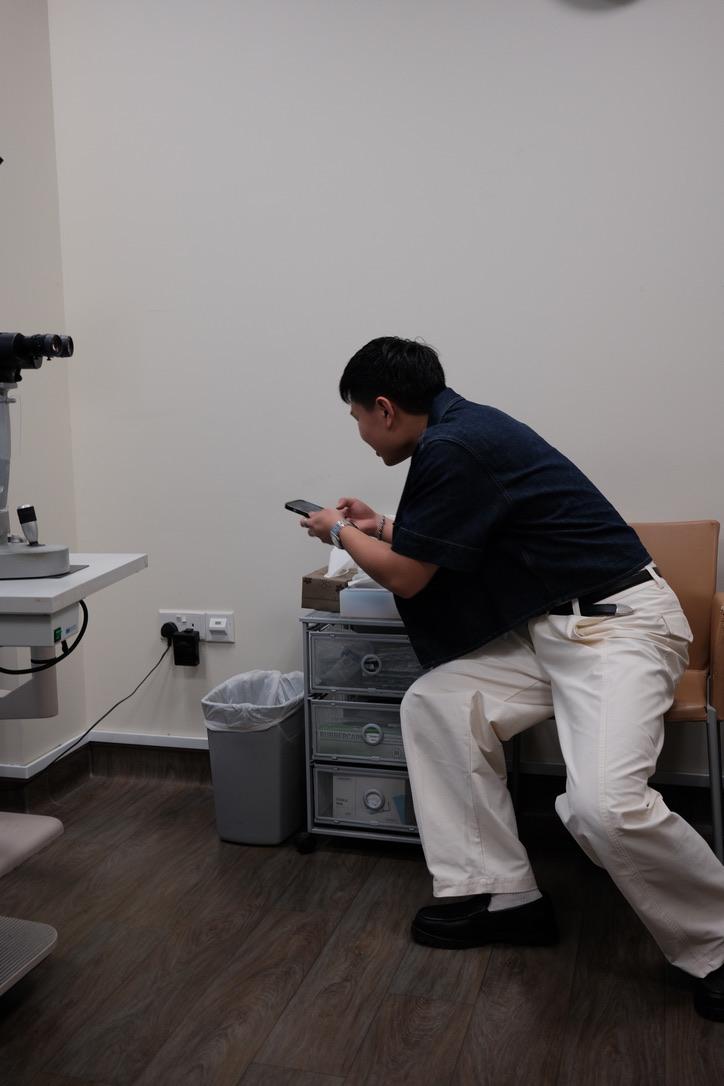
Ethnographic observation formed the core method of this project. Timestamped field sessions tracked staff movement through the department, where their attention was focused and where sustainability behaviours were expected to fit in.
A shadow study of a doctor's morning shift identified six moments where recycling compliance collided with the demands of clinical work. A separate observation of a cleaner's evening rounds revealed a quiet contradiction at the heart of the plastic-lite policy.
Semi-structured interviews with staff and management provided the institutional layer, surfacing how initiatives were communicated, how they were understood on the ground and where they diverged.
Behavioural experiments tested small environmental changes directly in the field, including bin placement, aperture size, transparency and labelling. Each result, including those that showed no effect, contributed to a clearer picture of what was actually shaping behaviour.
Two frameworks anchored the analysis. The COM-B model (Capability, Opportunity, Motivation) offered a way to understand behaviour as a product of conditions rather than individual will. Willis et al.'s principles for sustaining organisational culture change provided a structural lens for evaluating each initiative.
Syamimi Binti Sabarudin

Aveline Ang Swee Leng (Tomato)

Delia Lee Ru Li

Andrea Lau

Masha Nyanna Wee Junyadi
Tee Ling Wah
