



About
Celine is a designer‑researcher who explores emotional and communal storytelling through design interventions that preserve voices and evoke reflection.
As a curator of emotional connections, she is particularly interested in how everyday food gestures sustain memory and strengthen community ties.
Her research positions design as a method of inquiry. Through iterative making and thematic mapping, she reveals how food and gesture act as anchors of emotional resonance, turning artefacts into interventions and objects into carriers of collective memory.
The video presents a visual record of community engagement through food, weaving together short clips and photographs from different sessions.
It highlights everyday gestures, conversations and shared moments, revealing how food fosters connection and reflection. By bringing together voices from multiple communities, the video forms a continuous narrative of joy, comfort, memory and familiarity.
Designed as an accessible window into the project, it invites viewers to witness how ordinary acts of eating and sharing carry emotional resonance and sustain ties across generations.
Special thanks to the seniors of Share‑A‑Pot – Church of Our Lady Star of the Sea and the residents of Sembawang Crescent for generously sharing their voices, stories and everyday food experiences. Their participation and reflections made this project possible and shaped its narrative of community, memory and connection.
Traces of Aftertaste
"How does familiar food evoke emotional connections within communities?"
Traces of Aftertaste investigates how everyday food practices evoke emotional meaning and sustain community connections.
By focusing on repetition and familiarity, the study reveals how ordinary acts of eating and sharing become anchors of joy, comfort, memory and belonging. Food is understood not merely as sustenance but as a medium through which emotions are expressed, and communities find resonance in shared routines.
Community engagement was central to the inquiry. Residents reflected on daily food practices, revealing how simple dishes—such as porridge and chicken rice—carry layered meanings. These accessible foods hold emotional weight precisely because of their everyday presence, becoming anchors of memory across generations.

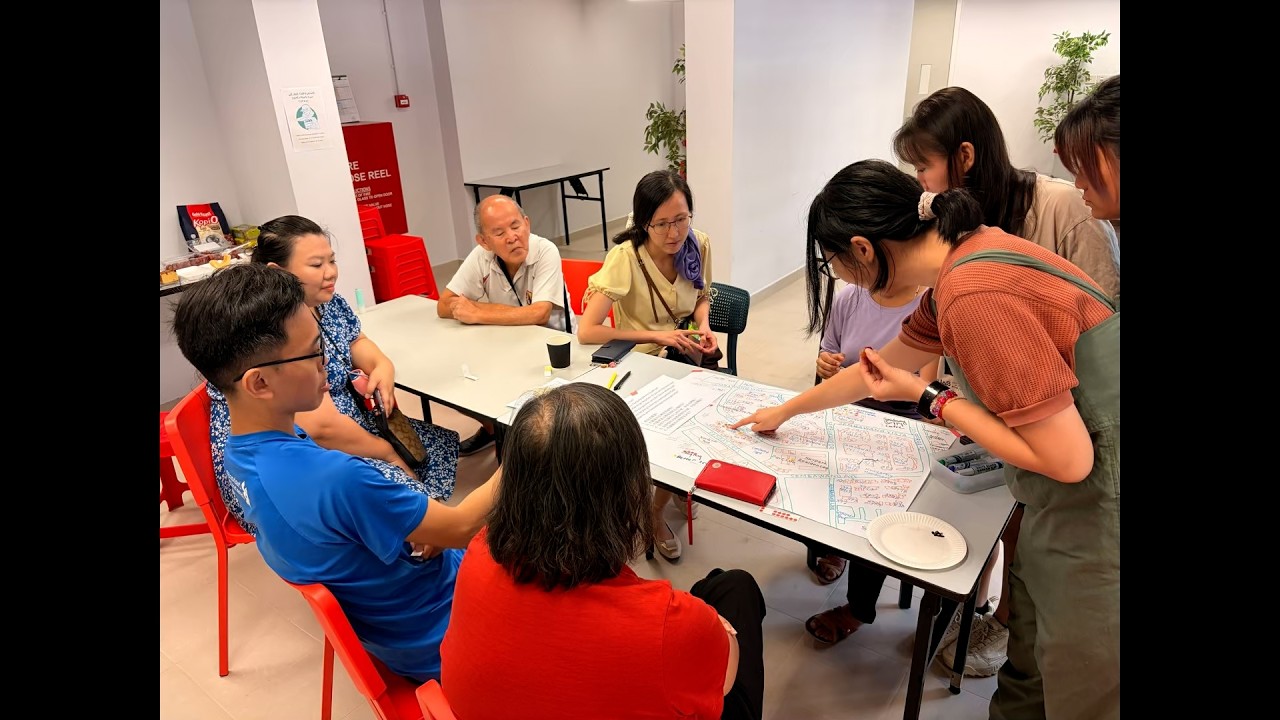
Community mapping workshop—a participatory session where members gathered around a shared map to share ideas, stories and perspectives. In addition to learning about their community, the activity created a common space for connection.


Research methodology and theoretical framework
Traces of Aftertaste is practice‑led and community-centred, positioning design as a form of inquiry.
Community engagements were conducted through both group sessions and individual conversations, allowing diverse voices to surface around everyday food practices. Co‑facilitated sessions with community leaders created participatory environments in which residents collectively mapped their food experiences, while one‑to‑one conversations provided space for more personal reflections and nuanced emotional accounts.
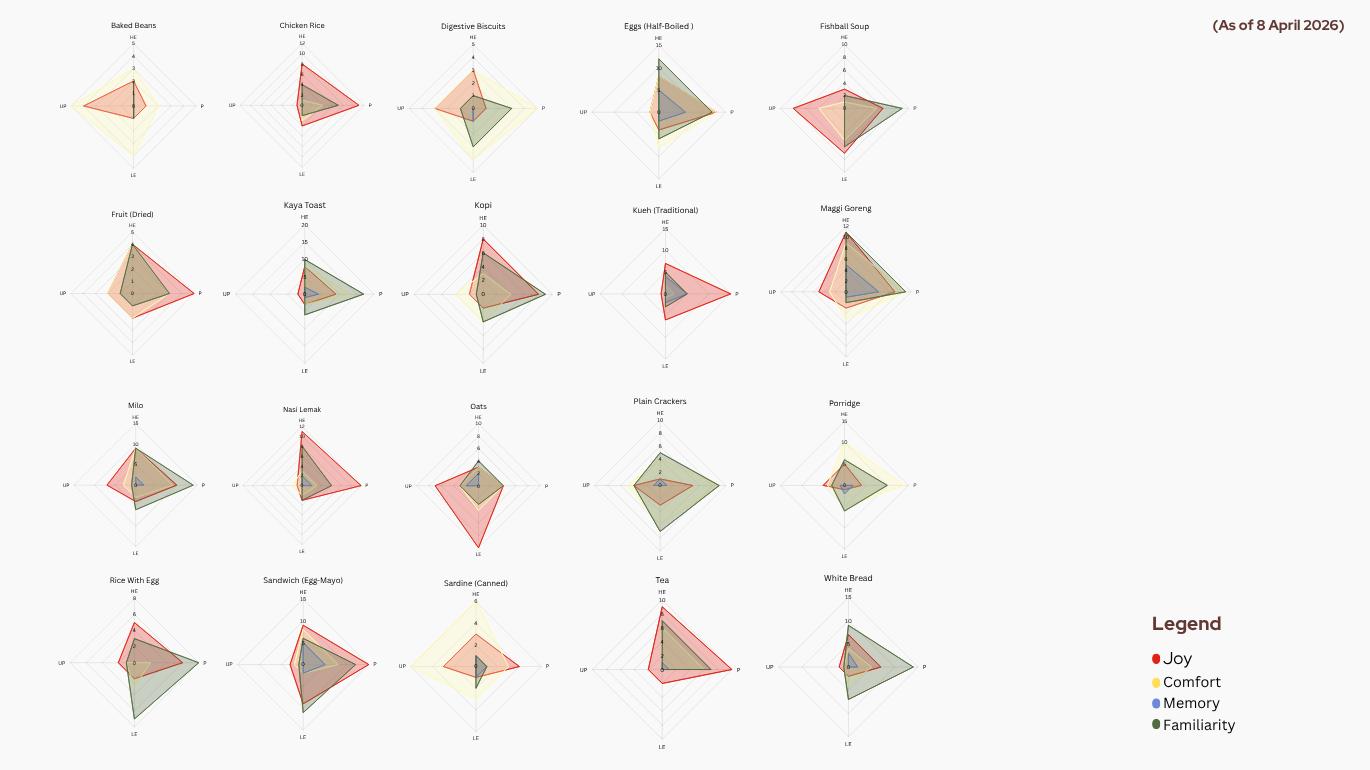
Design interventions—including card‑deck prompts, worksheets and food charts—enabled participants to express feelings visually and narratively. These artefacts functioned as tools for dialogue, helping to uncover likes, dislikes and layered emotional responses to familiar foods. Iterative making and thematic mapping guided the process, revealing overlaps across four themes: joy, comfort, memory and familiarity.
By combining participatory design, qualitative observation and thematic analysis, the project demonstrates how design can uncover emotional connections embedded in food gestures and transform them into collective records of resonance.
Andrea Lau

Tee Ling Wah

Nur Aliyah Binte Mohammad Noor Azman
Lim Bridget
Dionne Yeo

Elijah Chia