


Tan Yee Jing


About
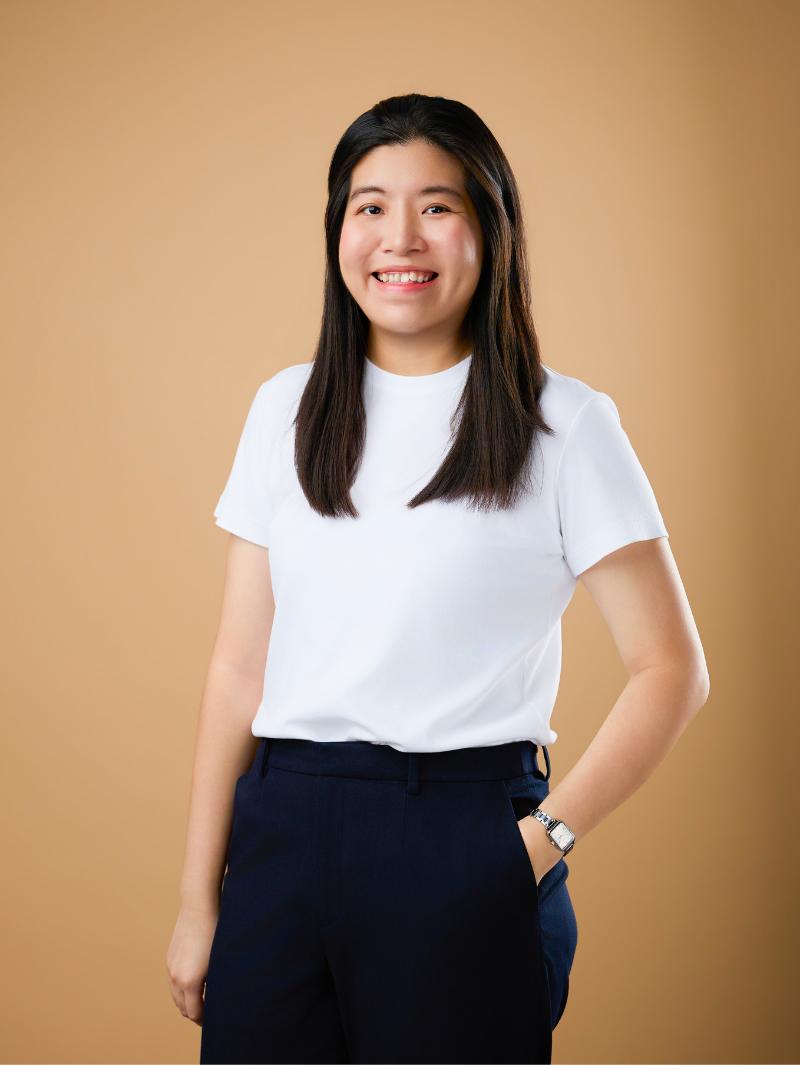
Tan Yee Jing is a final-year student of BA (Hons) Design for Social Futures programme at LASALLE College of the Arts and is part of the first graduating cohort.
She is interested in how systems shape the way people actually work, especially in healthcare. Her work focuses on how things unfold in practice, not just how they are intended to. She often works through observation and time on the ground, paying attention to small behaviours, workarounds and moments of friction within everyday systems. These become starting points for design, helping her identify where workflows can be clearer and more intuitive in real use.
Her final-year project spans across design, healthcare and sustainability, partnering closely with multiple stakeholders. This has led to an interest in uncovering how decisions made upstream quietly influence everyday experiences and how small shifts in design can create wider impact across a system.
Along with this, she has studied coastal environments, particularly mangrove ecosystems, and collaborated with a scientist to understand material-ecological relationships, expanding her understanding of interconnected systems. Her earlier social design projects with elderly communities and caregivers continue to shape how she thinks about care and everyday experiences.
With a background in service and experience design, her approach is iterative and grounded in context, with ideas developed and tested over time. She is interested in roles that focus on patient experience, clinical workflows and designing within complex systems.
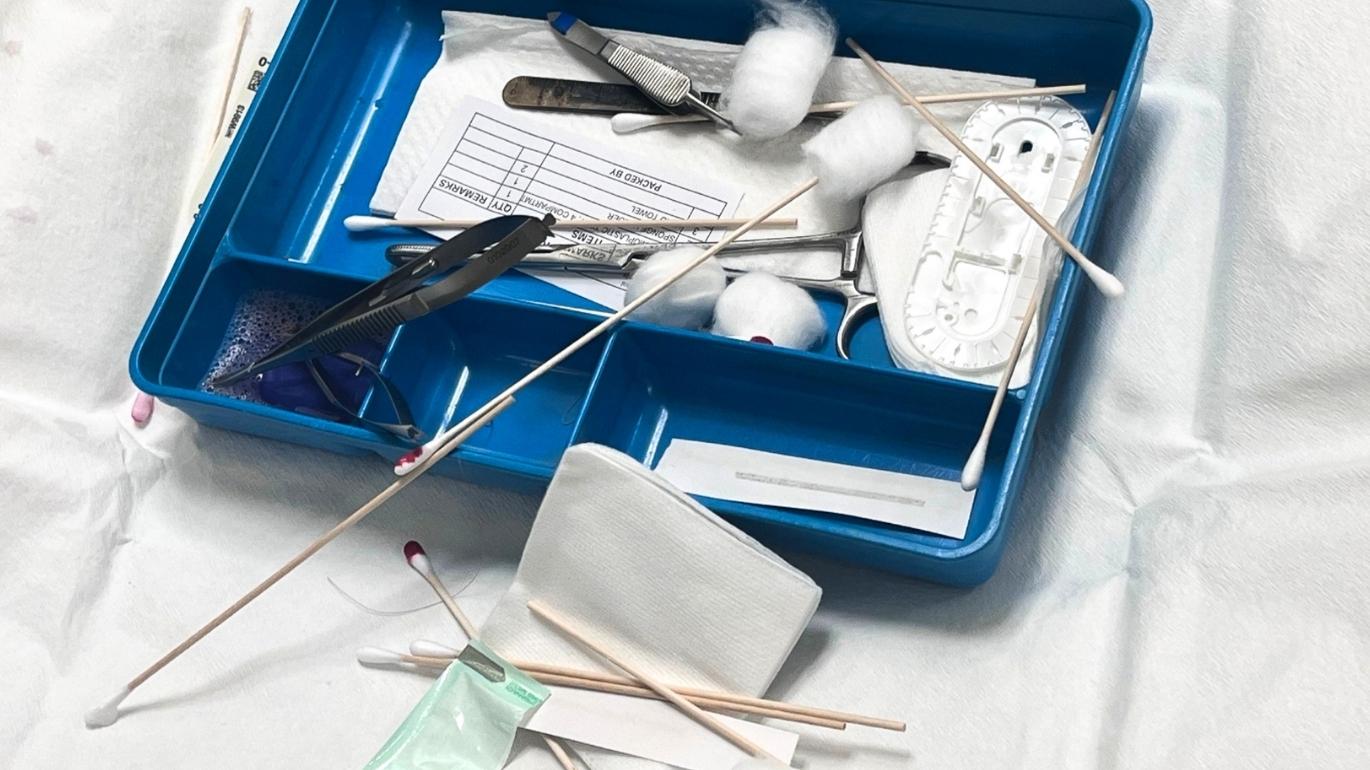
Tools are mixed in a single compartment, requiring doctors to search through and carefully handle sharp tools in the procedure clinic at the National University Hospital.
Rethinking Ophthalmic Procedure Workflows through Instrument Organisation
This project explores how the organisation of surgical tools shapes the way ophthalmic doctors work in practice.
Over nine months in the National University Hospital Ophthalmology Department, the work moved from on-the-ground observation of clinical workflows and shadowing, to interviews and a close study of the procedure tray as the interaction point between nurse preparation and surgical use. This was followed by co-creation sessions with clinicians and iterative prototyping.
While instruments are organised to move through cleaning, packing and sterilisation, this order breaks down at the point of use. Consumables, instruments and sharps are placed into a single compartment, where they mix together and become harder to retrieve.
During procedures, doctors often search through the setup while carefully handling sharp tools, disrupting flow and concentration under time pressure. Doctors described the tray as largely unhelpful and poorly organised, more a storage space than a working surface. Tools are placed there, but the setup does not support how doctors actually work.
Observing these repeated movements made it clear that the organisation of instruments shapes how doctors work. They adapt to the environment and work around what is provided to them. Through co-creation sessions with consultants and residents, tools were reorganised around sequence and movement, visibility and risk.
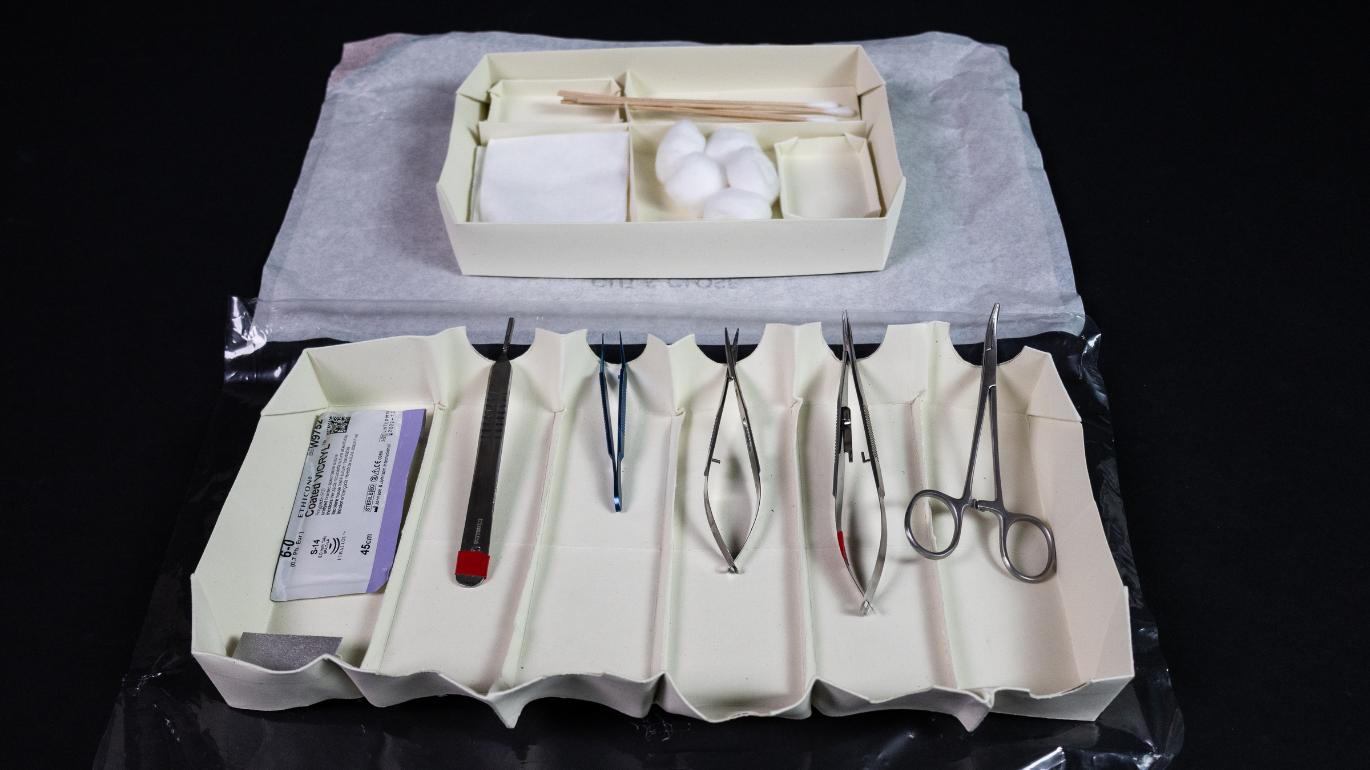
These insights were translated into iterative cardboard and paper prototypes exploring grooves, elevation and flat-pack structures that better support more intuitive pickup and safer handling. Upon testing the cardboard prototypes with the consultants, it became clear that the flexibility to rearrange tools during use could be addressed earlier by defining a fixed layout that matches the doctors' workflow before the procedure.
The project introduces a flat-pack system that reduces the need for individually wrapped instruments while minimising storage and packaging volume. This led to the proposal of two pre-packed sets: a 'Clean Cotton Set' for cotton consumables used throughout the procedure and a 'Cut & Close Set' for instruments used in sequence. Instead of opening multiple individual packs, nurses would prepare and open a single, organised set.
A typical complex procedure generates about 143g of packaging waste, and with the proposed pre-packed sets, this drops to 87g, while the setup time reduces from around 3 minutes to under a minute.
Though small per case, these changes have the potential to scale across daily operations. Conversations with stakeholders across sterility, procurement, manufacturing and sustainability helped to ground the proposal within real clinical constraints.
More than just redesigning a tray, this project rethinks how small changes at this level can shape behaviour, better support doctors' movement, reduce cognitive load and improve surgical workflows in practice.

Deconstructing how tools are arranged, spaced and picked up during procedures, translating doctors' behaviours into structured pre-packed sets through grid studies and prototyping.


Research methodology and theoretical framework
To understand how tools are used during procedures, observations were conducted across procedure clinics, focusing on small, repetitive actions such as searching for, adjusting and picking up tools.
Through co-creation sessions with consultants and residents, tools are physically rearranged using modular containers to explore how they are picked up, moved and used during procedures. When given the choice, doctors organised tools by sequence, risk and frequency, rather than instrument category.
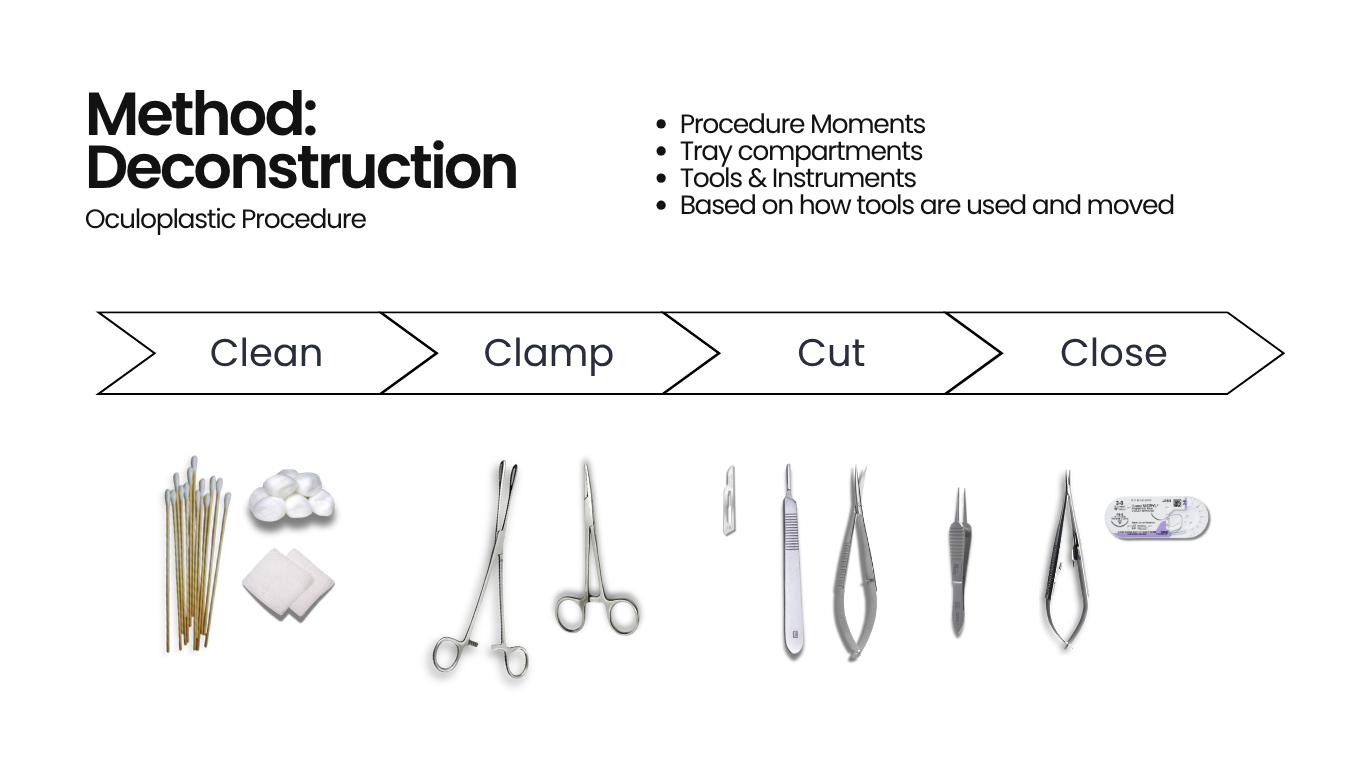
Using deconstruction, the oculoplastic procedure was broken down into key moments—clean, clamp, cut and close—to understand which tools are needed at each stage. Individual instruments were further studied through grid-based layouts and tool cutouts to understand how they sit, how much space they require and how they are most comfortably retrieved.
Clear behavioural patterns emerged across sessions. Doctors often adjusted tools to improve tip visibility, slightly elevated them to enable quicker, more precise pickup and separated sharps for safer handling. These behaviours informed the development of iterative cardboard and paper prototypes exploring grooves, elevation and flat-packed structures.
At its core, the work is grounded in the idea that organisation shapes behaviour. Designing for movement, visibility and flow can better support how doctors work under time pressure.
Dave Yu Warsanta
Nigel Sng Wei Jian
Delia Lee Ru Li
Masha Nyanna Wee Junyadi
Tiew Fang Kee
Andrea Lau
