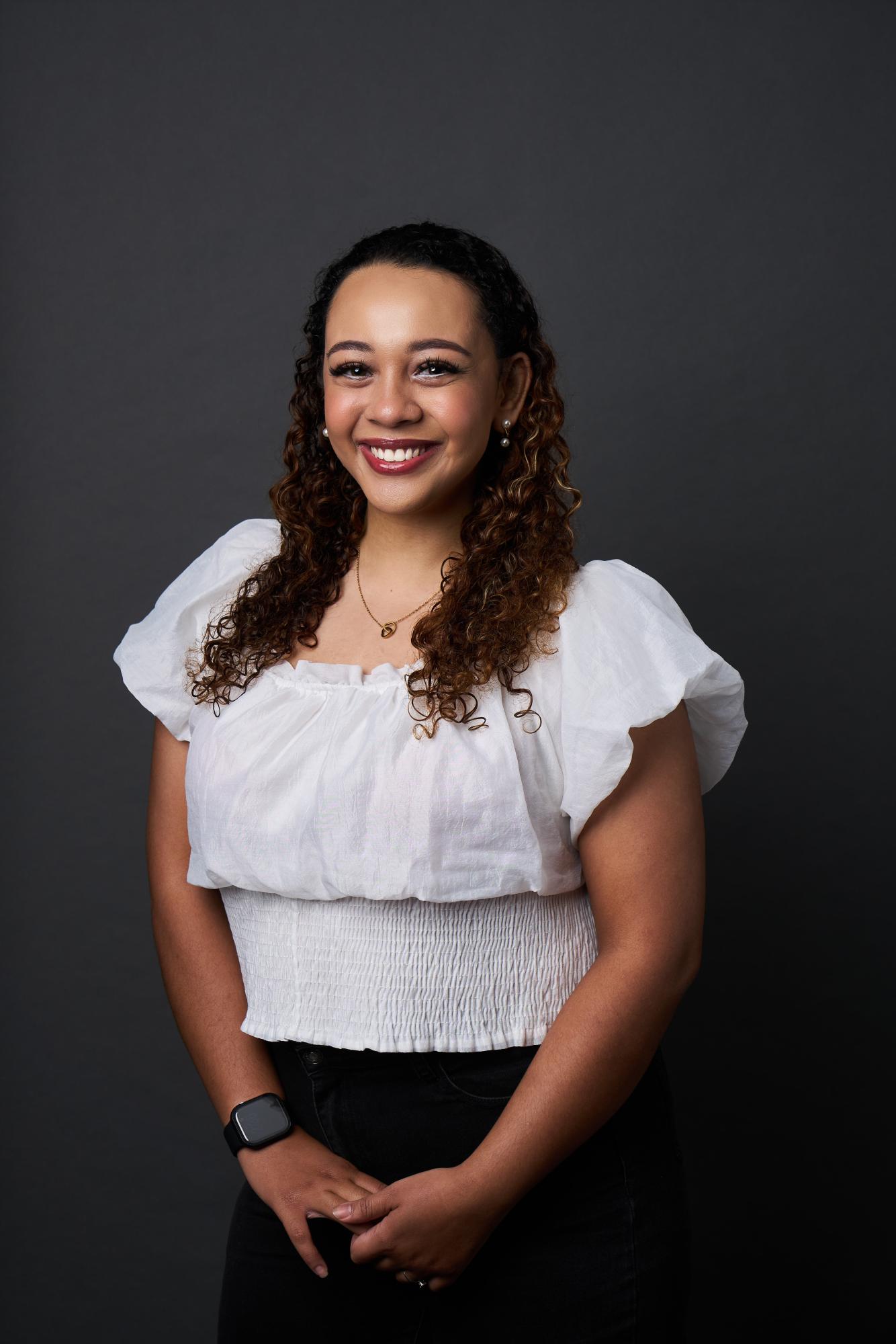



About
Janyka is drawn to the stories we tell and the ones that remain untold.
With her background in architecture, she approaches art and space as something lived, experienced and constantly redefined. She is intrigued by the constant reinvention of social, cultural and environmental relationships within art and architecture, and how these shifts influence the way stories are formed, shared and understood.
Janyka's curiosity often begins with observation: how people move through spaces, what captures their attention and how meaning is constructed through everyday encounters with art and objects. She finds herself returning to questions of memory, belonging and identity, particularly in relation to her own cultural background. Along the way, she has developed a quiet appreciation for the behind-the-scenes work that makes cultural storytelling possible.
Outside of her academic and professional work, Janyka gravitates towards slow and tactile practices. She enjoys reading, working on do-it-yourself crafts and picking up new and unexpected skills such as ikebana. These moments of making and learning reflect her interest in process, patience and the small details that shape larger experiences.
Driven by a deep interest in curation and conservation, Janyka is interested in how cultural narratives are shaped, preserved and reinterpreted within cultural spaces. Ultimately, she engages with the various forms of art and space as a way to explore and respond to the urgent and evolving questions confronting local and global issues.
Regulating Representation: Cultural authority and Filipino identity in Philippine public and private museums
Museums have the capacity to shape how individuals understand themselves by constructing and communicating meanings of cultural identity and heritage. In the Philippines, where Filipino identity remains fragmented and contested due to colonial histories and the marginalisation of Indigenous communities, this role becomes especially significant.
This study explores how museums participate in the process of constructing a unified identity by examining how Indigenous communities are represented as part of the Filipino cultural identity and heritage in two contrasting institutions: the state-funded National Museum of Anthropology (NMA) and the privately operated Ayala Museum (AYM).
Using the Circuit of Culture framework, this research focuses on the interplay between regulation and representation to understand how institutional power shapes cultural meaning. Using a comparative qualitative case study approach, the study combines exhibition analysis, policy analysis and semi-structured interviews with museum curators. This multi-method design enables a close examination of how institutional mandates, governance structures and curatorial decisions translate into exhibition narratives and public representations of Filipino identity.
The findings demonstrate that Filipino cultural identity is constructed differently across institutional contexts, producing a Filipino cultural identity that is not fixed or singular. First, both museums adopt the national ideology of unity in diversity, but operationalise it differently: the NMA emphasises broad and balanced representation grounded in shared material practices, while the AYM presents a more selective and interpretive narrative centred on conceptual and cosmological meanings.
Next, institutional processes of collecting, classification and validation determine what is recognised as heritage, with the NMA producing a state-sanctioned narrative of identity, and the AYM constructing a more subjective narrative shaped by private patronage and curatorial perspective.
Lastly, despite participatory mechanisms such as Free and Prior Informed Consent (FPIC), representation remains uneven and contested, revealing Indigenous identity as fluid and continuously negotiated.
Overall, this study argues that Filipino cultural identity is not simply displayed in museums but actively produced through institutional practices, revealing both public and private museums as powerful sites where identity is shaped, negotiated and reimagined.

Professional practice
Janyka is a multidisciplinary arts practitioner and manager, whose practice is grounded in how spatial, social and environmental contexts shape the production, presentation and preservation of art.
She is particularly drawn to curation and conservation, focusing on how exhibition-making and collections practices shape public understanding of cultural identity and heritage.
Alongside her research, Janyka has gained experience across galleries, libraries and conservation environments, including work in collections management, metadata systems and exhibition operations. She is committed to developing interdisciplinary and critically engaged approaches that bridge artistic practice, heritage work and public discourse.
Ultimately, Janyka aims to build a career within the arts and cultural sector where she can contribute to exhibition development, conservation and collections management, particularly in environments that prioritise inclusive and critical narratives, community engagement and sustainable preservation practices.
Audrey Khoo Jing Wen

Afiqah Amir
Veronica Lee
Trevor Wee
Jenise Lee
Dina Khaled