


About
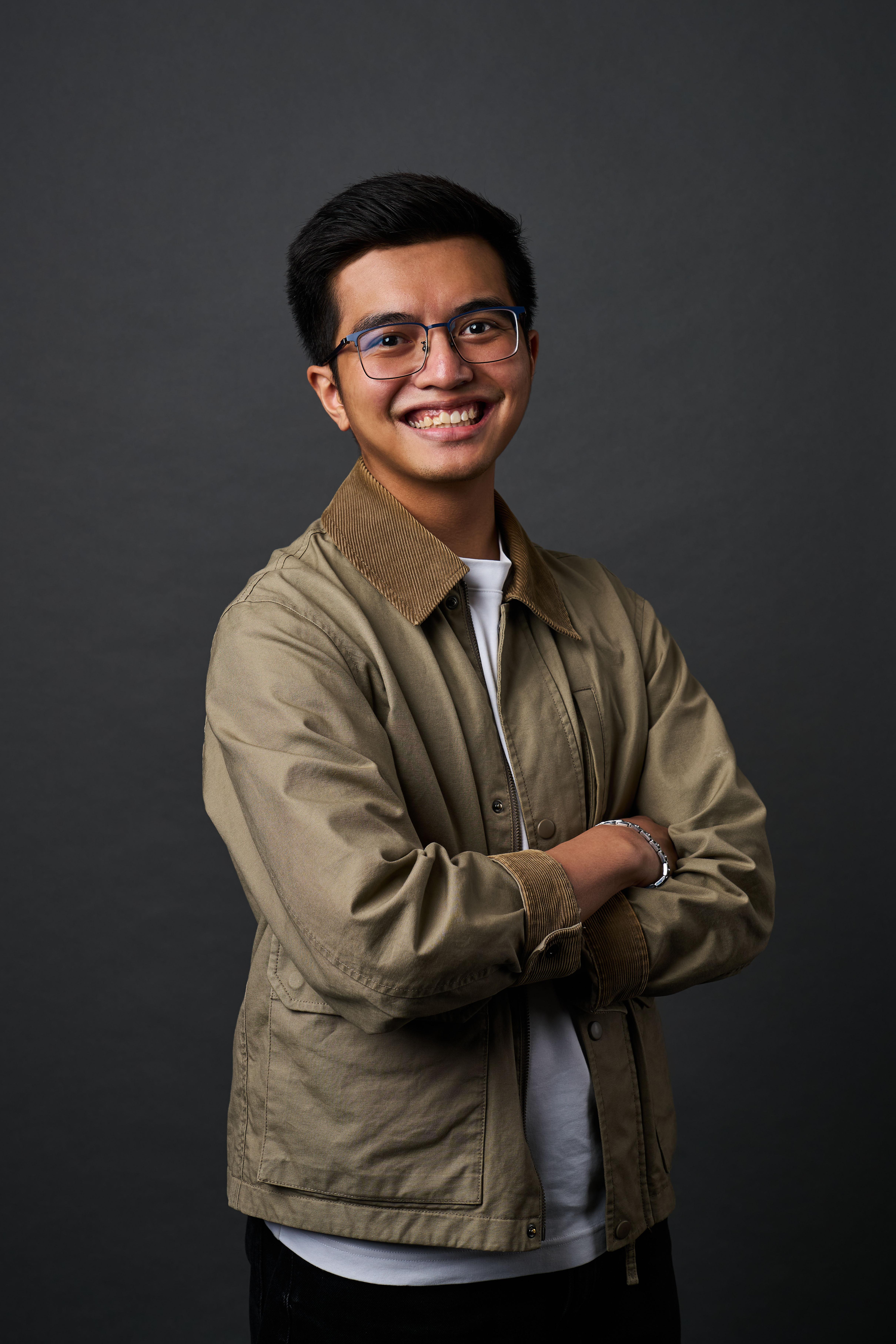
Rashad is a BA (Hons) Arts Management graduate and a dedicated photographer with expertise in digital and visual marketing.
He has worked with several notable external clients and contributed to a wide variety of artistic projects during his time in LASALLE College of the Arts and the British School in Tokyo.
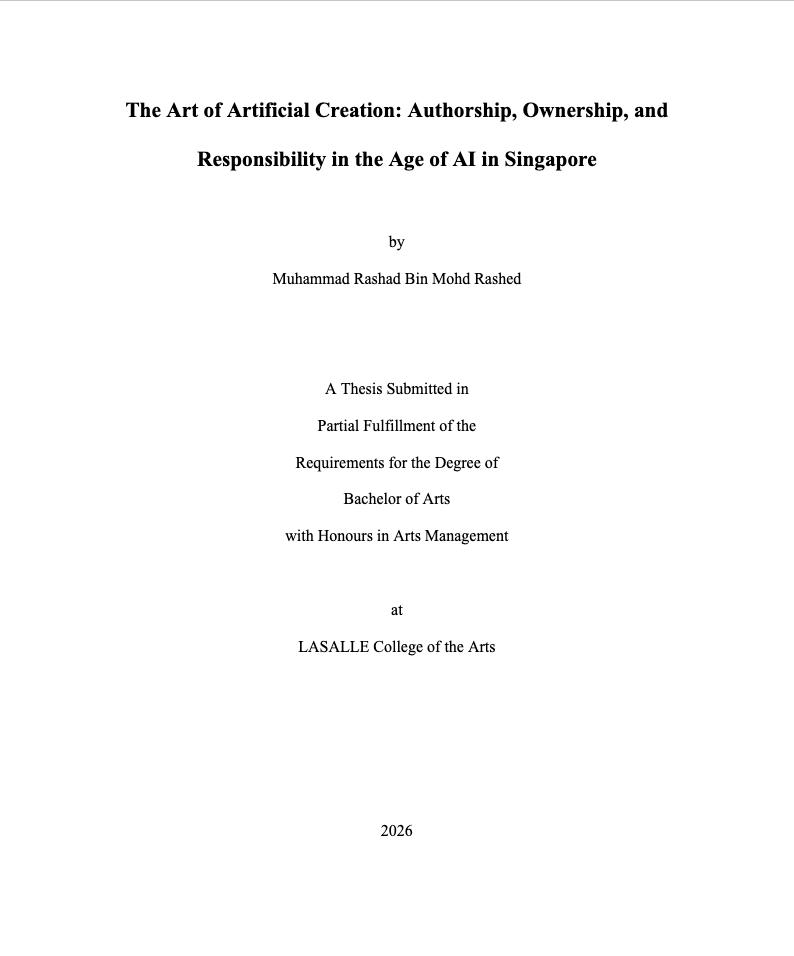
The Art of Artificial Creation: Authorship, ownership and responsibility in the age of AI in Singapore
Artificial Intelligence (AI) is quickly changing the arts and creative industries, moving from a technical tool to a creative partner. As AI-generated and AI-assisted works become more common, they raise new questions about who creates art, what counts as original work, who owns the rights and who is responsible for creative work. These changes are especially important in Singapore, where the push to lead in both technology and the creative economy has made it necessary to update laws and policies.
This dissertation looks at the gap between fast-moving creative technologies and the slower changes in legal and policy systems. It explores how AI-generated creative works are changing the way the arts are governed in Singapore, focusing on authorship, copyright ownership and creative responsibility.
Using an exploratory qualitative approach, this study combines analysis of legal texts, policy documents and governance reports with interviews of legal experts, arts administrators, curators and creative practitioners. By bringing together legal, theoretical and practical perspectives, the research examines how AI-generated creativity is understood, managed and regulated in Singapore’s arts and cultural sector from 2017 to 2026.
The findings show that AI is more than just a new tool or medium for art—it changes the legal and cultural rules that have shaped creative work. The study finds that traditional ideas about authorship, based around human intention, originality and personal expression, no longer fully apply. In reality, AI-generated works can come from complex interactions between the artists, developers, data, platforms and institutions. As a result, authorship is becoming more shared, negotiated and dependent on the context.
Copyright ownership of AI-generated works remains unclear. Singapore’s copyright laws still focus on human authors, but in practice, ownership is often decided by contracts, commissions and the degree of human involvement. This leads to confusion, especially when AI works with minimal human input or with multiple contributors. As a result, ownership is moving away from a simple author-based model to one that depends more on the process and situation.
The study also finds that creative responsibility is now shared among many people and groups, such as artists, developers, technology platforms and cultural institutions. It is no longer possible to hold just one creator accountable. Instead, responsibility is shared and negotiated, often through new practices such as disclosure rules, ethical guidelines and governance frameworks. However, enforcement remains uneven, revealing a gap between what policies intend to cover and what happens in practice.
In summary, this dissertation shows that AI-generated creative works are forcing a rethink of the creativity, agency and value in the arts. It calls for more flexible, collaborative and principle-based ways to govern these changes, moving past simple divisions like human versus machine or author versus tool. By adding to research in arts management, copyright law and AI governance, this study provides useful insights for policymakers, cultural institutions and creative professionals as they deal with the changing relationship between AI and human creativity.
Ultimately, the future of AI in the arts will depend not just on new technology, but on how well society preserves the human values that make creativity meaningful.
Professional practice
Rashad has research interests in heritage and culture, photography, marketing and audience development.
Building on his dissertation research, he is also exploring policymaking, future governance and practices.
LASALLE X Singapore Heritage Society: Rediscovering Heritage
As part of an arts project module, Rashad and his classmates collaborated with the Singapore Heritage Society to produce a market research proposal on whether walking tours are still relevant to future generations.
Click the emoji to find out more! 📈
LASALLE Rock and Indie Festival (RIF) 2025
As the photo and video lead for RIF, Rashad developed the festival's photo and video schedule and managed a media team of photographers and videographers across the two-day festival, ensuring smooth coordination and comprehensive coverage.
He also curated and produced social media content, including Instagram Reels for the festival’s Instagram page, and photographed bands, vendors, volunteers and teammates throughout the event.
As a videographer, he recorded and edited videos and b-roll footage featuring bands, vendors, volunteers and the RIF team, creating engaging short-form content for Instagram Reels.
Click the emoji to find out more 📸
Theatre Arts Conference 2025
During his marketing and communications internship with the Singapore Drama Educators Association (SDEA), Rashad curated visual collaterals for both SDEA and the Theatre Arts Conference.
At the conference, he photographed the event and created additional social media content on the ground for SDEA's social media and archives, and connected with local and international participants and speakers.
Click the emoji to find out more 🌐
Sharafah Malihah
Lionel Fong
Poo Pei Yi
Katja Marie Kroonenberg
Sri Nor Wakhidatun Nazila
Amirra Wardah Binte Shamsul-Bahari