


About
Adele is a BA (Hons) Product Design graduate from LASALLE College of the Arts, who has a background in business and a strong interest in hands-on making.
Before pursuing product design, she studied business, which shaped the way she thinks about users and how ideas can exist beyond concept. This background continues to influence her approach as a designer, allowing her to balance creativity with practicality.
Adele's practice is driven by curiosity towards materials, craft, culture and the details found in everyday life. She enjoys working through various means of making, whether through sketching, model-making, digital fabrication and material experimentation.
For Adele, design is not only about creating finished objects, but also about understanding how people interact with them, what they value and how objects can carry meaning. She is especially interested in the relationship between traditional practices and contemporary design.
Through her work, she explores how craft, technology and storytelling can come together to create outcomes that feel thoughtful, accessible, and culturally aware. Adele sees design as a way to bridge past and present, preserving the value of existing knowledge while imagining how it can evolve for new contexts.
Peranakan beadwork in transition
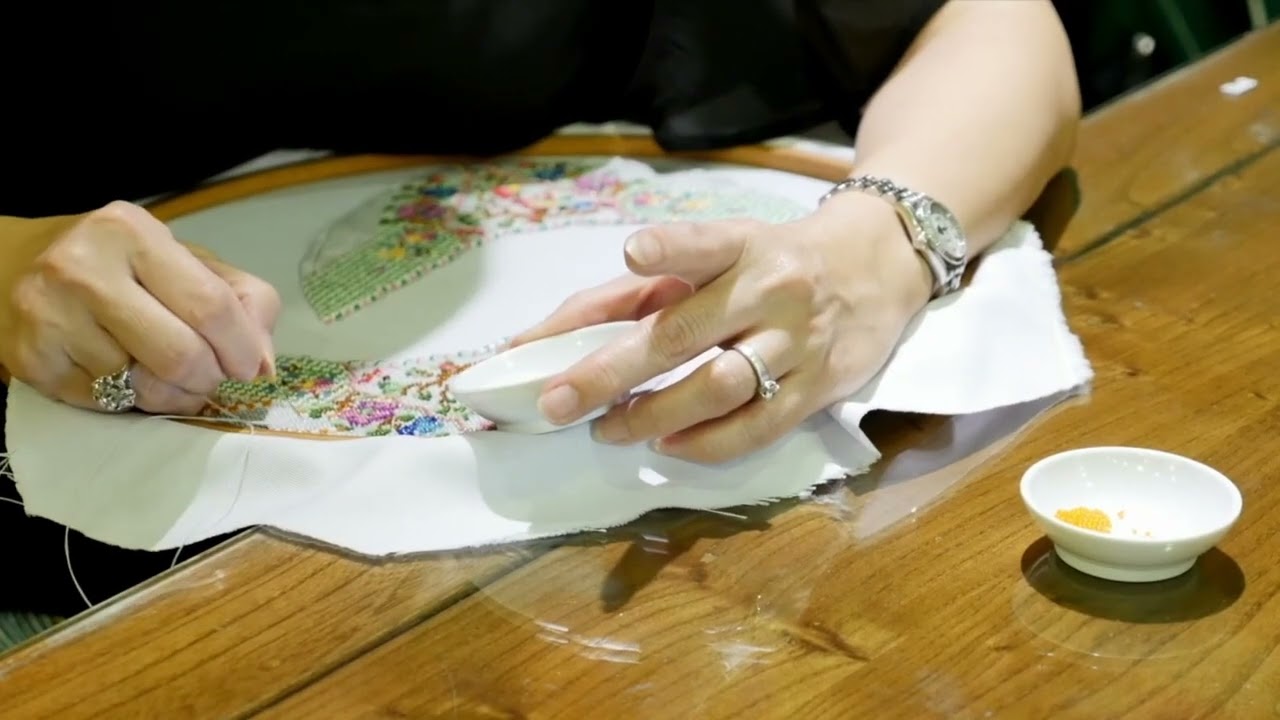
Bridging Peranakan beadwork with contemporary tools to support new ways of learning, making and engaging with the craft.
This project explores how Peranakan beadwork can be reintroduced to younger audiences through a hybrid craft system that combines tradition, digital tools and hands-on making.
Rather than replacing the original technique, the project aims to lower the barrier of entry by translating the logic of beadwork into a more accessible format for Gen Z beginners.
Through iterative prototyping, the project developed a 3D-printed beadwork base which guides bead placement, supported by a kit containing beads, tools and an app-based digital guide. The outcome encourages users to experience the patience, precision and cultural value of Peranakan craft through a contemporary product experience.
Positioned through a design-through-making approach, the project uses experimentation, material testing and prototyping as a way to understand how heritage craft can evolve while still respecting its traditional roots.

Prototyping phase

Final system presenting the relationship between the digital app interface and physical beadwork kit. The app supports motif selection, colour planning and AR-guided placement, while the kit provides the 3D-printed beadwork base, beads and tools needed for hands-on making.
This project responds to the challenge of keeping traditional craft relevant within contemporary design culture.
Peranakan beadwork is highly detailed and culturally meaningful, but its technical difficulty can make it intimidating for beginners. By introducing 3D printing and digital AR guidance, the project creates a bridge between heritage and modern making.
At the same time, it also preserves the tactile and meditative nature of beadwork by requiring users to place each bead by hand. Through this balance of technology and craft, the project proposes a new way for cultural practices to be experienced, learnt and appreciated by younger generations.
*Special thanks to Angeline Kong of Nyonya Needlework for sharing her knowledge and insights on Peranakan beadwork through an interview and workshop session. Her expertise helped to inform the project’s understanding of the craft, its cultural value and the challenges of transmission.

App – Motif library

App – Motif editor

App – AR overlay

Lamp sketches for further application on the 3D printed bead sheet.

AI-assisted render developed from an initial sketch. The final model was later simplified and refined for application as seen in the video.
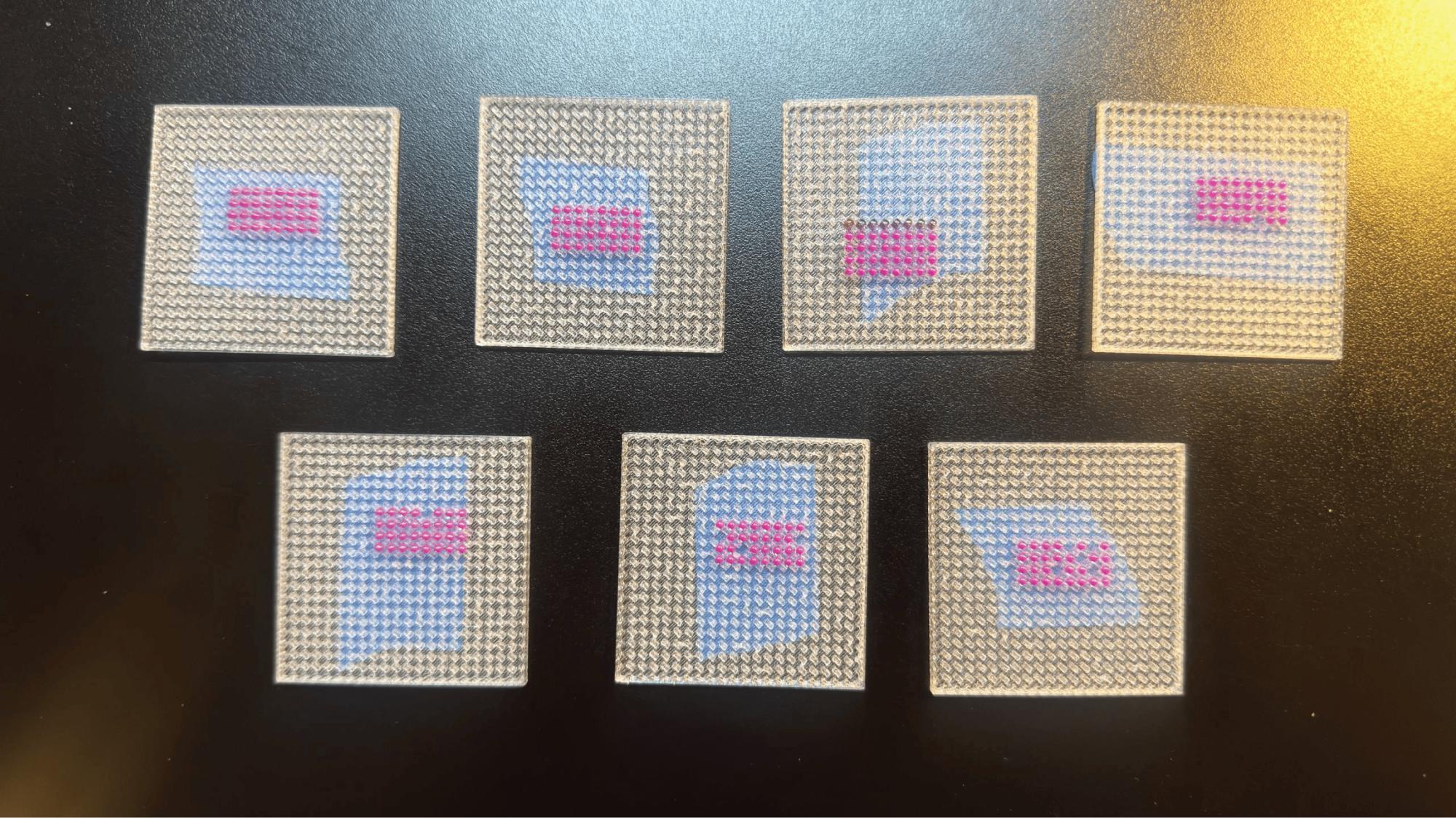
One of the small batch of prototypes I trialed during my project process.
Prototyping PETG 3.0: Testing with W1.30-1.36, D1.6, B0.2
*W = Width, D = Depth, B = Base, all measurements are in mm.
*testing criteria is based on:
Bead retention: does the bead fall out?
Insertion pressure: is it too hard to press in?
Print consistency: does the pocket print cleanly?
Surface flexibility: does the sheet warp?
Craft logic: does it still follow beadwork grid spacing?
Prakriti Sarawgi
Julienne Jo Boquiren
Koh Hui Chin

Meagan Chan Hui Xin

Muhammad Aniq Low Wei Jie Bin Irwan
Xavier Lim Zi Xu